One click, whole workflow
Recipes are here. Package a whole workflow and run it in one click
Explore recipesOne click, whole workflow
Recipes are here. Package a whole workflow and run it in one click
Explore recipesFrom sketches to systems, how we’re rethinking the creative process with Fuser.
Fuser
October 16, 2025
“Design is being commoditized.”
“Great design is the last remaining moat.”
“The only differentiator is your personal taste.”
We (Dalena & Hirad) have been working as professional creatives, across mediums and industries, for over a dozen years. It’s clear to us that the nature of creative work is changing. AI makes it easier than ever to produce something, but simply producing things was never the core of creative work. Speed, reps, quantity – these have always been a means to an end other than just output.
At the heart of creative work is the process. More and more, the process – the sketches, references, and unexpected discoveries – gets treated as inefficiency. But for people doing this work seriously, that’s the part that matters most.
Many critiques of AI boil down to the idea that it creates “slop,” that is, low-effort, mass-generated content. But slop didn’t start with AI. Even before AI, content had been stagnant for years: endless superhero sequels, safe bets, no risk. “One-shot” AI tools just accelerated that phenomenon by allowing us to make slop at much faster and cheaper rates.
AI slop is the product of a certain kind of process. When you’re locked into single-prompt workflows, you end up reacting to a stream of guesses by AI rather than building something intentional at each step. You prompt, tweak, regenerate, and save the outputs that look promising. But in the process, you end up ceding a lot of creative control.
Creative work actually happens in the shaping of an idea – the decisions, iterations, and reasoning that lead to the final form. That’s how your taste emerges. But most generative tools skip over this entirely, flooding you with outputs without structure.
There’s nothing wrong with speed. But when speed short-circuits the process, you lose the ability to say what you’re actually trying to say.
The good news? The same tools that produce slop in one-shot workflows can be used to push creative boundaries when you have the right processes and constraints. And this is where Fuser comes in.
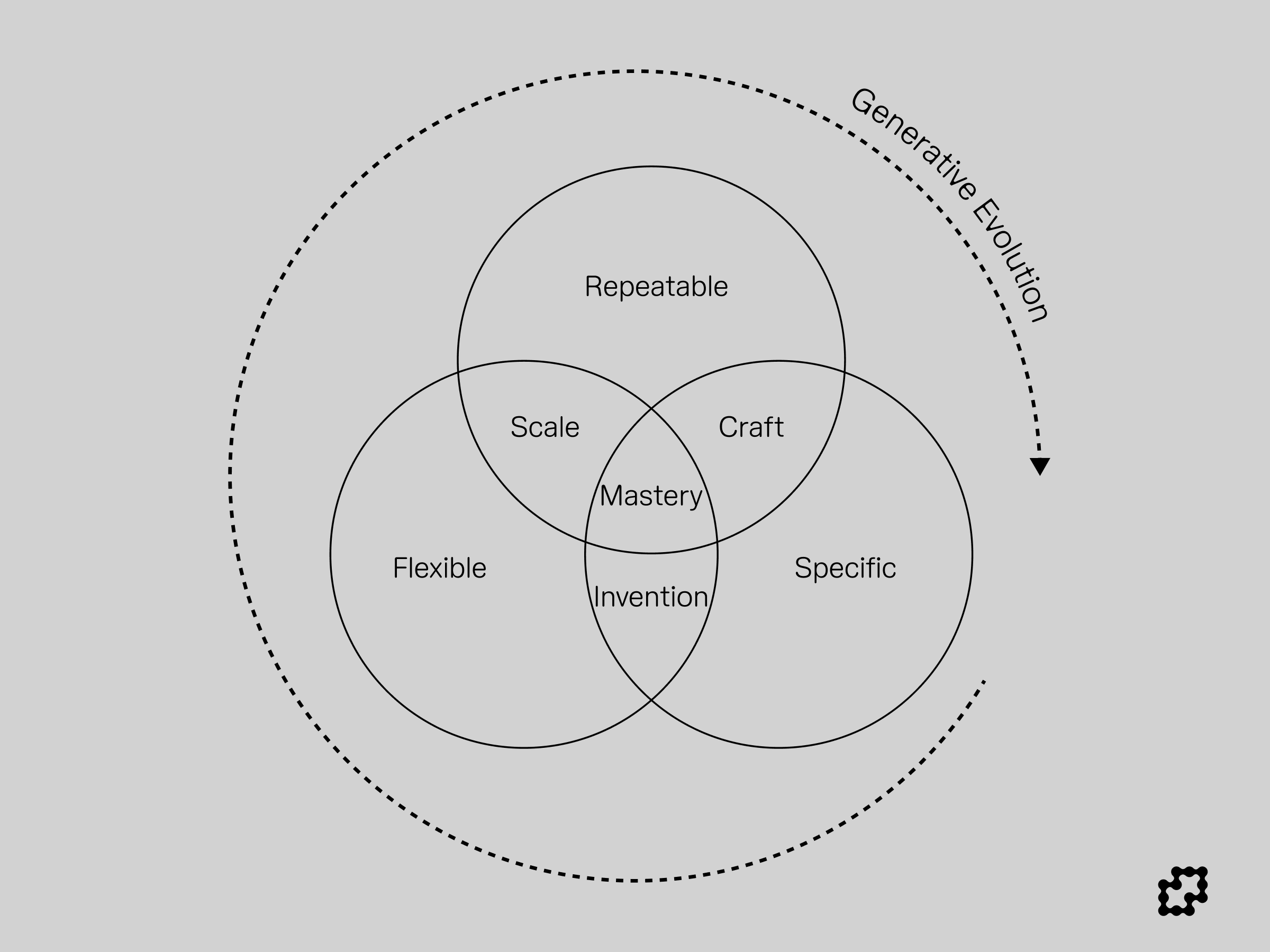
Fuser is a workspace for evolving ideas. We aim to strike a balance between pure generation and granular control, maintaining accessibility without sacrificing creativity.
We empower creatives to use frontier technology while actively avoiding the one-shot processes that lead to slop. Because the messy middle – the process of creativity – is where the magic happens.
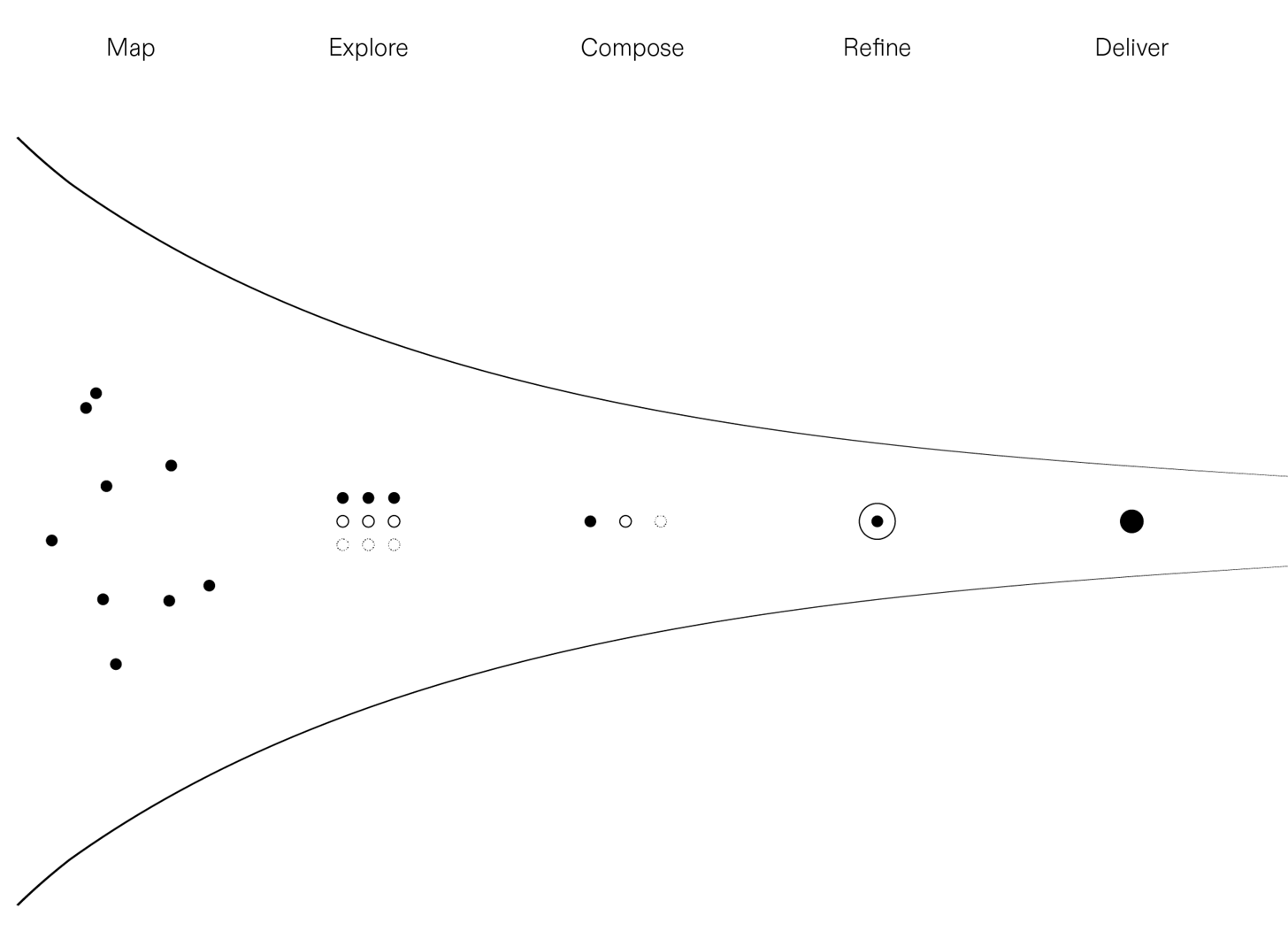
Fuser is a workspace built to support the part of the creative process where you’re thinking, exploring, and evolving your ideas.
More concretely, Fuser is a node-based interface where you can connect different generative models from various providers and build workflows with your own prompts, references, styles, and assets. As your workflows take shape, they become “recipes” that you can reuse, remix, and share with others.
Rather than locking you into one format or one tool, Fuser lets you work fluidly across image, video, 3D, sound, and various AI models, all in a single, structured environment.
With Fuser, you can explore different directions without starting over, swap in new models or styles without rebuilding everything, and reuse earlier outputs as inputs in a system you control.
Fuser opens new windows for exploration. Not about input and output, but also discovery, refinement, and going down rabbit holes in a systematic way.
It’s because we come from the creative world that we know that you need control in order to get work done.
Fuser is built for creative professionals who want to work with generative tools without losing the styles and standards that make their work their own. It’s for people who have to ship without sacrificing quality.
Our users are creatively ambitious and unafraid of new technology. With Fuser, they leverage the same AI models that others are using to produce slop. But instead of slop, they create net-new work, net-new aesthetics, and net-new processes.
Fuser is for people who are curious about how AI can fit into their workflow and how their workflow can evolve with AI. These are creatives who understand that new technology pushes creative boundaries and who want to be at the frontier of creative work. After all, being on the frontier forces you to be more creative.
We’ve always been interested in innovation and invention. Speaking your voice has always meant fighting for it.
Hirad was one of the first artists to use game engines to make award-winning music videos. Dalena made one of the first controllable music videos with generative AI by combining video techniques that weren’t meant to work together. It is only through testing new tools and capabilities that our practice has persisted.
We’ve always asked: How can we hack or leverage this in service of expression? How can we use it to speak to the times, to be in conversation with our tools and with ourselves? What are this tool’s limitations and affordances, and how can we use them in ways only this tool could allow?
But the frontier will always move, and so will Fuser. We’ve built a modular, node-based product to allow for the most cutting-edge models and workflows. We want to be pulling in emerging interactions, trends, and technologies and put them into the hands of creative professionals in controlled and thoughtful ways.
A lot of people ask, with the advent of LLMs and diffusion models, “What’s left for us?” With Fuser, we believe there’s still so much more to discover about what can be made and communicated. The process is just different now.
We believe that if Fuser works, the creative process becomes something you can see, share, and build on.
Ideas will have a clear lineage, from the first spark to the final product. Moodboards will evolve into living systems of references, styles, and experiments. Outputs will be traceable, so you can revisit decisions, remix past work, or hand off a process that others can build from.
“Recipes” will replace one-off prompts – shared, forked, and refined like open-source code. Designers will move across image, motion, 3D, and sound without leaving their creative environment or giving up control. Designing how you design will become a core skill for creatives.
This shift toward structured creative processes will restore something that’s been missing. The best work often comes from building on others’ foundations – from having lineage you can trace and context you can share.
More importantly, people will be able to make the most of their ideas without losing their voice in the process. Instead, Fuser will be the place you hone your unique taste.
The frontier of creative work is still unwritten.
Start your own process with Fuser — and show us what the future of making looks like.