One click, whole workflow
Recipes are here. Package a whole workflow and run it in one click
Explore recipesOne click, whole workflow
Recipes are here. Package a whole workflow and run it in one click
Explore recipesbyNAVER / LINE Vision
Isolate clean architectural wireframes, perspective grids, and straight-line structural guides with single-shot precision
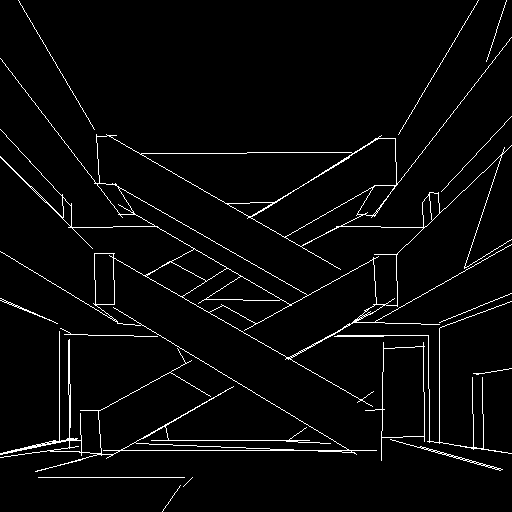
Transform photographic references and 3D renders into minimalist line-segment wireframes in three straightforward actions.
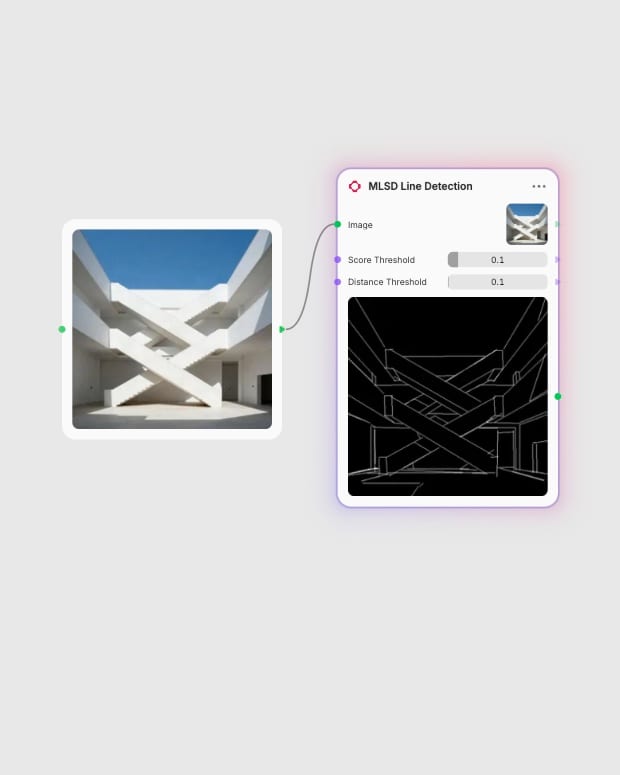
Supply Reference Image
Provide an architectural photo, interior design capture, or 3D render containing clear linear geometry.
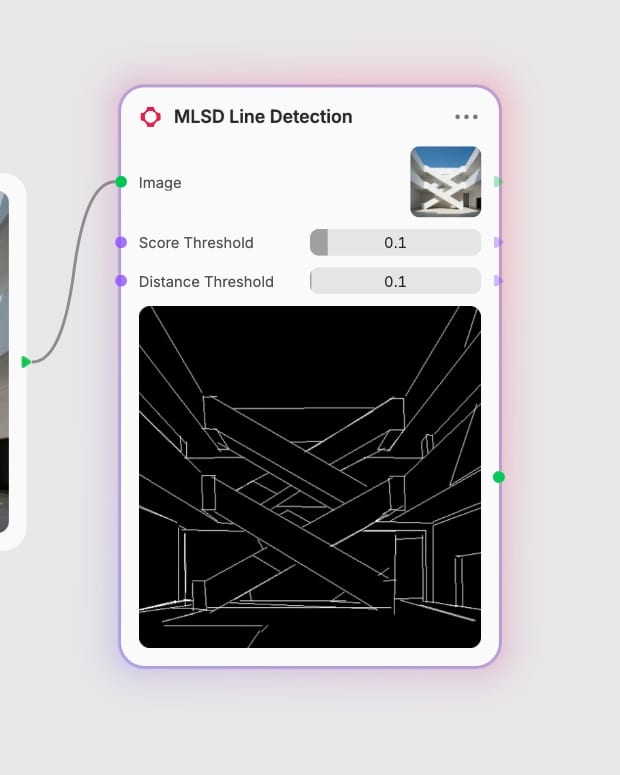
Tune Detection Thresholds
Calibrate score and distance thresholds to balance fine wireframe fidelity against noise suppression.
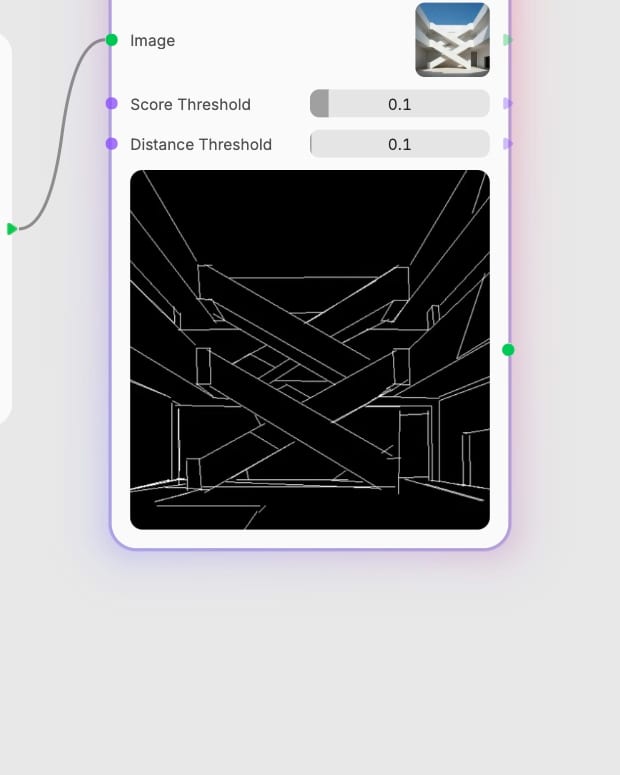
Export Wireframe Map
Receive a high-contrast black-and-white structural line map ready to guide perspective-locked generation.
Extract pristine geometric scaffolding and perspective baselines to guide generative composition without transferring image noise.
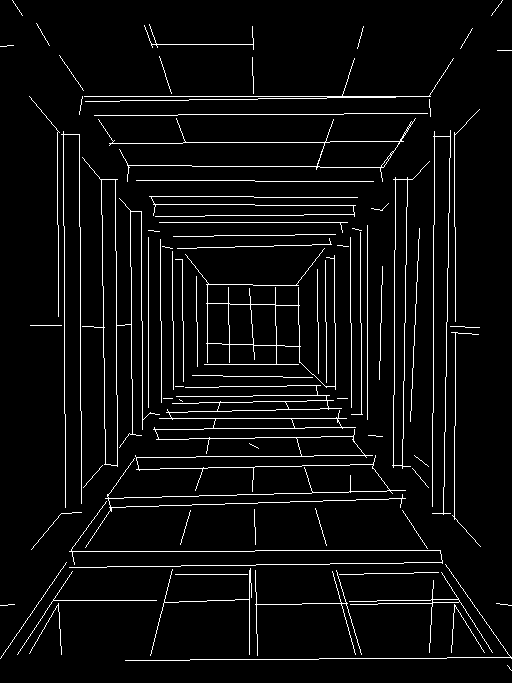
Perspective Grid Extraction
Isolate precise perspective grids and building planes, stripping away distracting shadows and surface textures to produce clean white structural vectors on solid black.
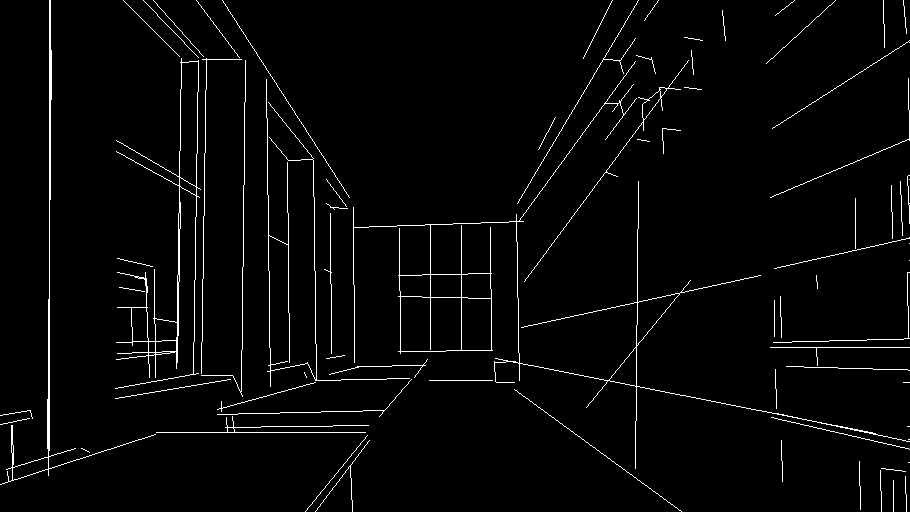
Score Confidence Control
Tune the score threshold from 0.0 to 1.0 to eliminate faint texture noise or capture delicate structural lines across complex interior environments.
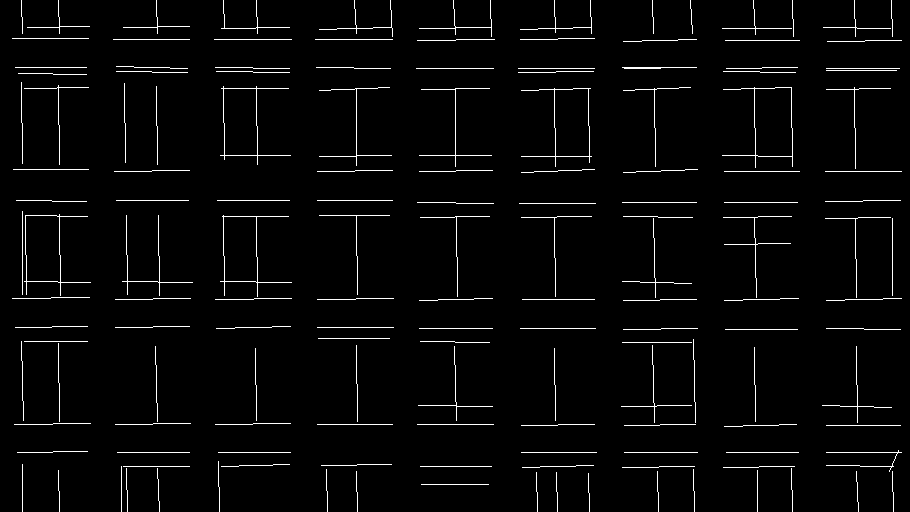
Distance Segment Merging
Adjust the distance threshold between 0.0 and 20.0 to resolve closely spaced window mullions and facade lattices without merging adjacent geometry.
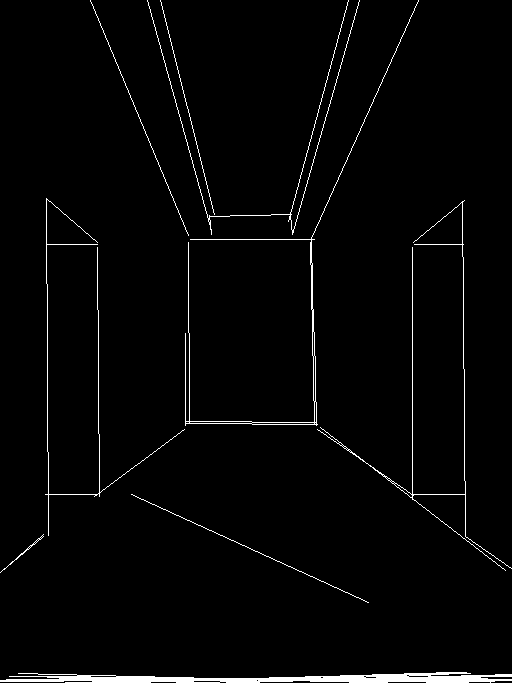
ControlNet Structural Guidance
Generate ultra-lightweight structural scaffolding that locks camera perspective and room proportions into downstream ControlNet workflows.
Explore how stark structural line maps anchor complex architectural perspectives, vehicle profiles, and editorial environments.

High-fashion editorial perspective framing
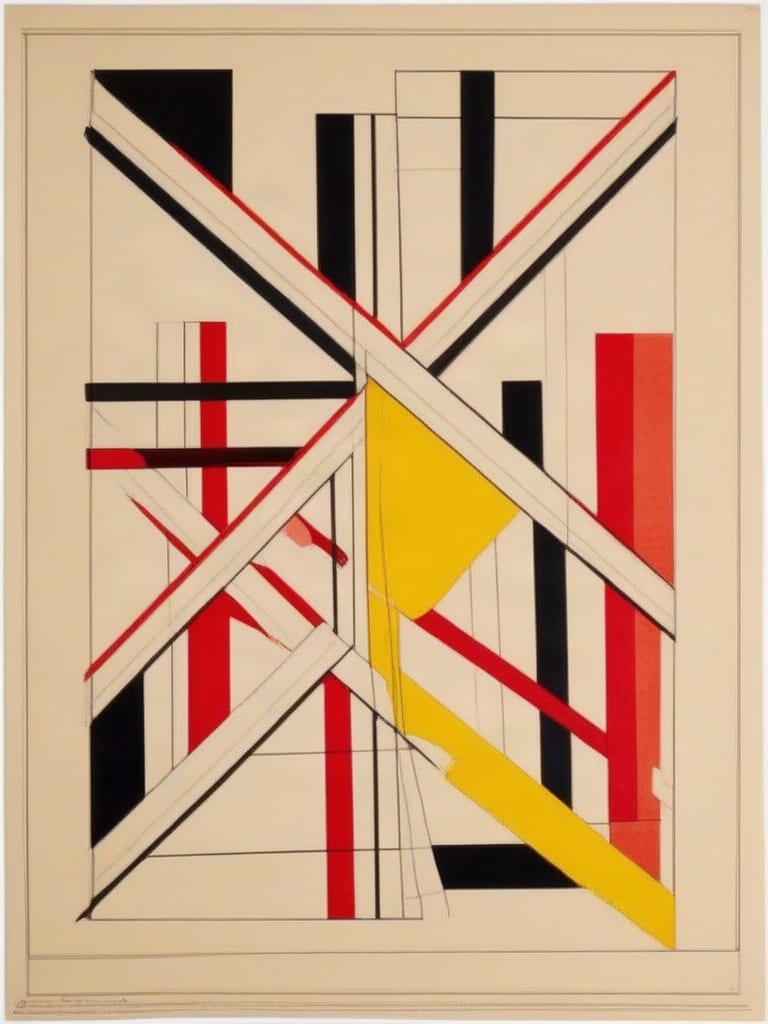
Constructivist album sleeve artwork
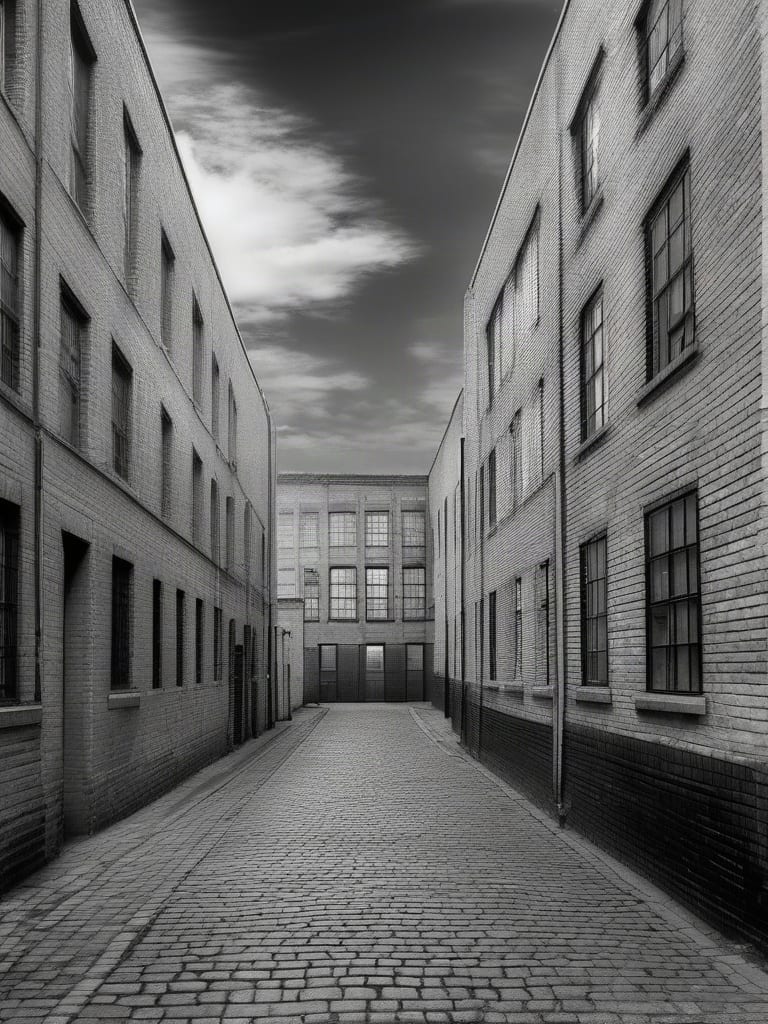
Archival documentary urban perspective
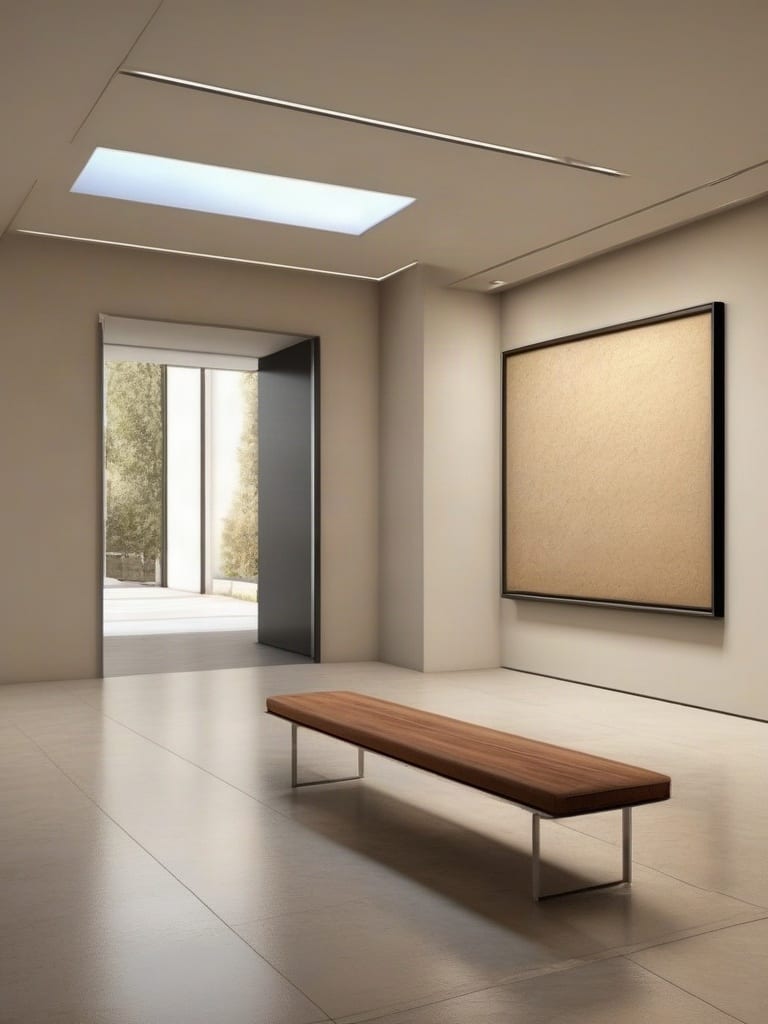
Minimalist interior gallery perspective
From architectural visualization to industrial product design, discover how creators enforce rigid geometric structure across workflows.
Yes, MLSD stands for Mobile Line Segment Detection (M-LSD), developed by NAVER and LINE Vision. It is widely referenced as M-LSD in academic research and as the MLSD preprocessor in generative diffusion workflows.
MLSD is purpose-built for straight geometric geometry: interior room layouts, architectural building facades, street perspectives, furniture framing, and structural grids. It extracts crisp vector-like wireframes while stripping away surface textures, shadows, and color noise.
Avoid using MLSD for organic silhouettes, human figures, animals, curved sculptures, vegetation, and soft drapery. Because the detector exclusively tracks straight segments, organic forms will either be ignored or rendered as fragmented visual artifacts. For organic shapes, reach for edge or depth preprocessors instead.
Score Threshold sets the confidence cutoff between 0 and 1 (defaulting to 0.1) to eliminate noisy or faint line detections in busy textures. Distance Threshold spans from 0 to 20 (defaulting to 0.1) and controls line merging—lower values preserve fine parallel architectural details like window mullions, while higher values consolidate overlapping segments into simplified guides.
NAVER and LINE Vision introduced M-LSD at AAAI 2022. The model uses a streamlined MobileNetV2 backbone with roughly 25,000 parameters and a tri-points formulation to deliver real-time single-shot line detection on resource-constrained hardware.
Isolate clean architectural wireframes, perspective grids, and straight-line structural guides with single-shot precision