One click, whole workflow
Recipes are here. Package a whole workflow and run it in one click
Explore recipesOne click, whole workflow
Recipes are here. Package a whole workflow and run it in one click
Explore recipesbyVikhyat Korrapati
Extract instant visual answers, detailed scene captions, and precise spatial layouts from any image with sub-second latency
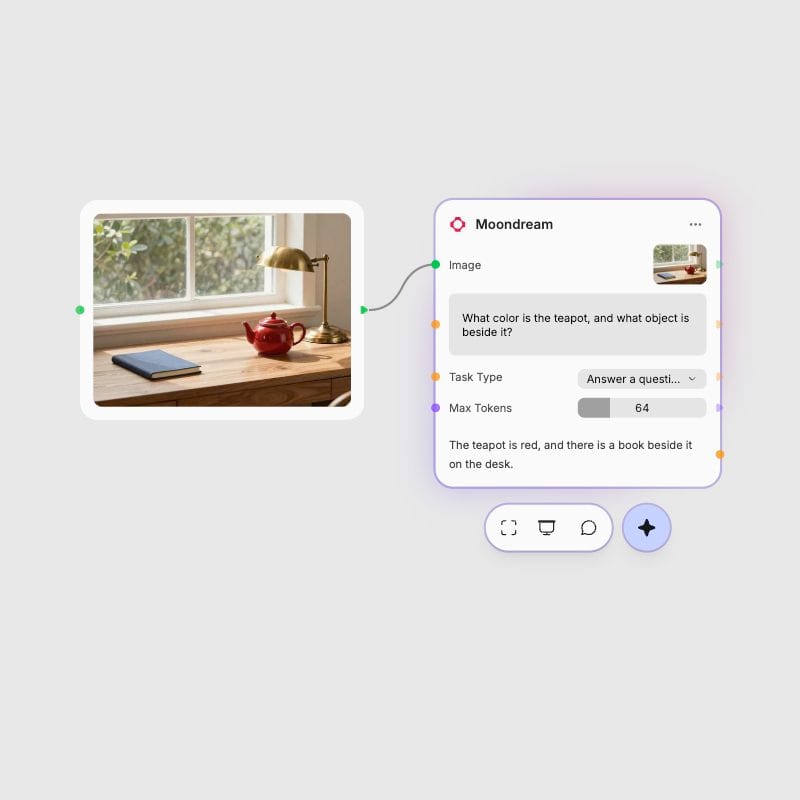
Go from raw image upload to grounded visual intelligence in three straightforward steps.
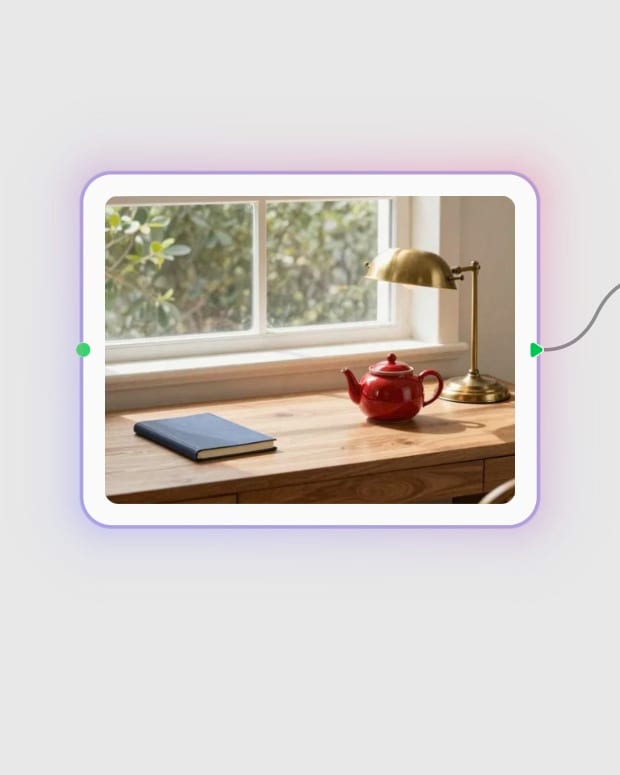
Upload your image
Provide a clear JPEG or PNG image focusing on the subjects or interface you want to inspect.
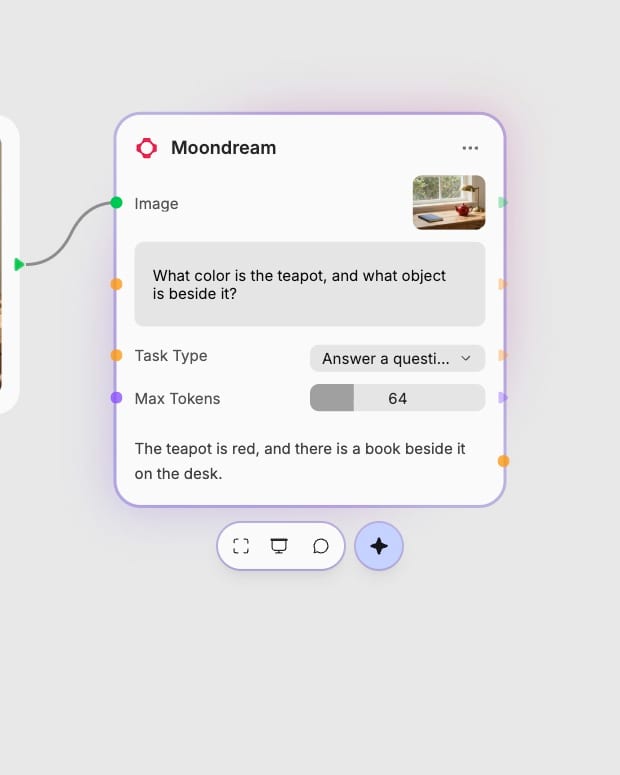
Choose task and prompt
Select between broad scene captioning or targeted visual queries with token limits up to 256.
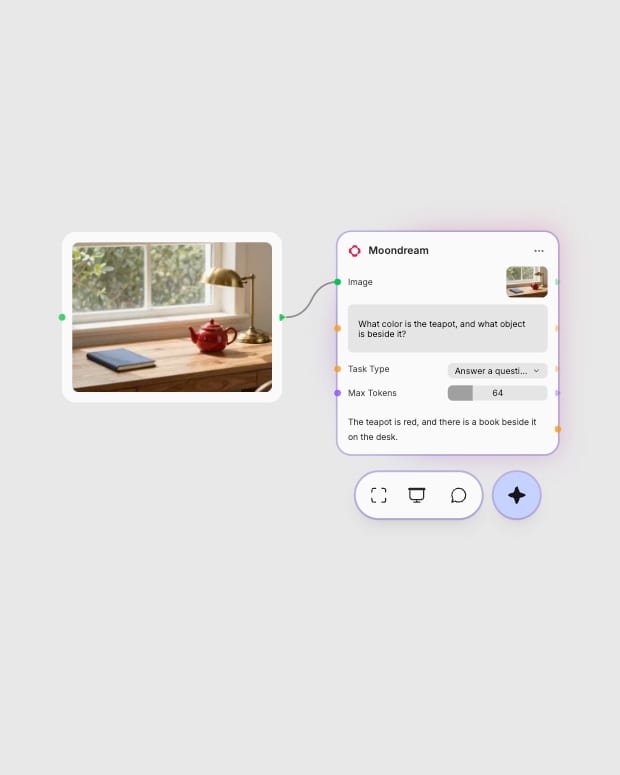
Receive instant visual intelligence
Get concise, objective descriptions and grounded answers in fractions of a second.
Engineered for near-instant visual comprehension, spatial reasoning, and clean textual extraction without heavy infrastructure.
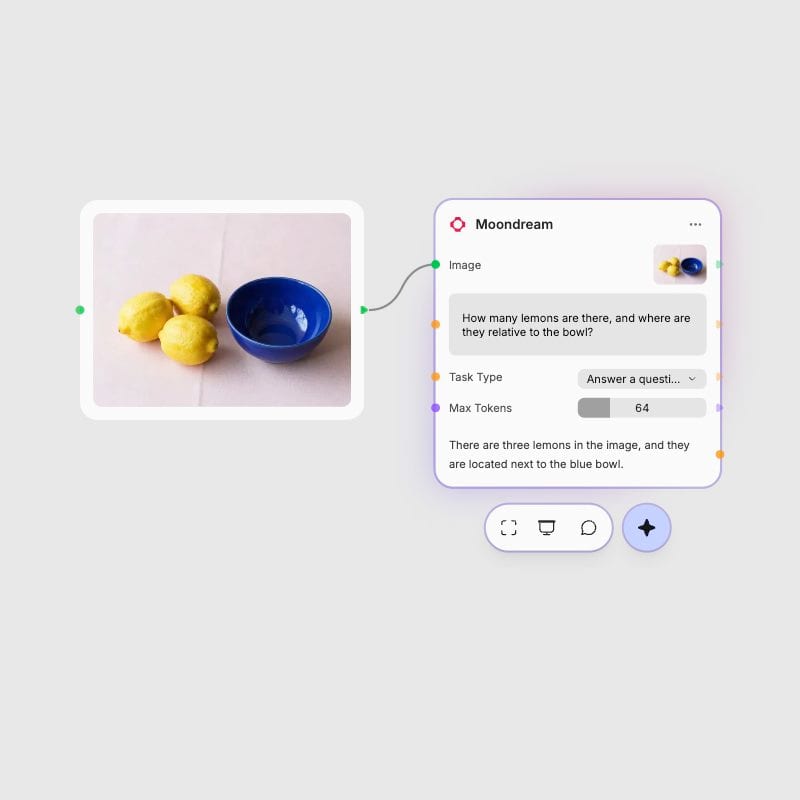
Spatial Question Answering
Ask targeted queries about object positions, item counts, or physical attributes, strictly grounded in the visual evidence of your input image.
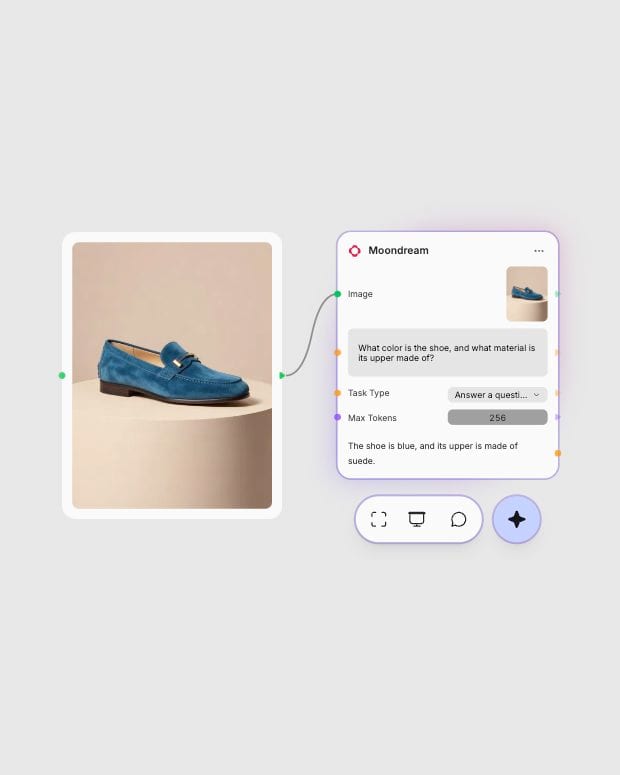
Zero-Shot E-Commerce Tagging
Extract structured product attributes, color profiles, materials, and categories for automated cataloging at high volume.
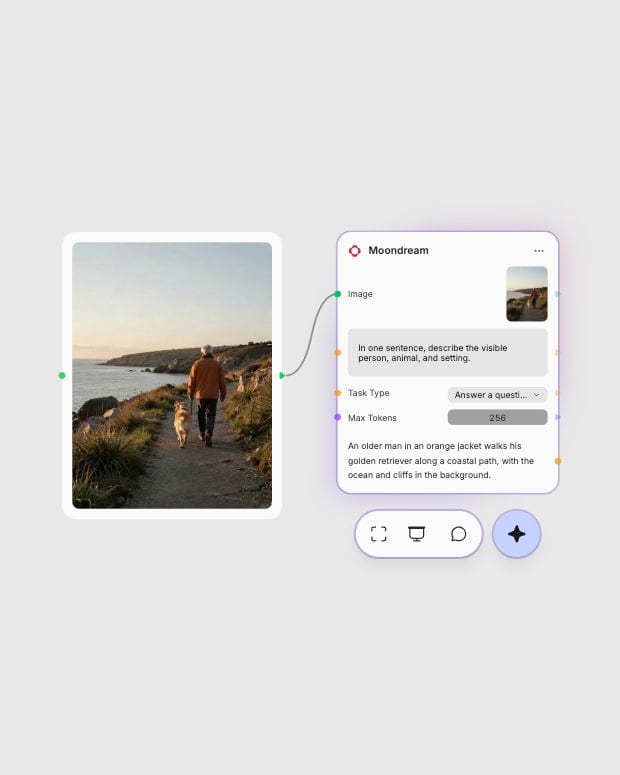
Instant Accessibility Captions
Generate objective, literal scene descriptions focusing on composition, lighting, and subjects without flowery embellishments or hallucinations.
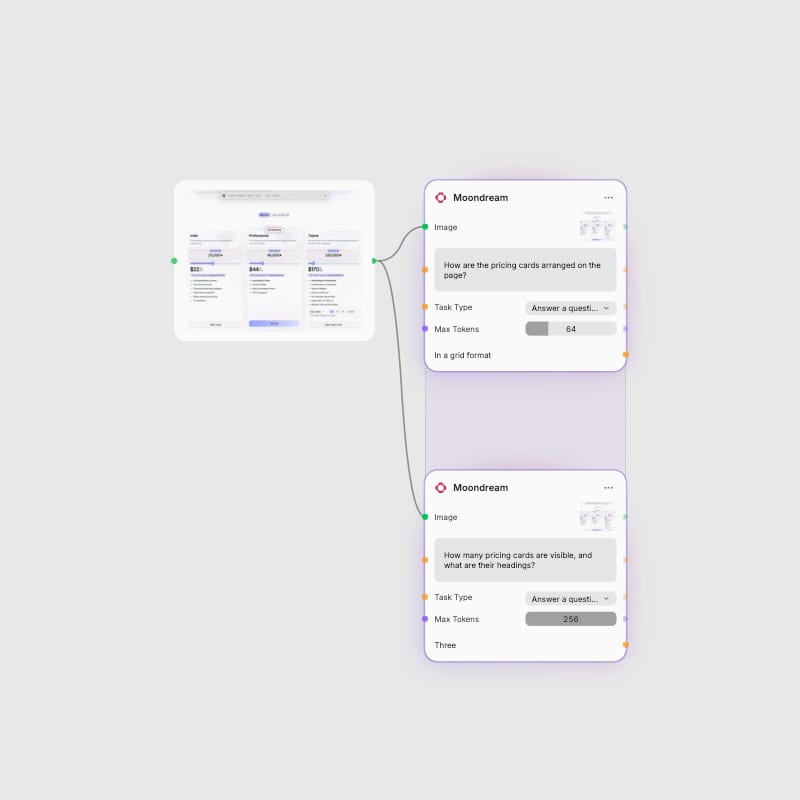
UI and Layout Inspection
Analyze interface screenshots to identify navigation bars, active buttons, typography hierarchy, and component layouts in sub-second time.
Explore how Moondream parses visual layouts, identifies materials, and transcribes scene details across diverse image domains.
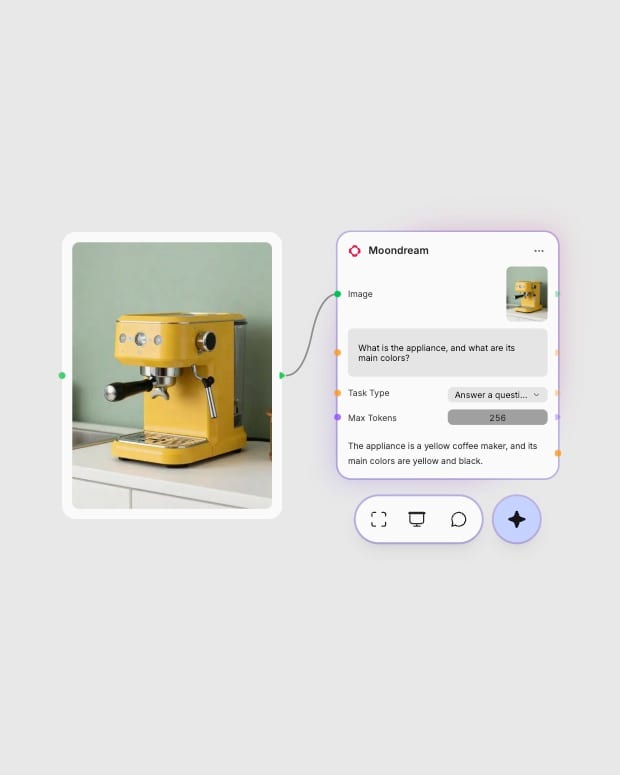
Product attribute inspection
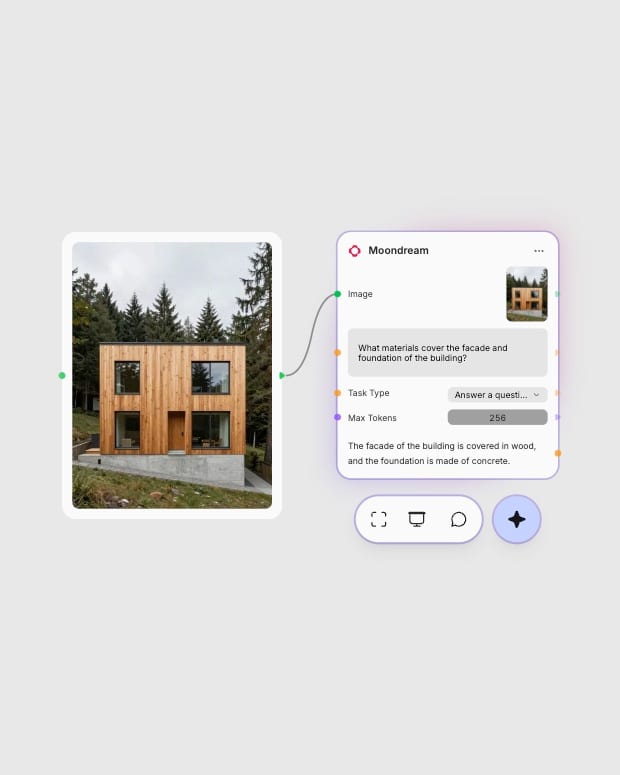
Exterior layout and material parsing
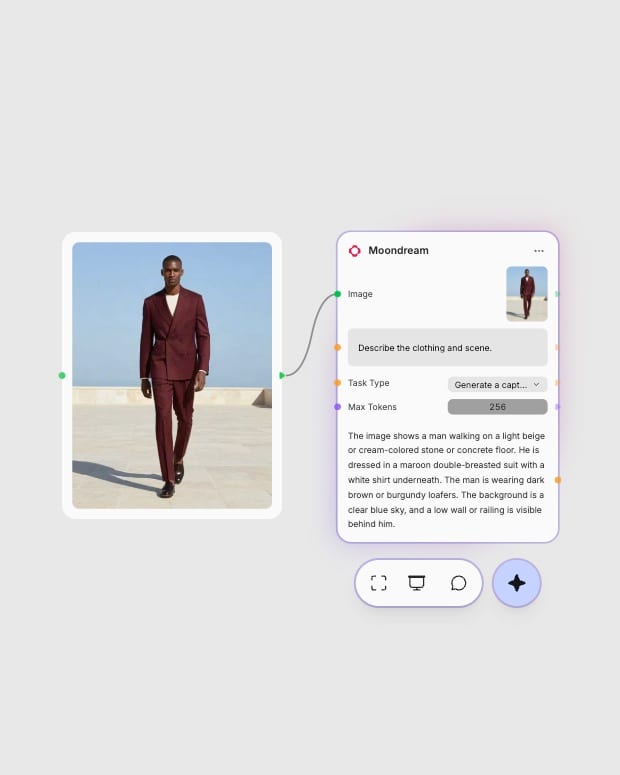
Fashion lookbook scene captioning
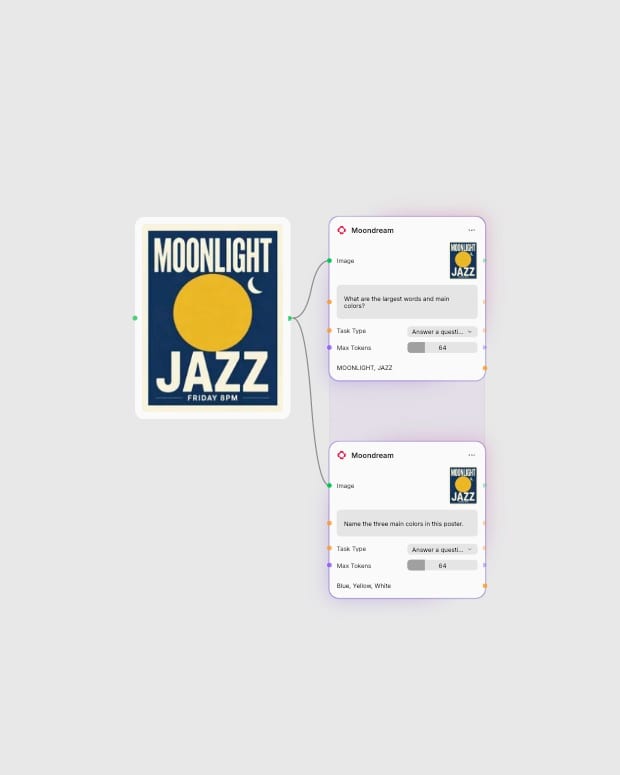
Poster typography and palette identification
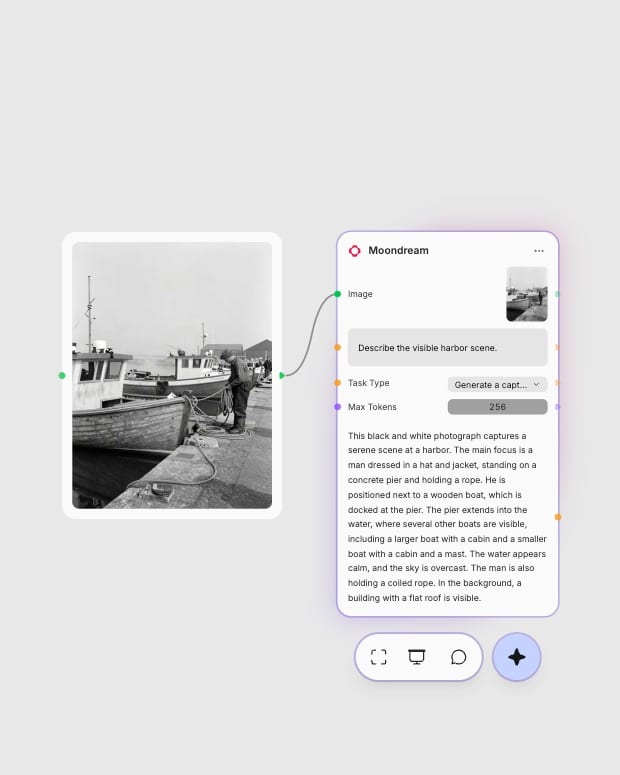
Archival scene analysis
From e-commerce catalog teams to accessibility engineers, see how developers deploy Moondream for high-volume visual workflows.
Moondream Next is the architecture previewing Moondream 3, utilizing a sparse Mixture of Experts (MoE) design with 9 billion total parameters that activates 2 billion parameters per token for near-instant inference.
Moondream Next excels at real-time image captioning, spatial visual question answering, e-commerce product tagging, alt-text generation, and UI layout inspection. Its sub-second response times make it ideal for high-throughput batch processing where larger models are too slow or cost-prohibitive.
The model is not built for full-page dense document OCR, multi-step logical reasoning, pixel-perfect coordinate drafting, or generating long-form creative narratives. For workflows requiring dense document transcription or deep multi-paragraph reasoning, pair Moondream's initial extraction with a dedicated text LLM.
Set task_type to 'query' for targeted questions and information extraction, or 'caption' for a complete scene summary. Use a max_tokens limit between 16 and 64 for short, single-sentence answers, and increase it up to 256 for detailed multi-sentence captions.
Moondream was created by Vikhyat Korrapati at M87 Labs. It combines an efficient visual encoder with a language decoder in a sparse Mixture of Experts structure to deliver edge-ready visual intelligence.
Extract instant visual answers, detailed scene captions, and precise spatial layouts from any image with sub-second latency