One click, whole workflow
Recipes are here. Package a whole workflow and run it in one click
Explore recipesOne click, whole workflow
Recipes are here. Package a whole workflow and run it in one click
Explore recipesbyMoondream (Vikhyat Korrapati)
Pinpoint bounding boxes, track human gaze vectors, and localize interface elements with instant spatial vision
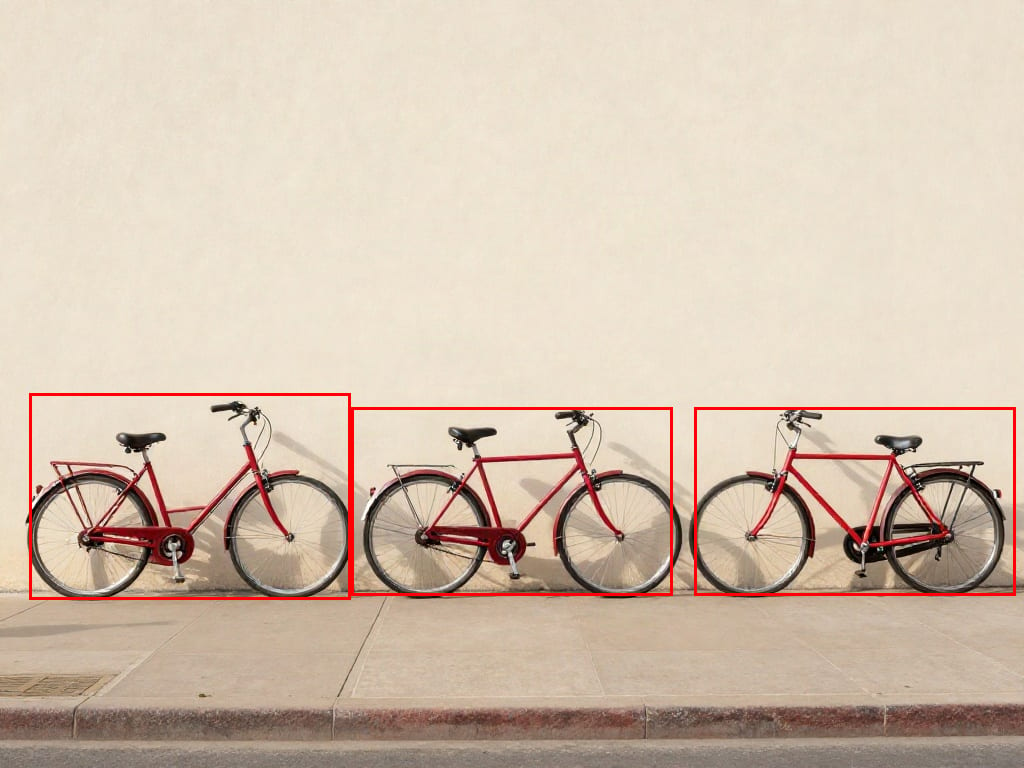
Three straightforward steps to extract bounding boxes, target points, or gaze vectors from your imagery.
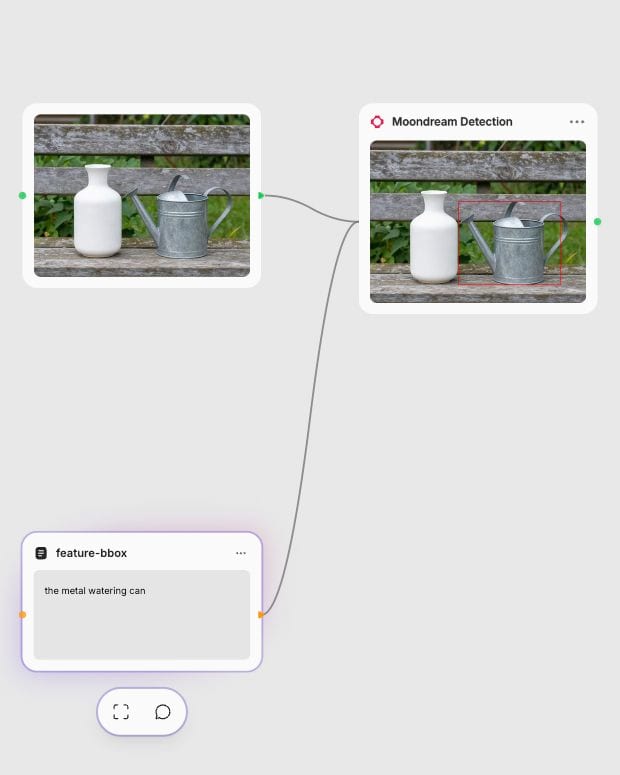
Upload source image
Provide a high-contrast image containing the objects, interfaces, or human subjects you want to localize.
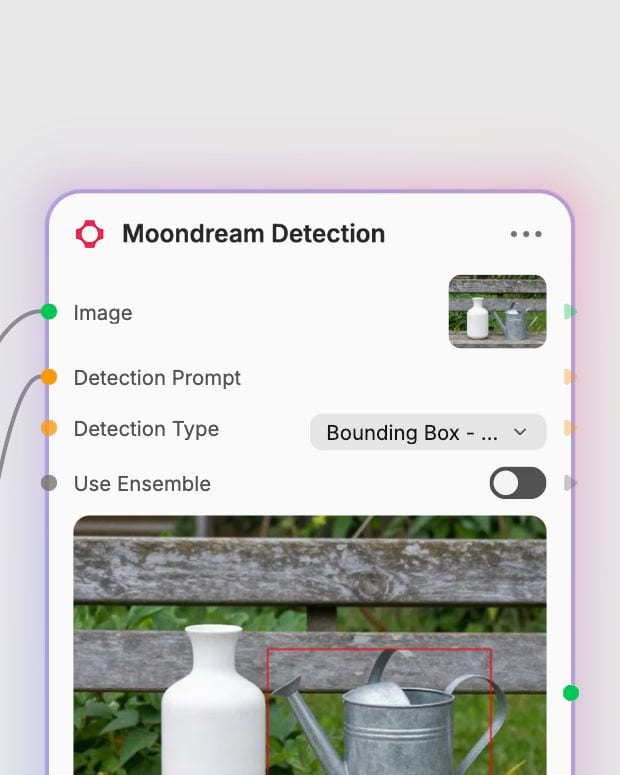
Specify target and mode
Choose between bounding box, point centroid, or gaze detection, and enter a direct descriptive label.

Retrieve spatial coordinates
Receive an annotated visualization with color-coded overlays alongside normalized coordinate data.
Engineered with custom spatial tokenizers to deliver low-latency coordinate extraction and attention tracking.
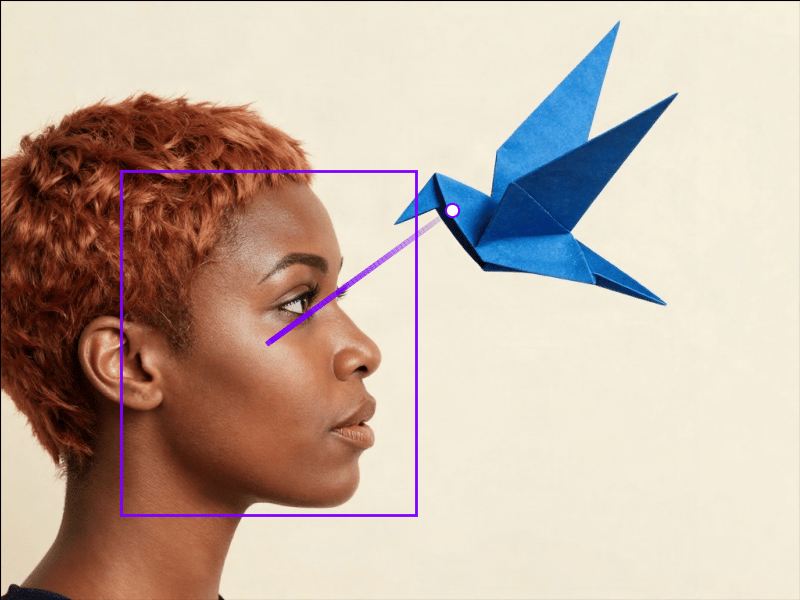
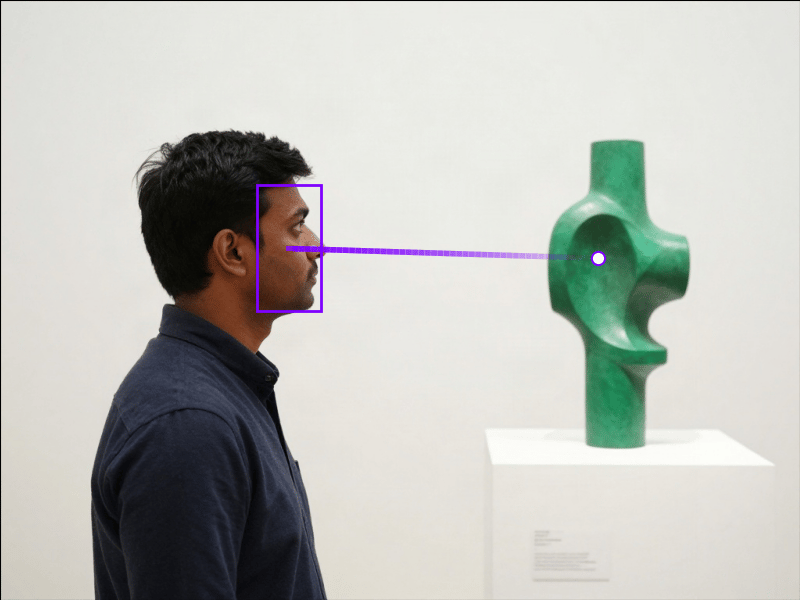
Gaze Direction Tracking
Traces directional vectors from human eyes to identify focus points across visual frames, supported by custom spatial tokenizers.
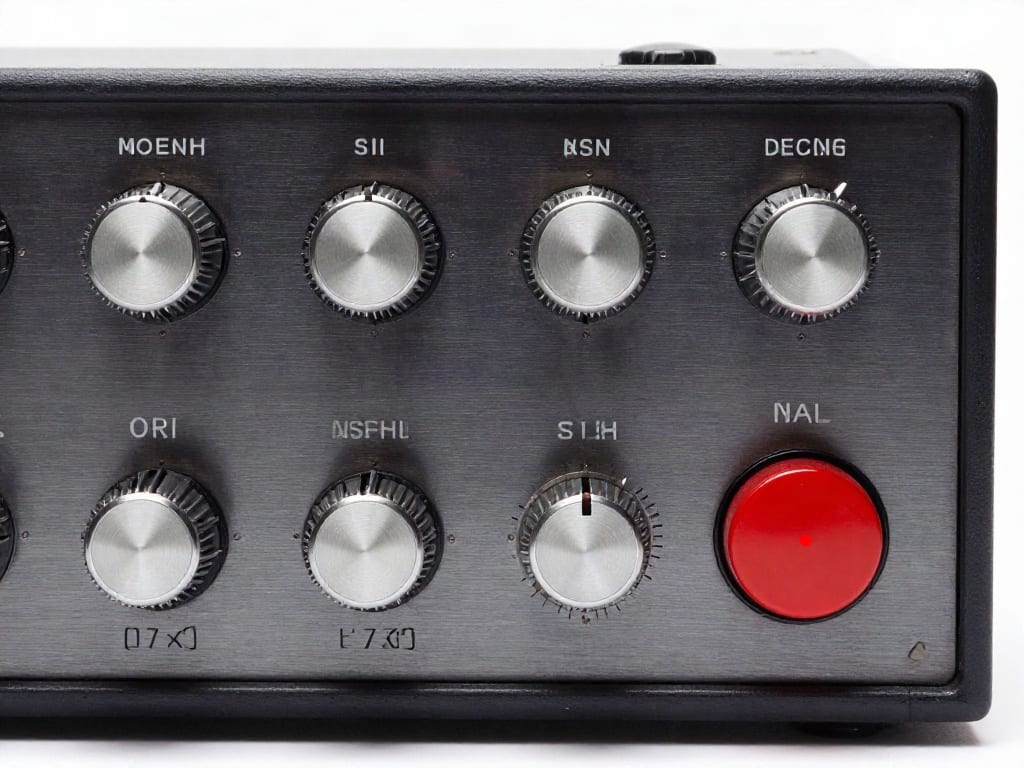
Precise Point Centroids
Identifies exact centroid coordinates and sharp crosshair markers for interface buttons, hardware switches, or small physical artifacts without requiring bounding margins.

Object Boundary Localization
Emits crisp, color-coded boundary boxes fitted to targeted items using specialized coordinate and size tokens without clumsy text generation.
Monte Carlo Ensemble Mode
Averages flipped image encodings and Monte Carlo predictions on complex static compositions when absolute line-of-sight precision is critical.
Spatial overlays, centroid targeting, and line-of-sight vectors generated across high-contrast visual scenes.
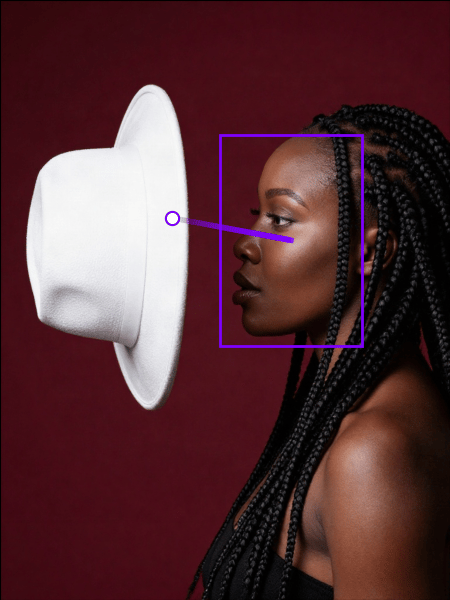
High-fashion gaze vector tracking

Architectural centroid and bounding box detection

Sporting equipment point localization
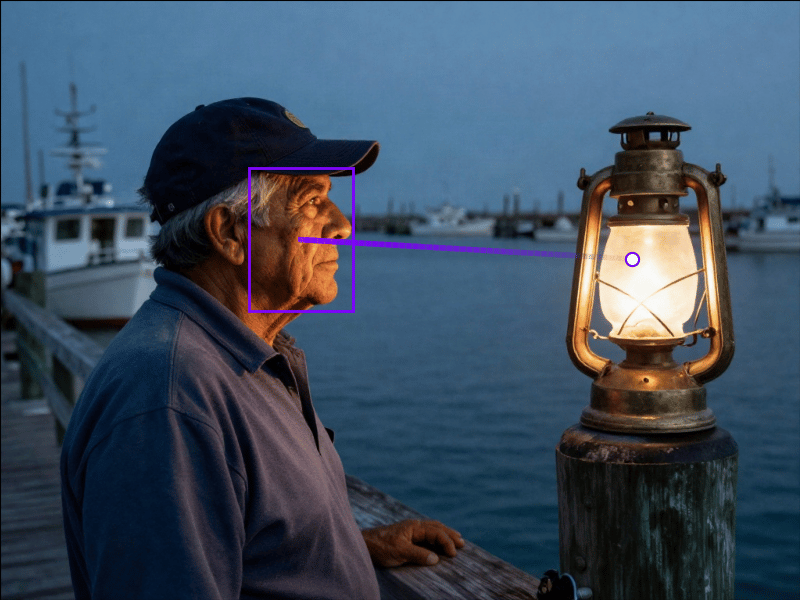
Documentary gaze analysis
Built for engineers and researchers who require fast spatial parsing without the overhead of heavy vision-language models.
MoondreamNext is the experimental release branch of the Moondream small vision-language model, introducing dedicated gaze tracking and refined spatial point detection alongside standard bounding boxes.
Moondream Detection performs three primary spatial vision tasks: rectangular object localization (bbox_detection), centroid coordinate pinpointing (point_detection), and human eye-gaze vector tracking (gaze_detection).
Enable use_ensemble only for static, complex images where extreme gaze accuracy is necessary. Turning on ensemble mode performs flipped image encodings and Monte Carlo predictions to refine coordinate estimations, which increases precision while compounding inference latency.
Moondream is not built for pixel-level semantic segmentation masks, dense scenes containing hundreds of tiny objects, high-resolution document OCR, or multi-turn conversational reasoning.
Moondream was created by Vikhyat Korrapati (Moondream/M87 Labs) as an ultra-efficient small vision-language model designed for low-latency spatial understanding on resource-constrained hardware.
Pinpoint bounding boxes, track human gaze vectors, and localize interface elements with instant spatial vision