One click, whole workflow
Recipes are here. Package a whole workflow and run it in one click
Explore recipesOne click, whole workflow
Recipes are here. Package a whole workflow and run it in one click
Explore recipesbyIntel Labs
Extract high-precision metric depth maps with crisp spatial boundaries and linear distance scaling for 3D displacement and ControlNet workflows
From standard photograph to metric depth map in three frictionless steps.
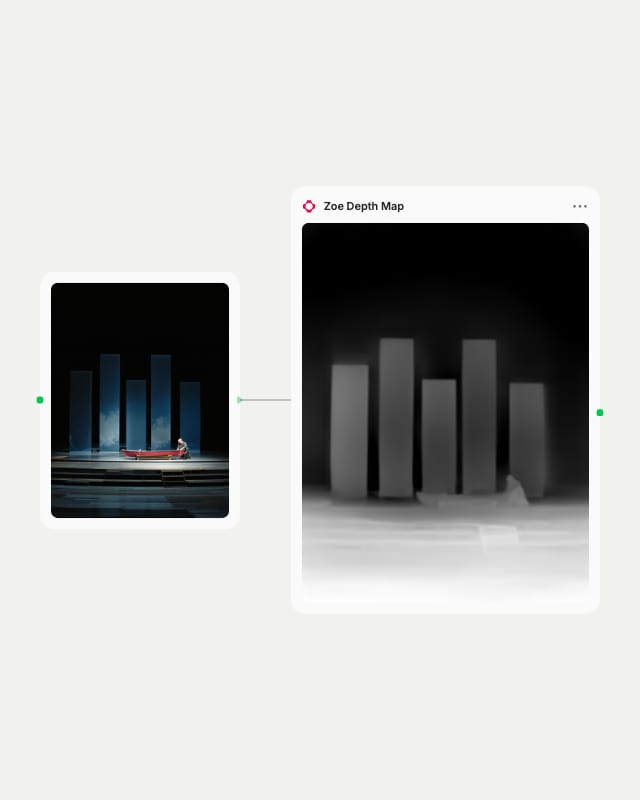
Upload source image
Select an input photograph with defined spatial depth, layered subjects, or architectural perspective.
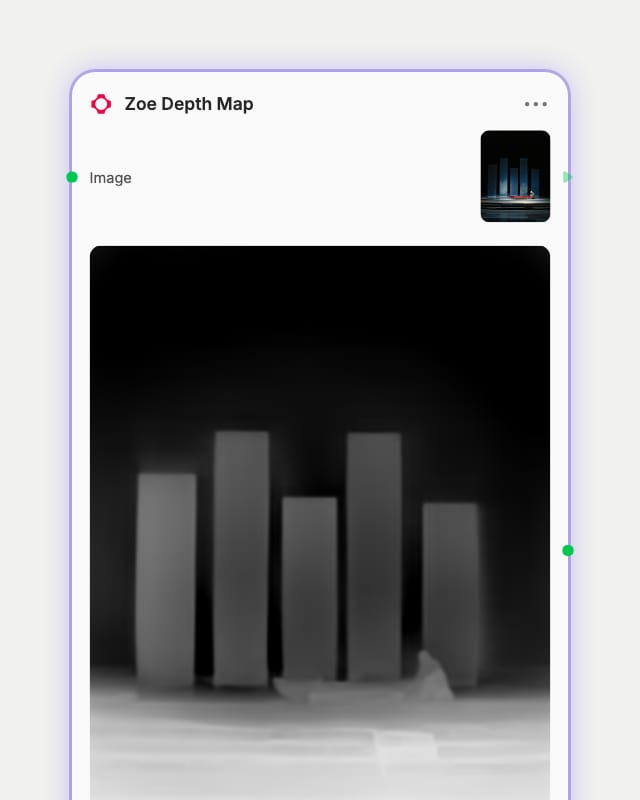
Process metric depth
The transformer backbone dynamically routes indoor and outdoor cues to compute millimeter-accurate linear distance.
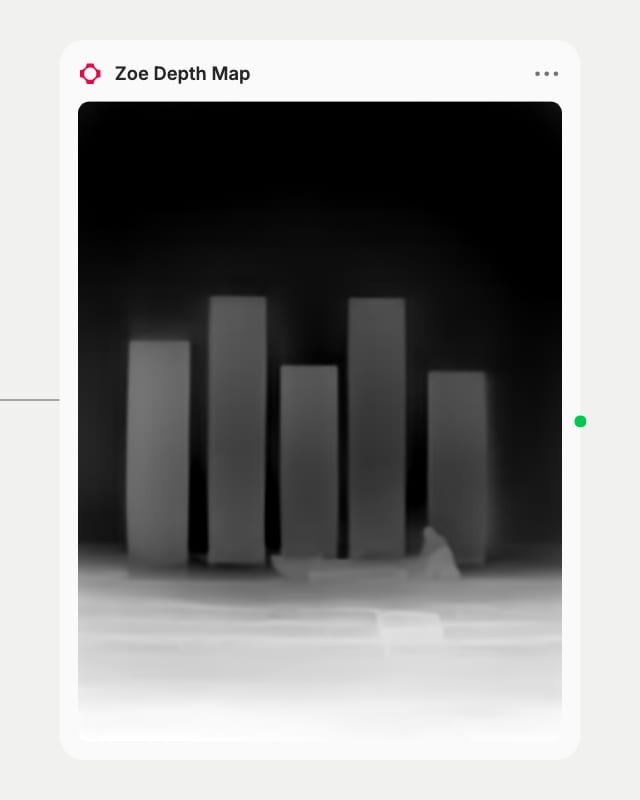
Export depth pass
Download the high-contrast depth map for ControlNet conditioning, 3D mesh displacement, or spatial VFX.
Explore how hybrid relative-metric estimation and automated scene routing deliver unrivaled spatial fidelity.
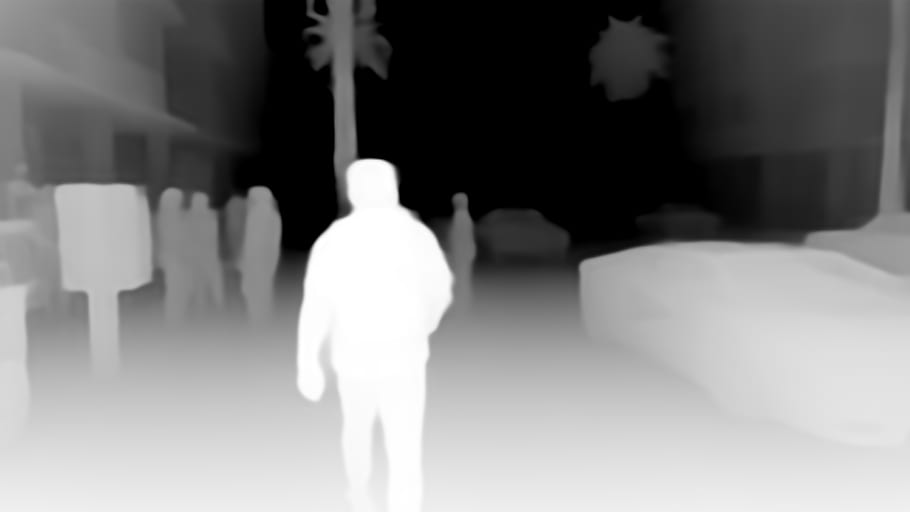
Relative and Metric Fusion
Combines metric distance accuracy with relative depth generalization, preserving true physical proportions across layered spatial planes without geometric distortion.
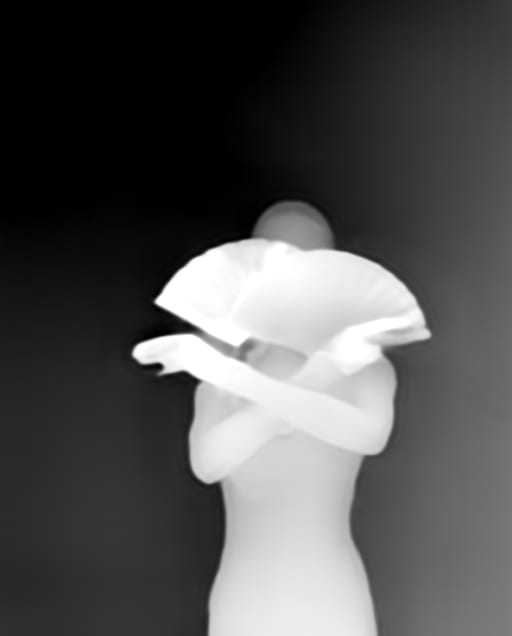
Complex Overlap Resolution
Isolates tightly overlapping foreground elements such as crossed arms, splayed fingers, and layered props with razor-sharp volumetric boundaries.
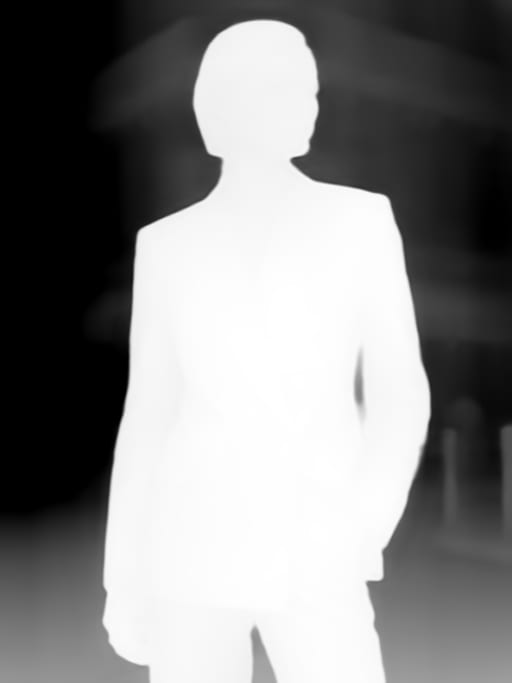
Intelligent Scene Routing
Automatically routes inputs to dedicated indoor (NYU Depth v2) or outdoor (KITTI) metric heads based on latent scene classification without manual intervention.
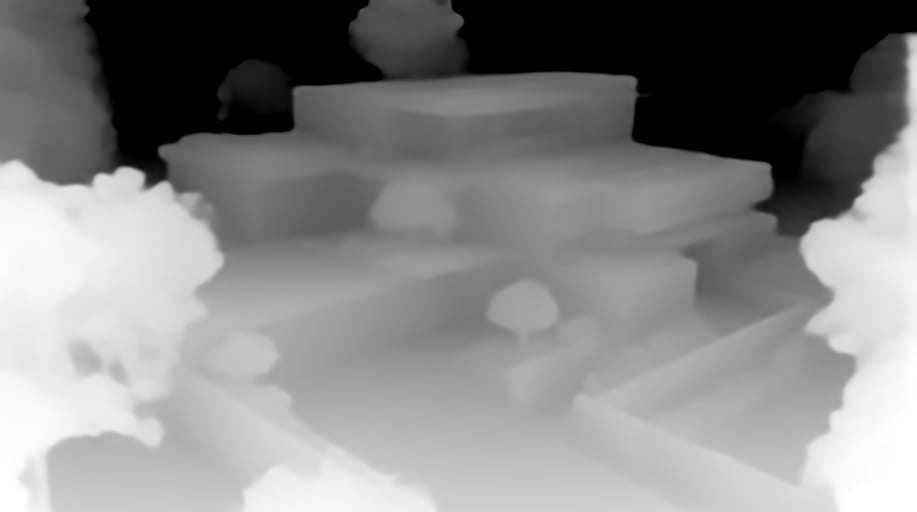
3D Displacement Precision
Generates high-contrast linear grayscale depth values that map distance directly to physical height fields for Blender, Unreal Engine, and Maya.
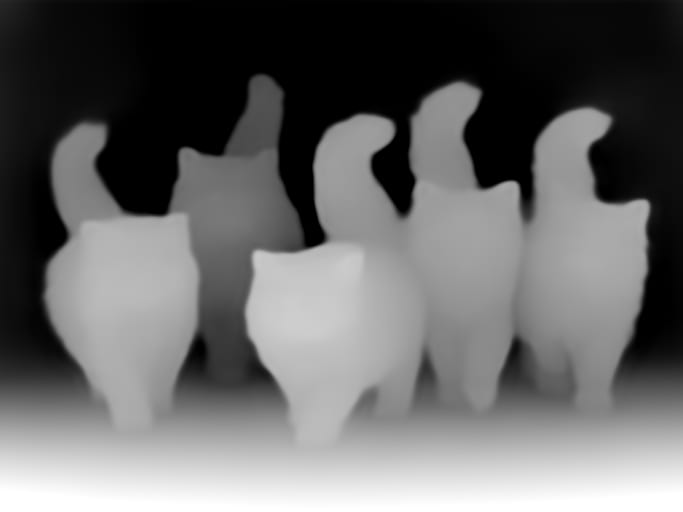
A visual gallery demonstrating crisp geometric plane isolation, complex limb depth resolution, and surface displacement across diverse subjects.
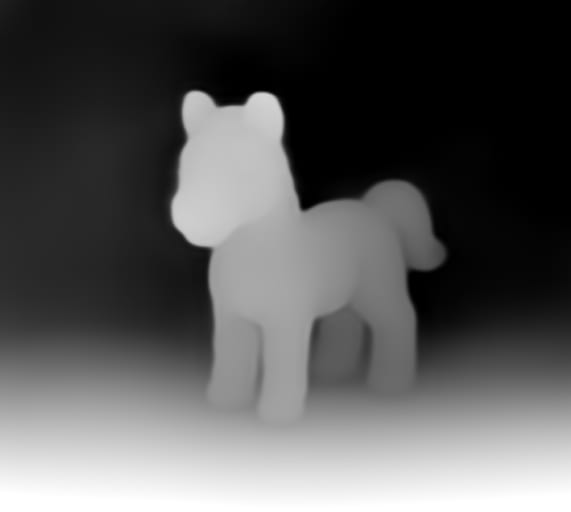
Granular grayscale depth data ready for complex objects and scenes
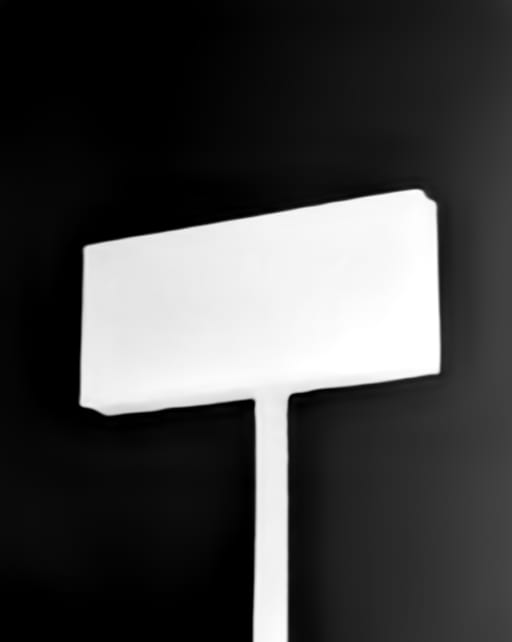
Distance-accurate depth plates ready for 3D generation
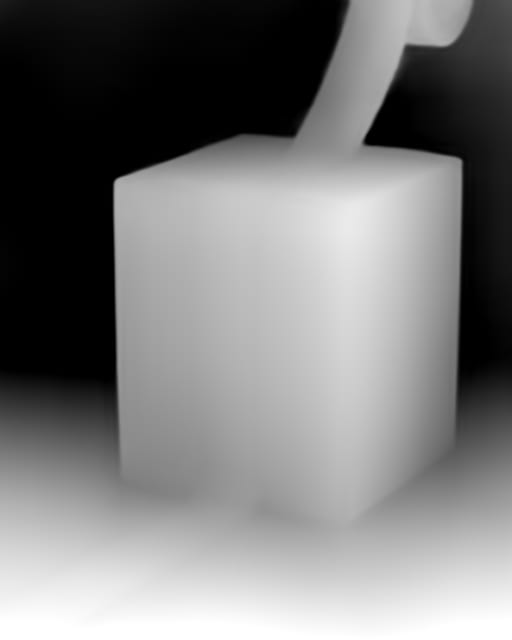
Multiple object interaction and scene depth mapping
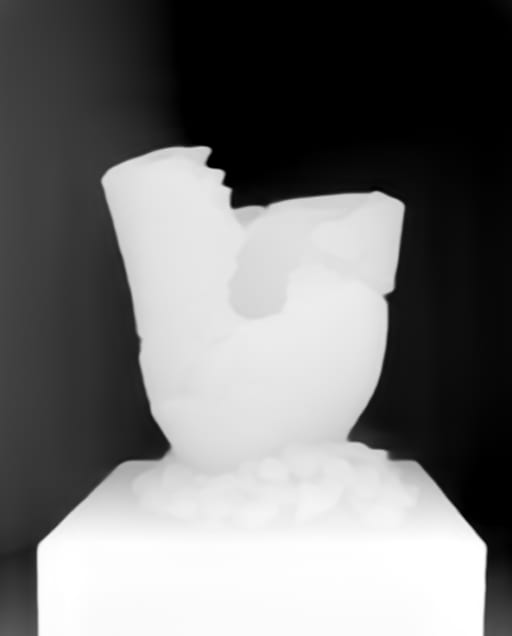
Fractured ceramic sculpture with tactile surface detail
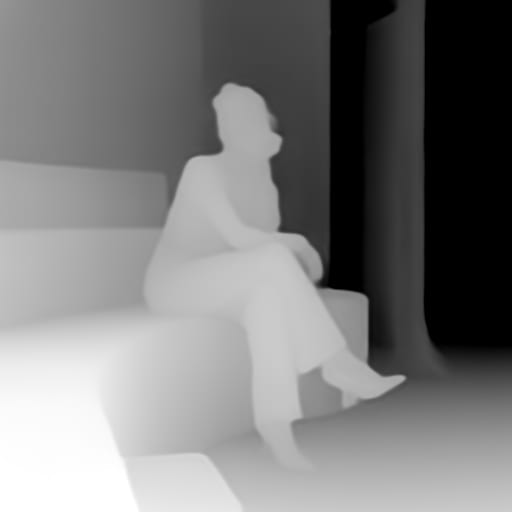
Seated figure lifted cleanly off the steps behind her
See how 3D generalists, VFX compositors, and AI creators harness metric depth for precise spatial conditioning.
Yes, Zoe is the common shorthand for ZoeDepth (Zero-shot Transfer by Combining Relative and Metric Depth), a monocular depth estimation architecture developed by Intel Labs and KAUST.
ZoeDepth fuses metric depth estimation with relative depth generalization. Unlike older preprocessors that generate soft, ambiguous depth blobs, ZoeDepth dynamically routes images to indoor or outdoor metric heads to compute linear, physically accurate distance values along the Z-axis.
ZoeDepth is ideal for images with distinct foreground-to-background separation, deep interior or exterior architectural perspective, and complex overlapping limbs or hands. It is widely used to create 3D displacement maps in software like Blender and precise ControlNet reference guides.
Avoid ZoeDepth on flat 2D illustrations, unshaded vector graphics, and extreme fish-eye lens photos, as these lack the perspective cues required for metric depth prediction. For simple background segmentation or high-speed processing, lighter alternatives like LeReS are better suited.
ZoeDepth was created by researchers at Intel Labs and KAUST and initially released in February 2023. It introduced a Dense Prediction Transformer architecture with a BEiT backbone and metric bins module for zero-shot metric depth transfer.
Extract high-precision metric depth maps with crisp spatial boundaries and linear distance scaling for 3D displacement and ControlNet workflows