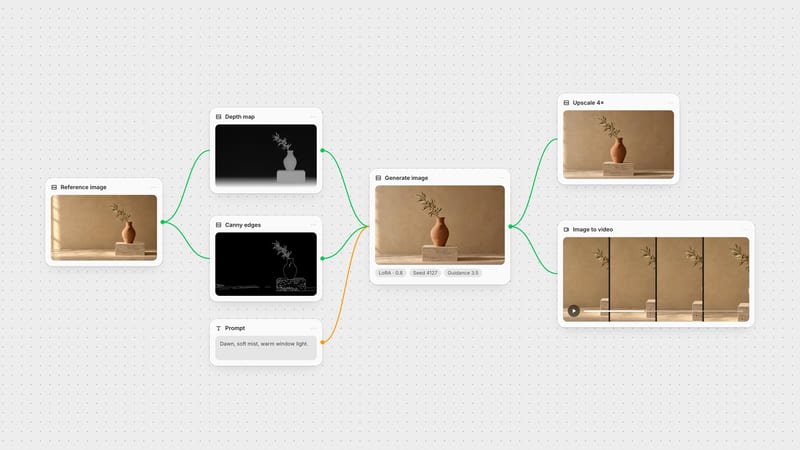
One click, whole workflow
Recipes are here. Package a whole workflow and run it in one click
Explore recipesOne click, whole workflow
Recipes are here. Package a whole workflow and run it in one click
Explore recipesbyMicrosoft
Literal, spatially grounded image captions and dense training annotations at high speed
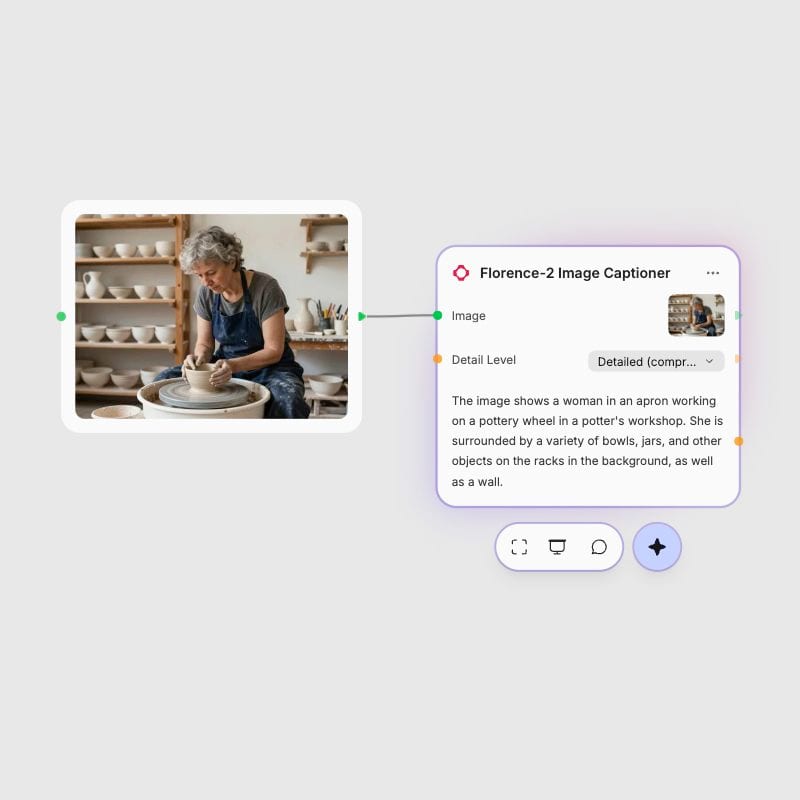
From single-subject labels to granular scene descriptions, configure detail levels to match your indexing or training pipeline.
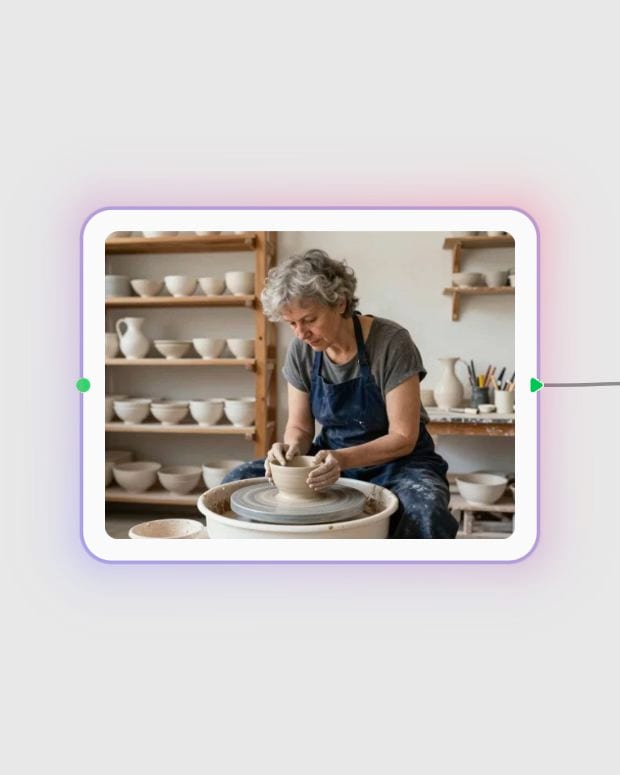
Submit your image
Provide a photographic image URL for scene parsing and cataloging.
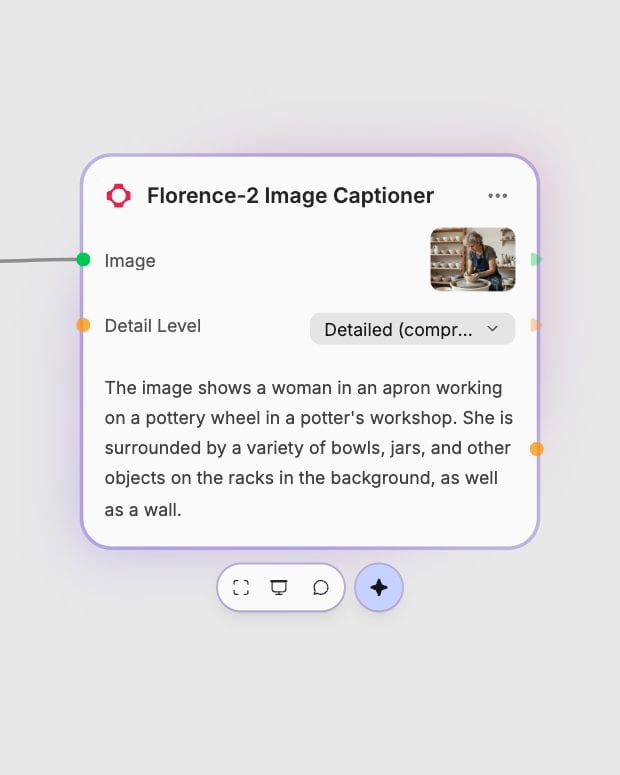
Select detail level
Choose basic subject tags, detailed spatial context, or granular multi-sentence descriptions.
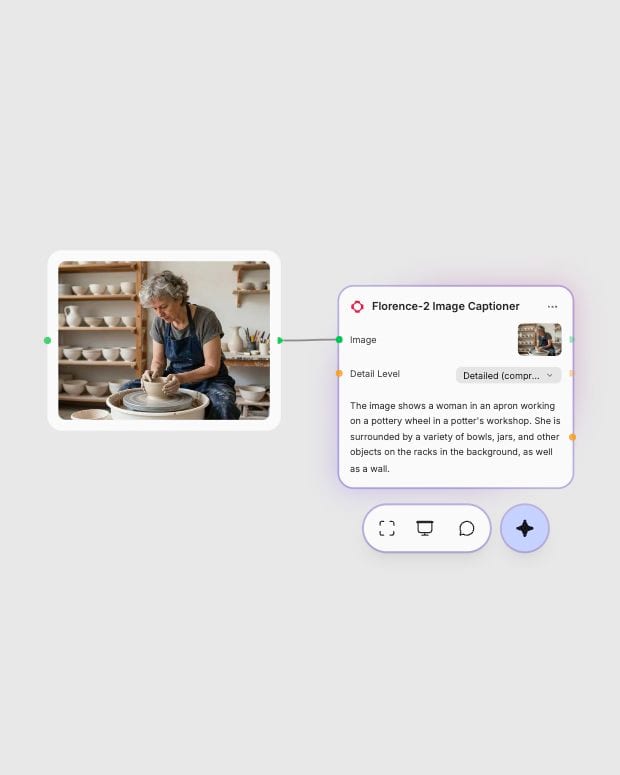
Extract structured captions
Receive objective, literal visual descriptions formatted for LoRA training datasets or indexing.
Engineered for objective visual parsing, rapid inference, and dense spatial grounding across large image collections.
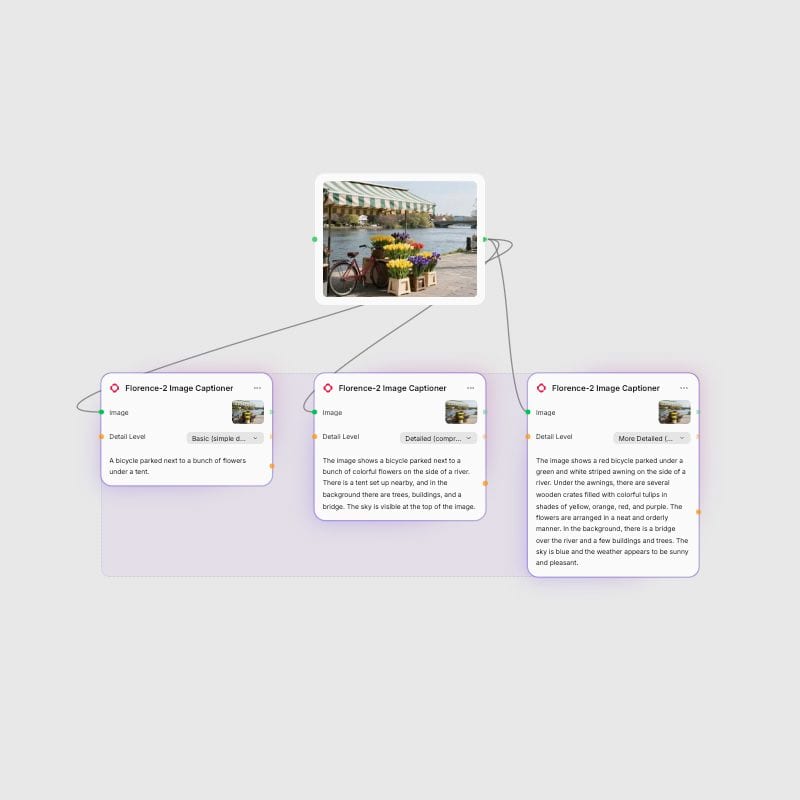
Multi-tiered caption depth
Switch between single-sentence subject summaries, balanced environmental descriptions, and exhaustive multi-sentence scene analyses grounded in the model's specialized endpoints.
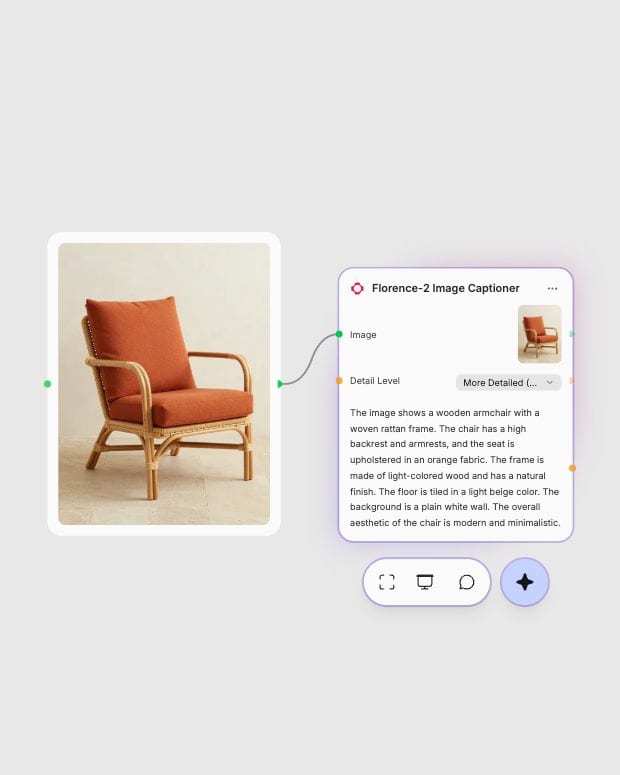
LoRA dataset synthetic annotation
Synthesize dense, hallucination-resistant texture and object catalogs engineered specifically for training generative image architectures like FLUX and SDXL.
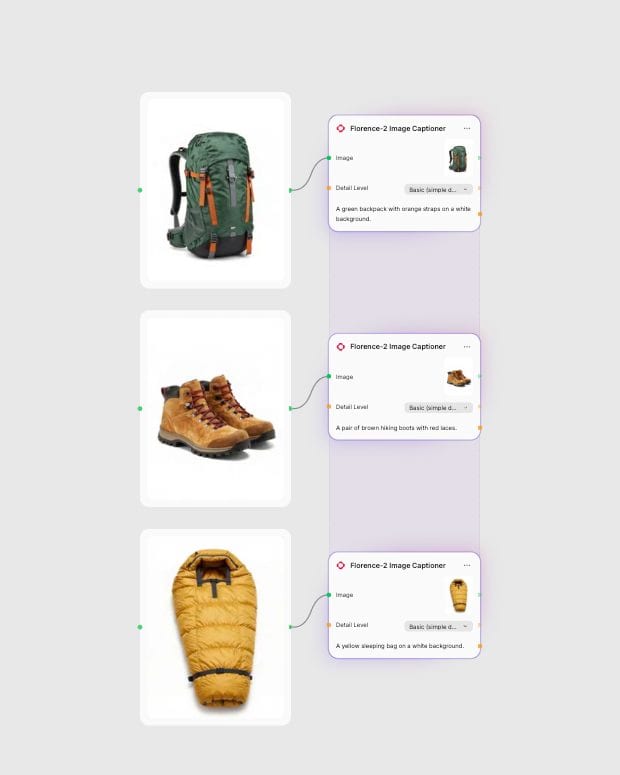
High-throughput batch processing
Execute high-speed visual analysis across massive image batches with a uniform, lightweight compute footprint designed for automated asset pipelines.
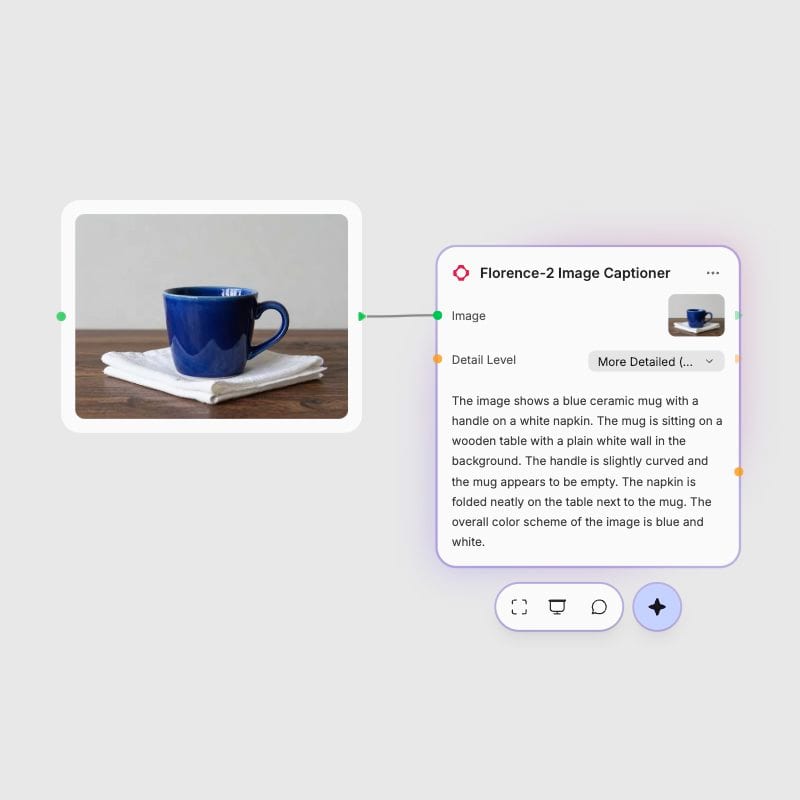
Spatial and texture grounding
Deconstruct photographic scenes into tangible objects, material surfaces, spatial orientations, and exact color palettes with literal precision.
Explore how structured visual captioning translates real-world photographs into precise natural-language annotations.
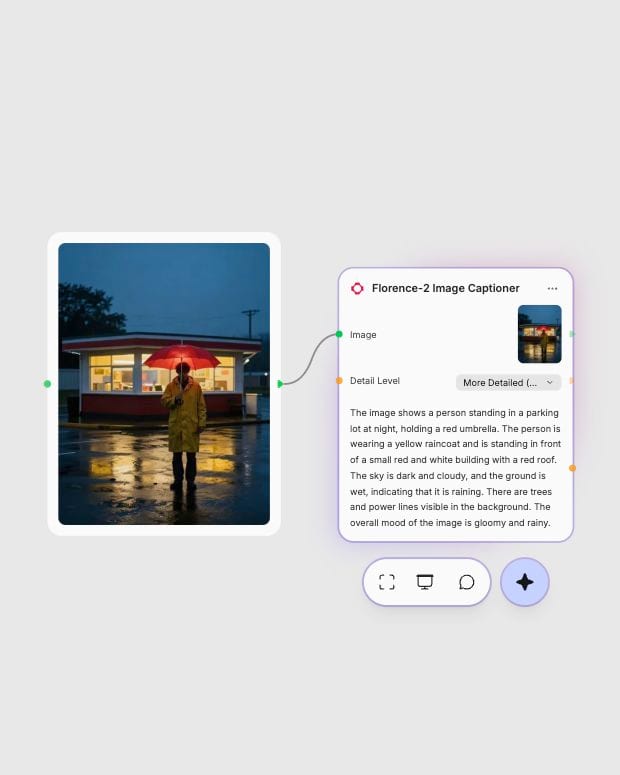
Atmospheric cinematic scene analysis
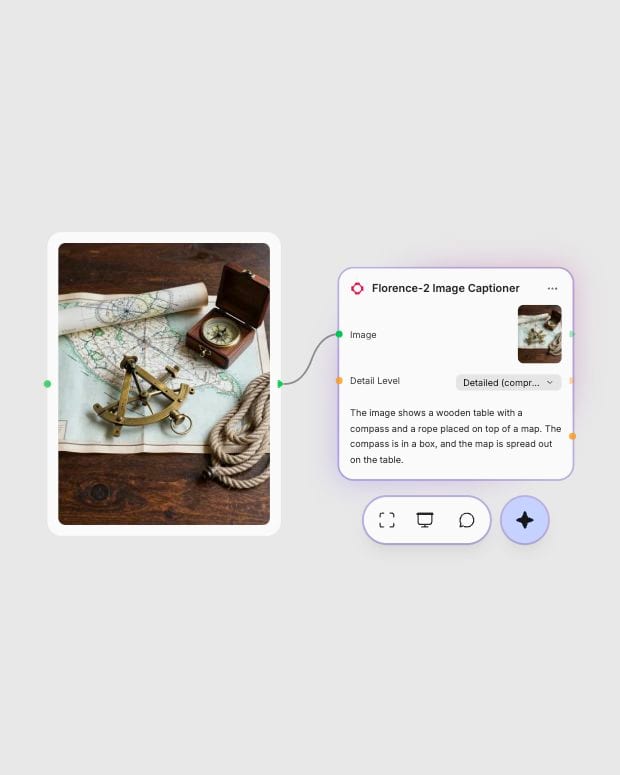
Archival documentation and artifact inventory
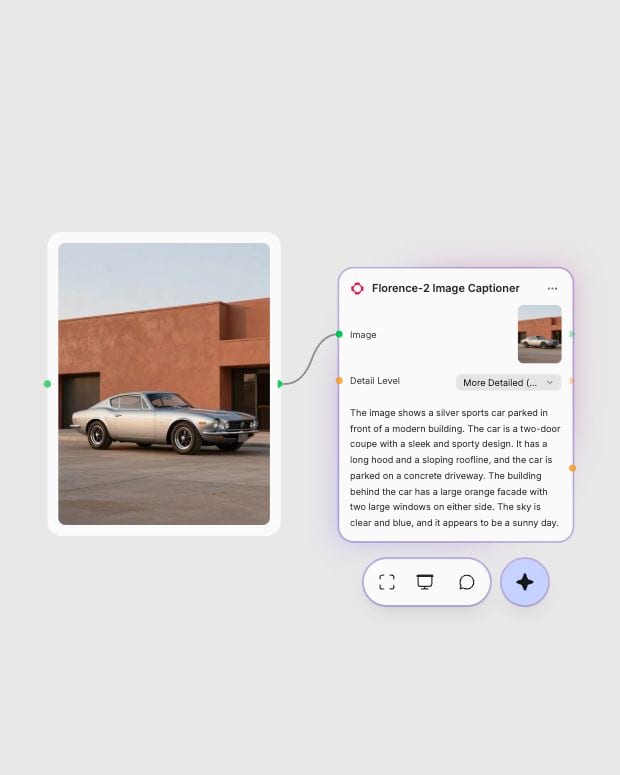
Automotive advertising cataloging
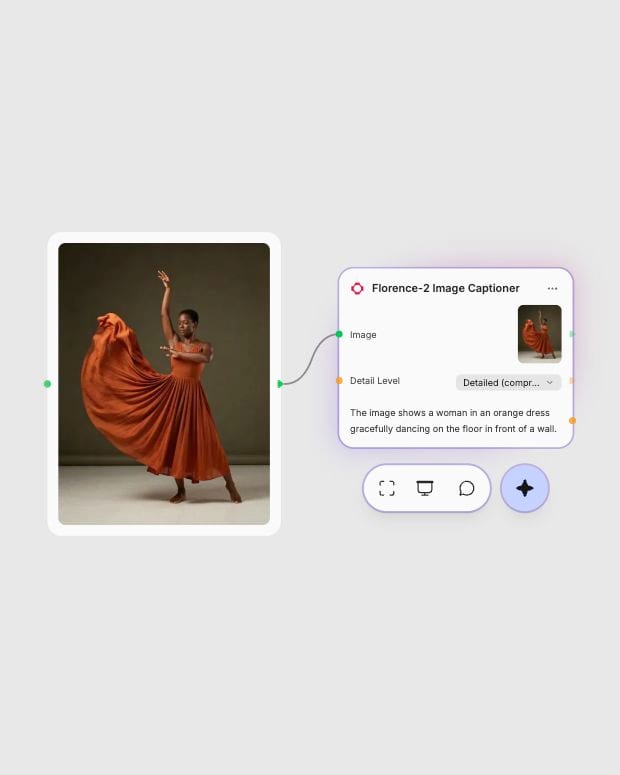
High-fashion movement and fabric breakdown
Built for machine learning researchers, catalog engineers, and accessibility teams needing fast, literal image descriptions.
The basic caption variant generates a concise, single-sentence summary identifying only the primary subject, making it ideal for high-speed indexing and basic alt-text. The detailed caption variant expands on this by incorporating spatial context and immediate environmental relationships while maintaining a compact single-sentence structure.
Select the more-detailed caption variant when you need dense, multi-sentence synthetic annotations for generative model training datasets like FLUX or SDXL LoRAs. It performs an exhaustive cataloging of background elements, surface textures, and fine spatial arrangements, whereas the standard detailed variant focuses primarily on foreground spatial relationships.
Florence-2 excels at photorealistic scene analysis, accessibility alt-text generation, large-scale search indexing, and automated LoRA dataset captioning. It is less suited for open-ended conversational visual reasoning, complex stylized 2D illustrations, anime aesthetic tagging, or transcribing stylized handwritten text.
Florence-2 was developed by Microsoft and released open-source in June 2024. Despite its compact footprint of 0.77 billion parameters, it leverages a sequence-to-sequence transformer architecture combining a DaViT vision encoder with a BART text decoder trained on the FLD-5B dataset containing 5.4 billion visual annotations.
All captioning variants—basic, detailed, and more-detailed—operate at a flat compute cost of 3.5 per execution, providing an economical solution for massive dataset processing and automated asset tagging.
Literal, spatially grounded image captions and dense training annotations at high speed