One click, whole workflow
Recipes are here. Package a whole workflow and run it in one click
Explore recipesOne click, whole workflow
Recipes are here. Package a whole workflow and run it in one click
Explore recipesbyBlack Forest Labs
Change one thing in plain language and the rest of the frame stays exactly as you shot it, with light, grain and palette intact
Start from a photo you already have, or from nothing. Describe the change like you would to a retoucher, attach references if you need them, and choose how much polish the render deserves.
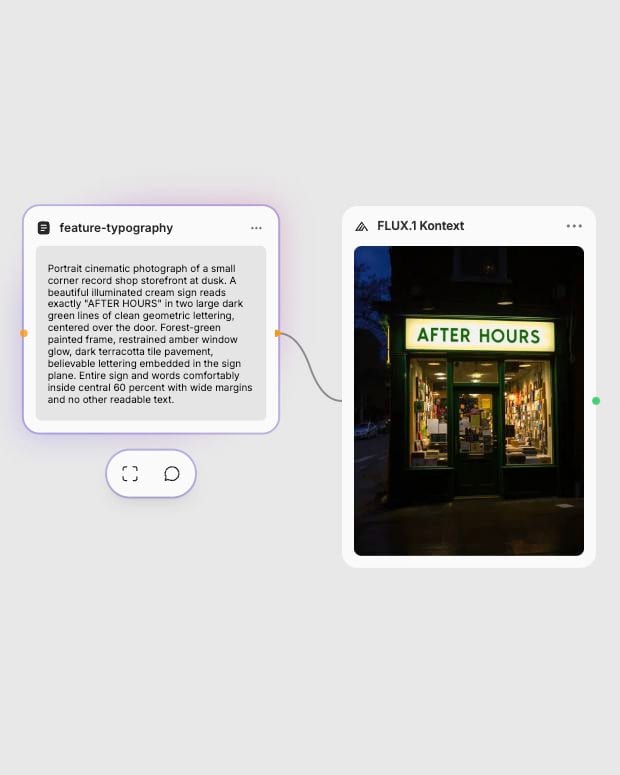
Write the edit as an instruction
Name the action, the target, the result and what must stay put, such as 'only change the jacket; background unchanged'.
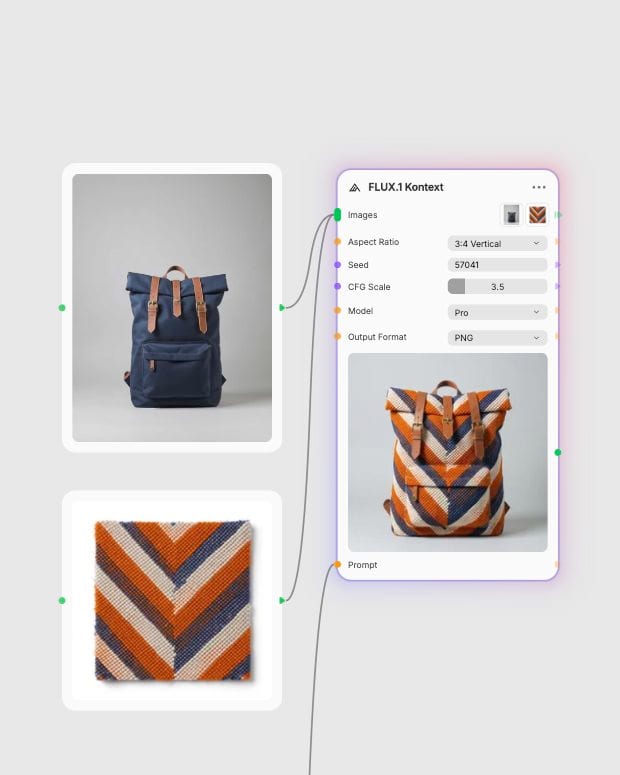
Attach one to four references
Drop in a source image to edit, or up to four to merge, and refer to each by description like 'the jacket from the second image'.
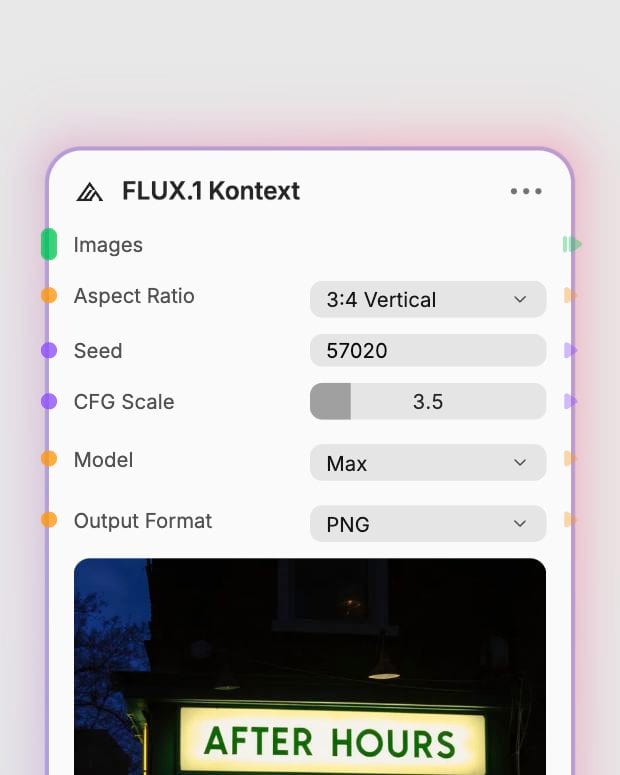
Pick Pro or Max and render
Iterate fast in Pro, then rerun the winning seed and prompt in Max for sharper lettering and tighter consistency.
Built around minimal drift: identity, pose, framing and untouched objects survive each edit, with lighting-aware blending and in-image text handled by the Max tier.
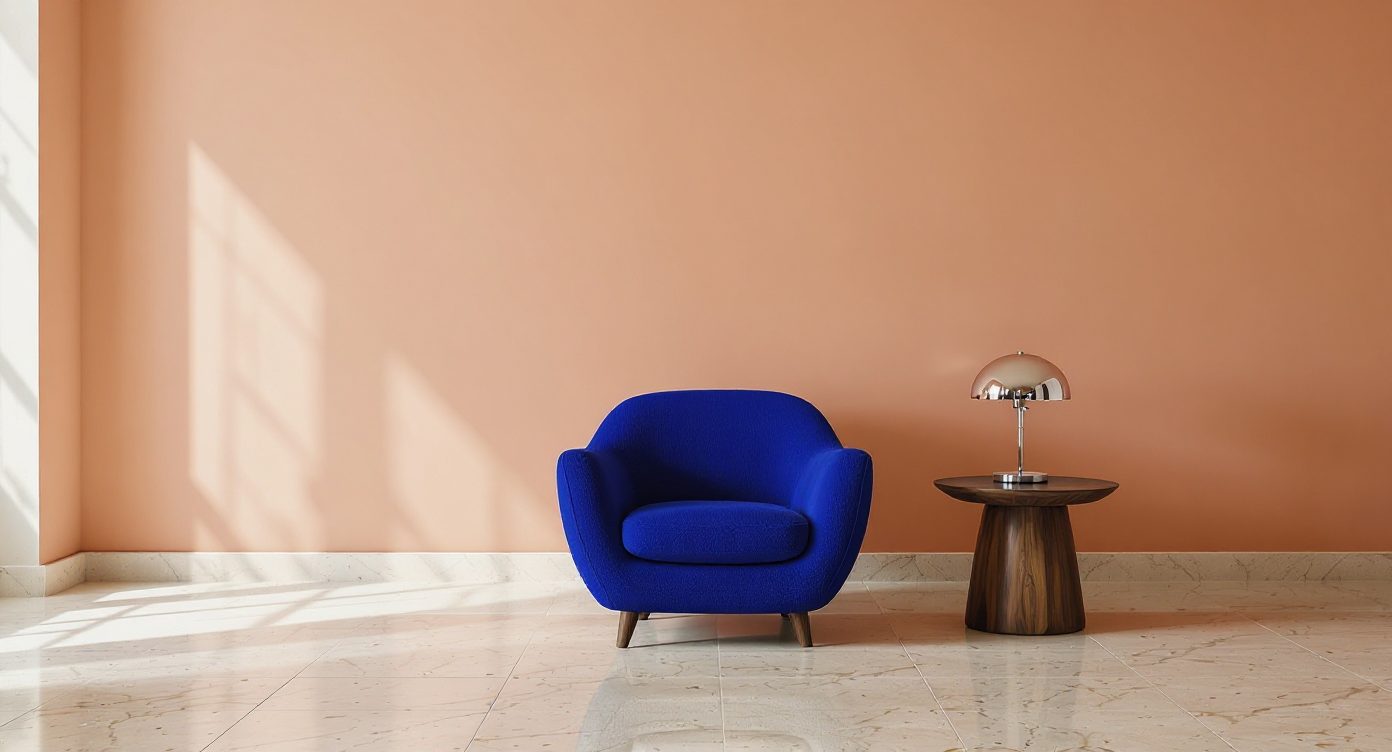
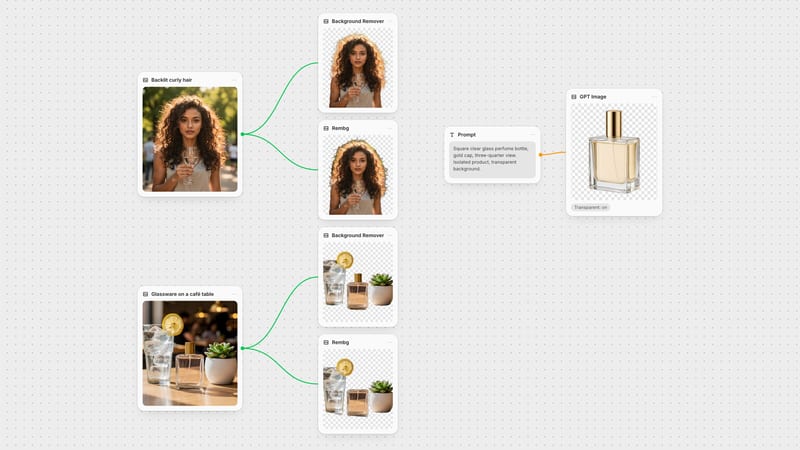
Mask-free local edits
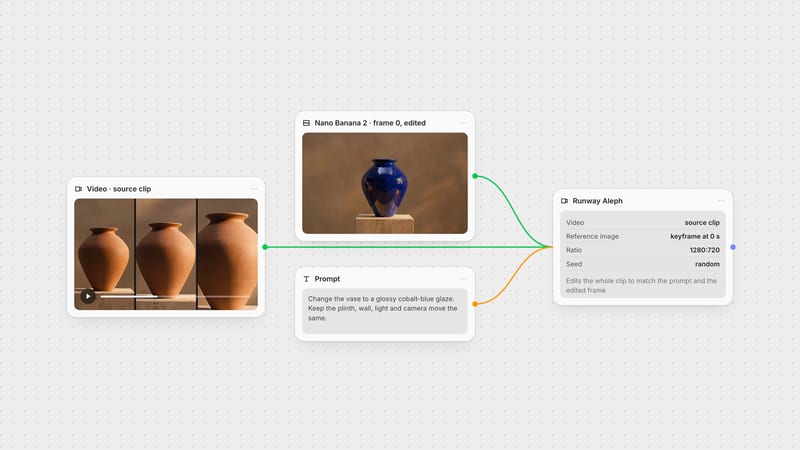
Swap a color, remove an object or relight a scene with one sentence. Shadows and reflections adjust to the change while framing and everything else survive. Pro is the fast default tier for this iteration work.
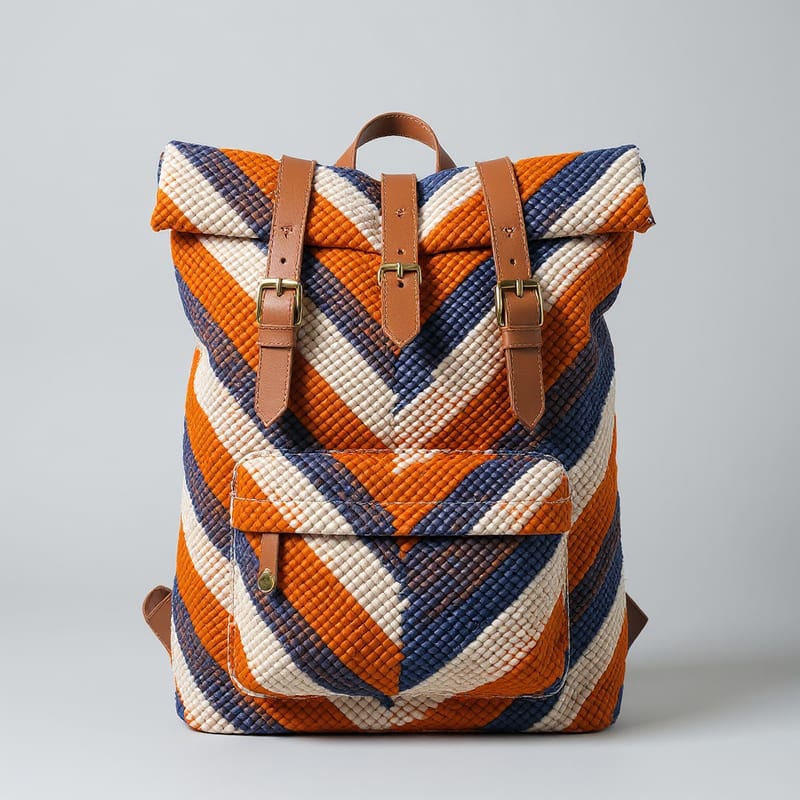
Four-reference compositing
Merge people, products and settings from up to four images into one scene. Assign each reference a role in the prompt, since conflicting references can cost likeness. Max Multi suits final deliverables once the composition is confirmed.
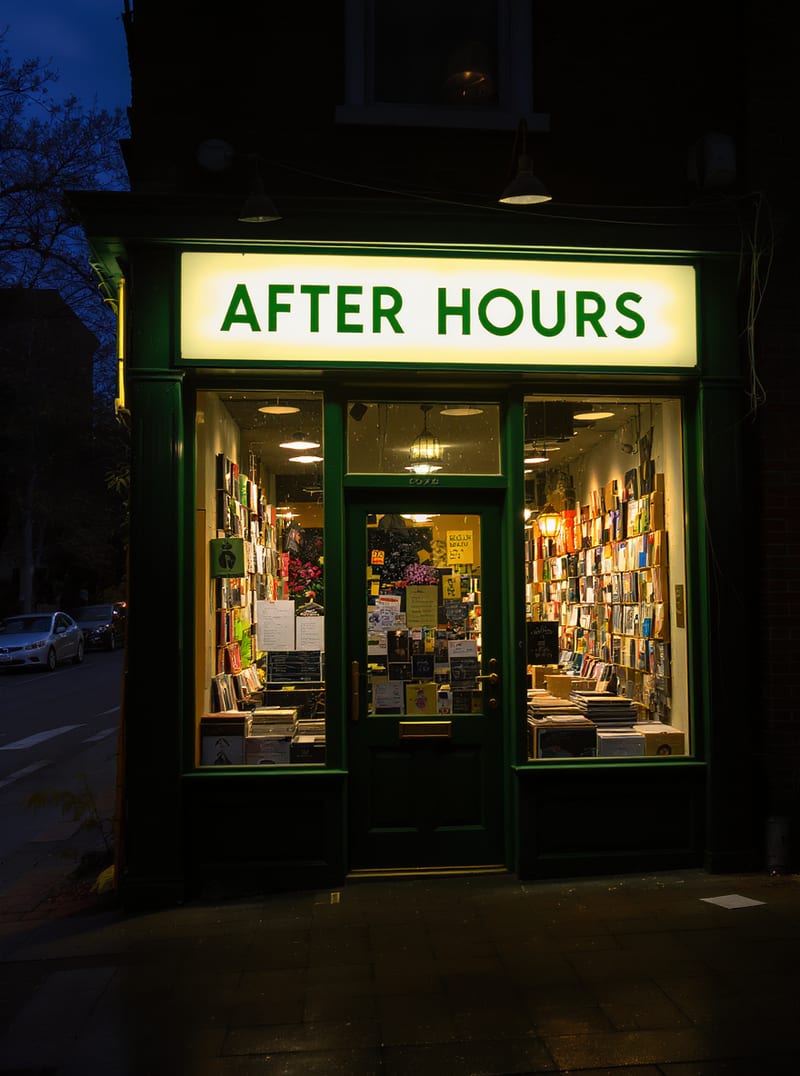
Lettering that survives edits
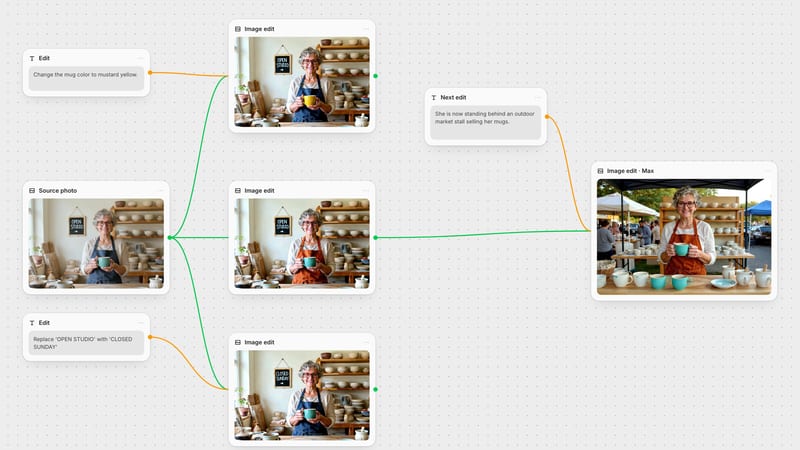
Quote the new words and name the font and color to replace text on signs, posters and packaging. Max is the tier built for this, at about double Pro's cost (110.3 vs 55.2). Keep strings short; long paragraphs stay unreliable.
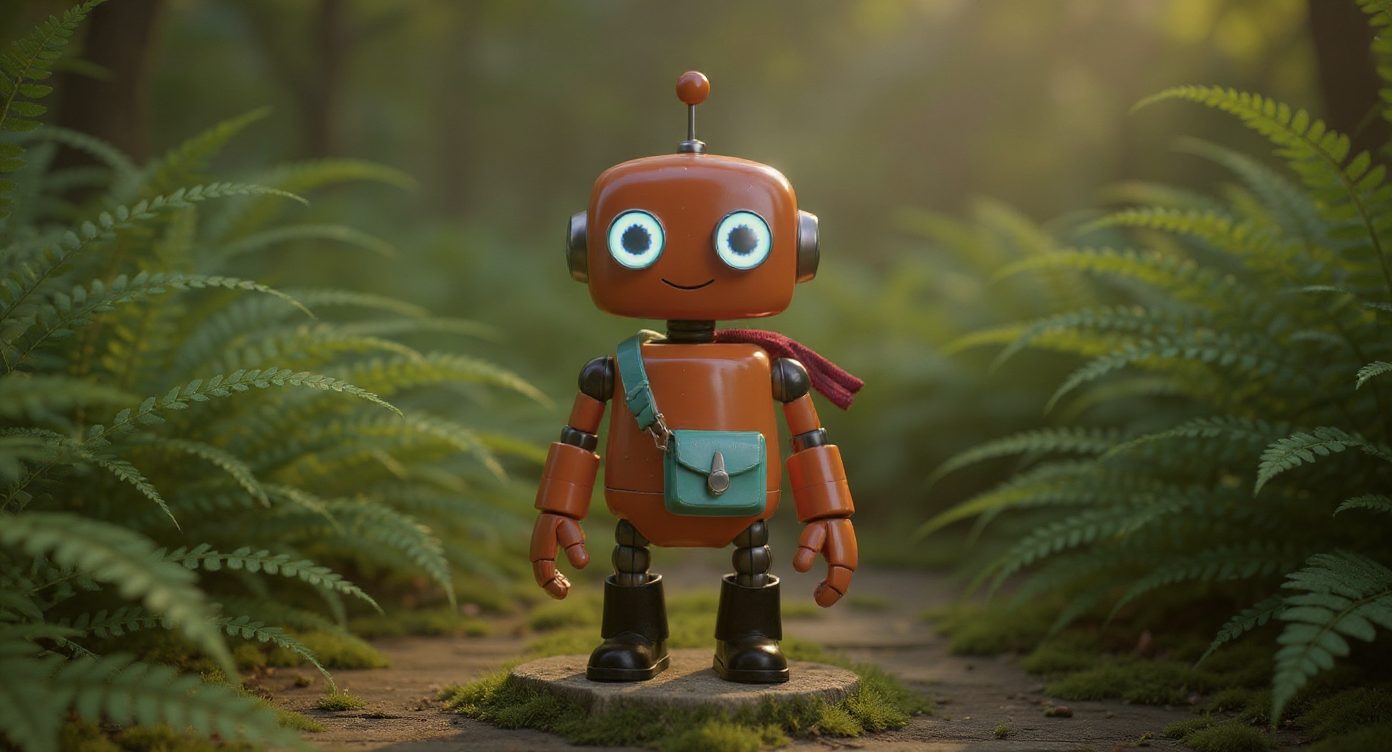
Same character, next scene
Change the outfit, then the background, then the time of day, and identity holds. Feed the original image into each new edit rather than chaining many outputs, since softness builds after about five or six passes.
A gallery spanning fashion, product design, music video, record sleeves and advertising, all in a clean photographic finish that takes on whatever medium the prompt names.
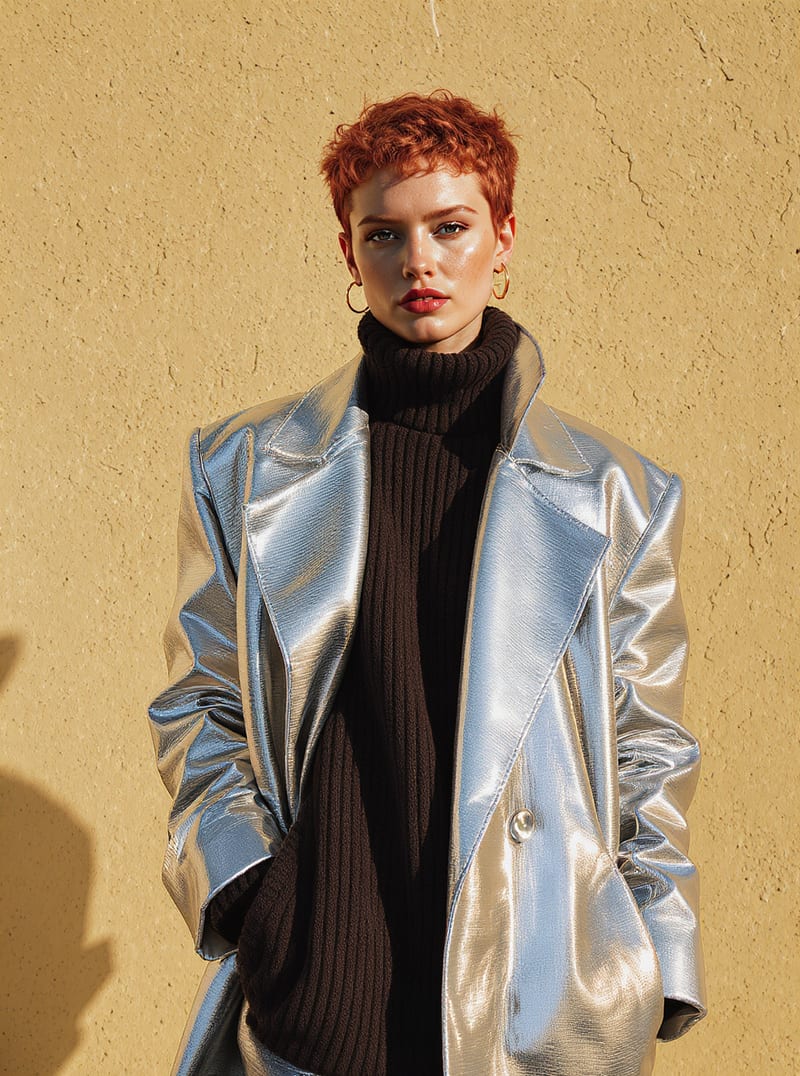
Editorial fashion portrait with material juxtaposition
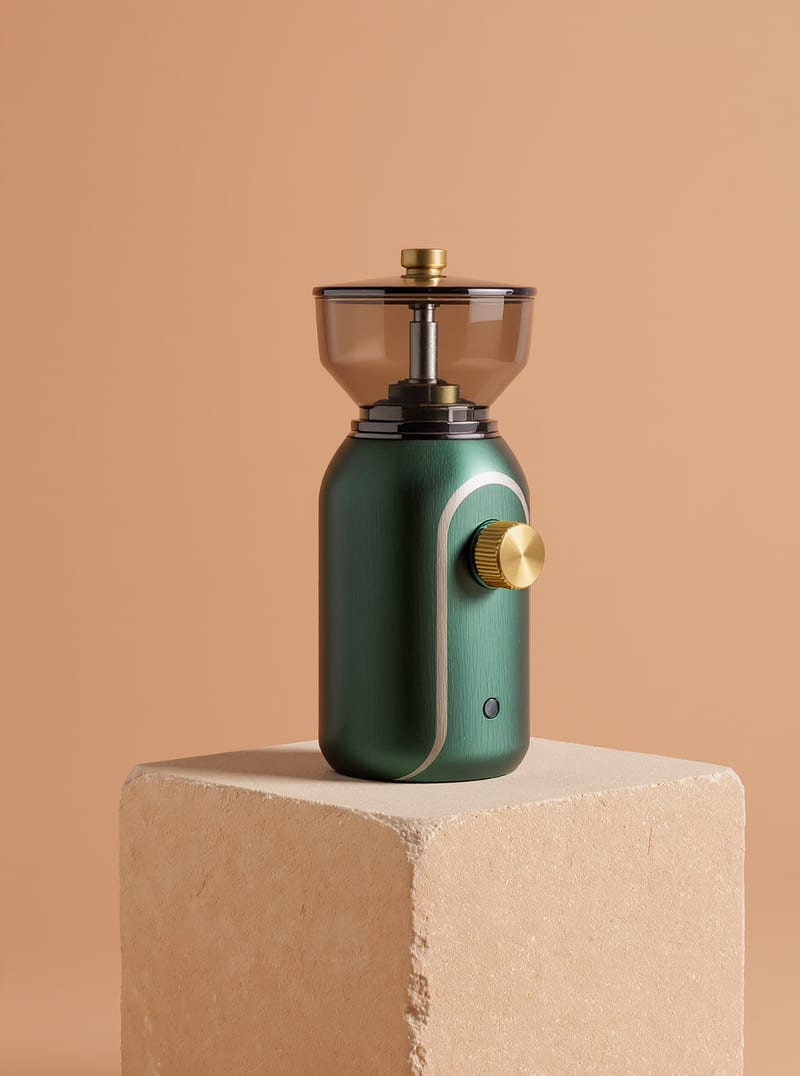
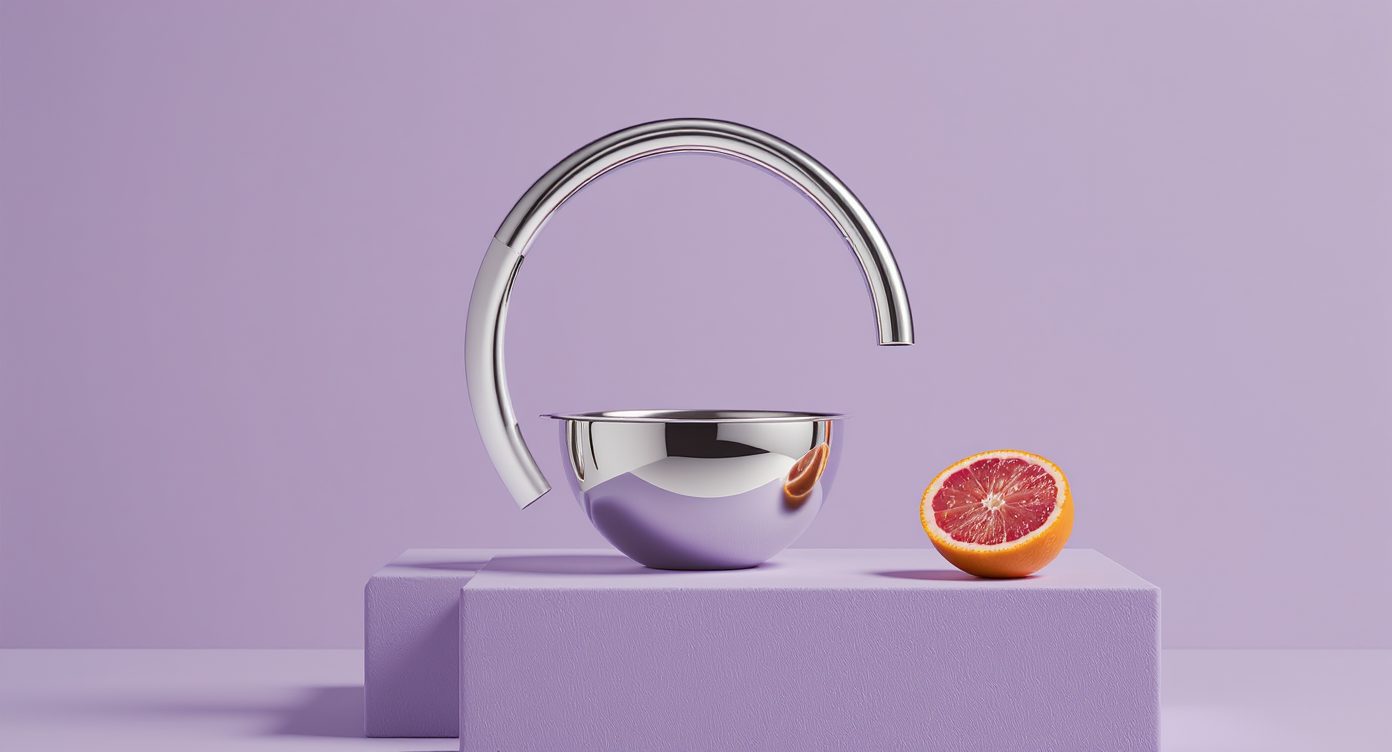
Industrial product design hero frame
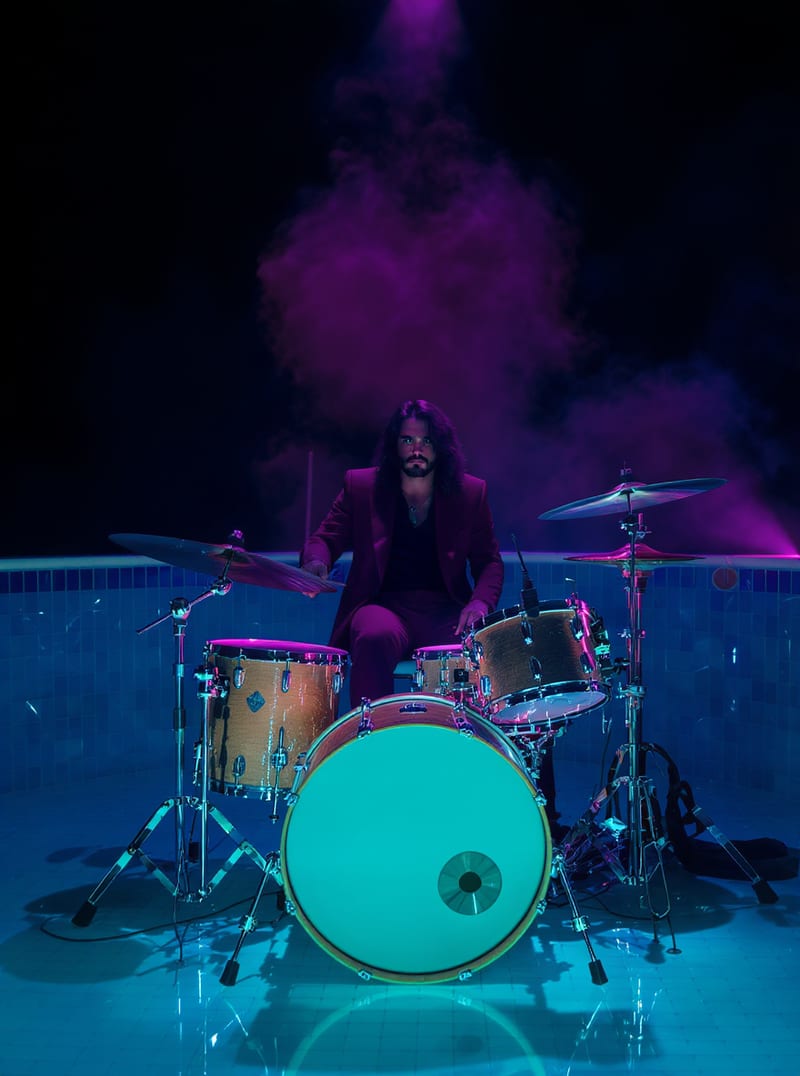
Cinematic music-video keyframe
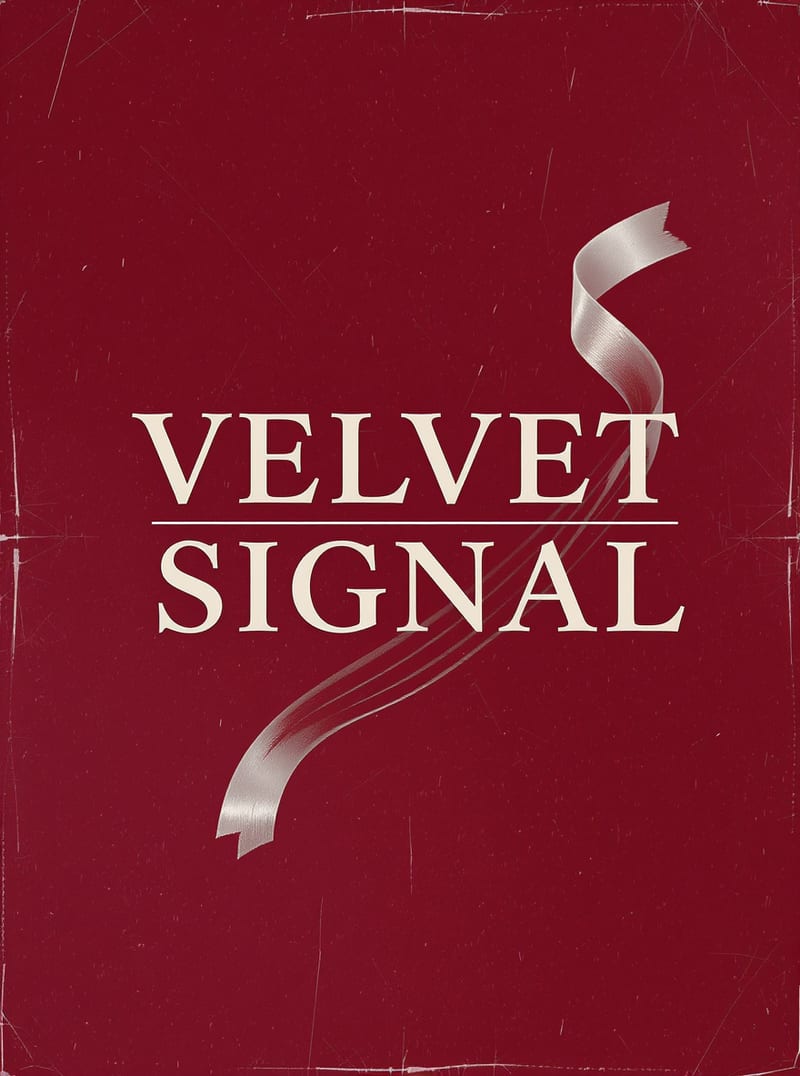
Album artwork typography and graphic composition
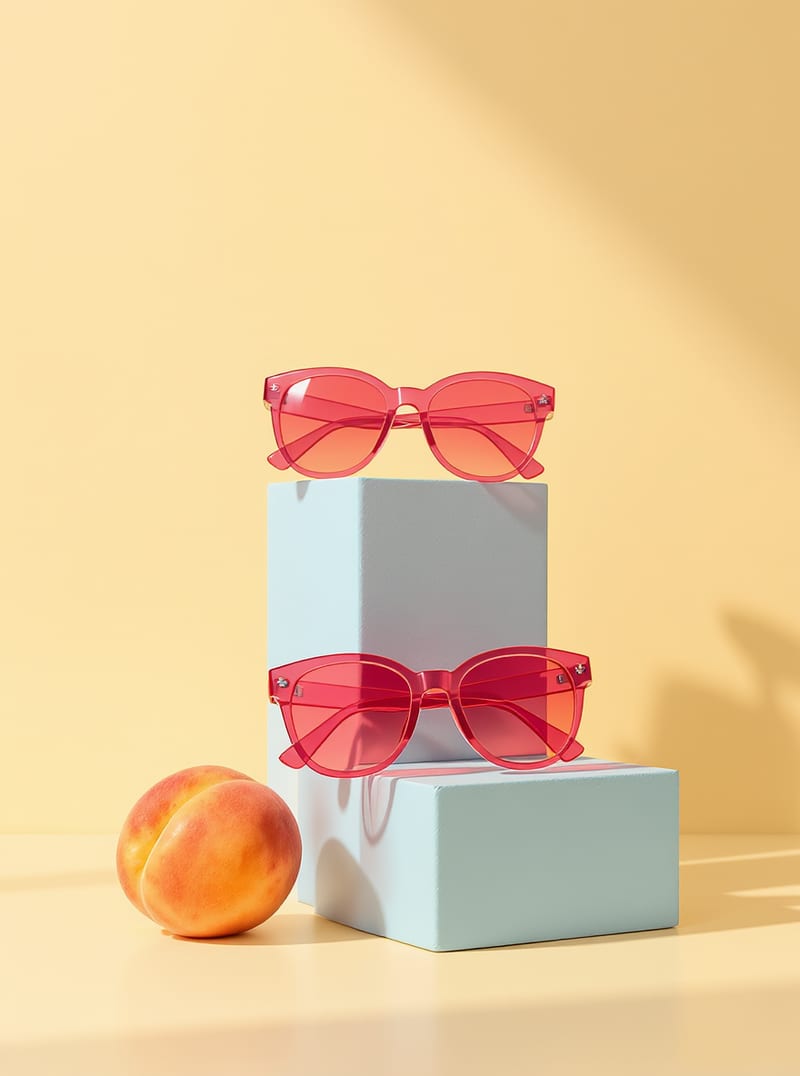
Advertising campaign still life
Used by teams who already have the picture and need one thing different: product retouchers, lookbook directors, storyboard artists, poster designers and photo editors.
Max costs about double Pro (110.3 vs 55.2 per request) and adds stronger prompt adherence, typography and consistency. Pro is the fast everyday tier for color swaps, removals and iteration. Max suits final renders and text replacement on signs, posters and packaging, but is overkill for throwaway exploration.
Use a Multi variant, which accepts up to four reference images. Pro Multi (55.2) is the place to test a composition, and Max Multi (110.3) is for deliverables where identity and product fidelity matter. Describe each image's role in the prompt, because blends can lose likeness when references conflict.
Yes, the text-to-image variants work with no source image, in both Pro and Max. They are good for on-brand starter frames to refine with later edits, and the aspect ratio setting applies only in this mode. Output leans polished photoreal, and Max is the pick for short in-image lettering.
No. It edits from plain-language instructions with no masks, so it isn't built for pixel-exact selections. Chaining about five or six edits on successive outputs builds softness and artifacts, so feed the original image into each new edit instead. Dense paragraphs of rendered text are also unreliable.
It was created by Black Forest Labs and first launched on 29 May 2025 as the Pro and Max tiers. This node runs those Pro and Max tiers rather than the later open-weights Dev version.
Change one thing in plain language and the rest of the frame stays exactly as you shot it, with light, grain and palette intact