One click, whole workflow
Recipes are here. Package a whole workflow and run it in one click
Explore recipesOne click, whole workflow
Recipes are here. Package a whole workflow and run it in one click
Explore recipesMeet the winners of our app-building contest
Fuser
August 7, 2026
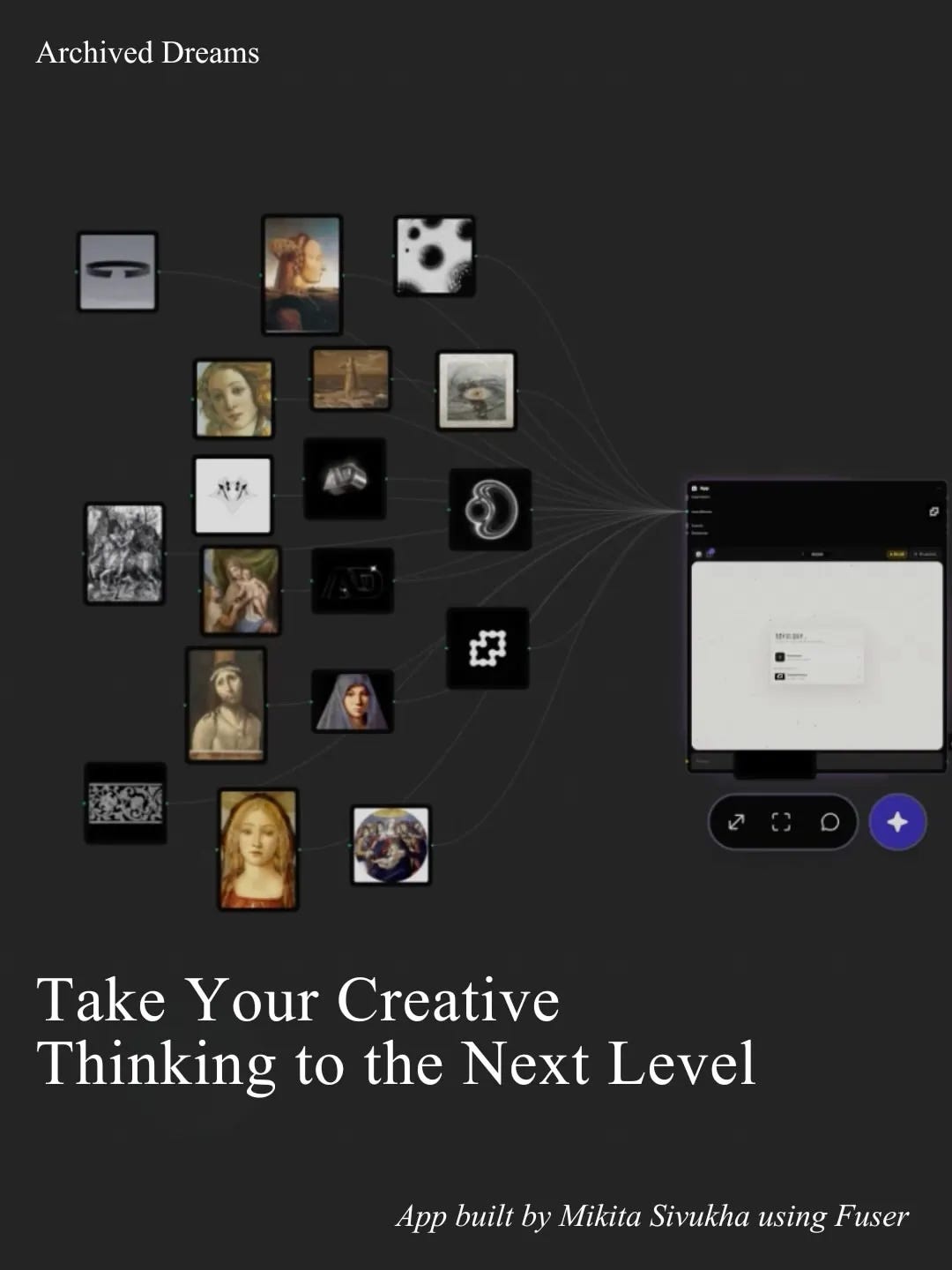
Too many ideas die quietly. They sit on your desktop, in your notes app—a sketch in the margins, or a concept you’ve turned over for years without ever having the team, the time, or the technical background to actually build it. But that idea doesn’t just disappear. That’s the gap that Fuser Apps was meant to close, and the real subject of our latest community challenge with Archived Dreams.
If you haven’t already heard of them, Archived Dreams is a global media platform and creative studio empowering creators across the realms of fashion, design, and art. Together, we held an open call to invite builders, artists, tinkerers (many of whom have never made an app before) to turn their wildest ideas into live, functioning apps and websites.
Each submission stemmed from a different impulse: a bedtime story app, a box of burned CDs from 2008, an ink-diary, or a daily performance art prompt. What they shared in common was a willingness to treat the Fuser canvas as an active collaborator: a space to iterate, prompt, and tweak until the app took on a shape and design that honored their original intention.
After two rounds of community voting, three projects rose to the top. Here they are:
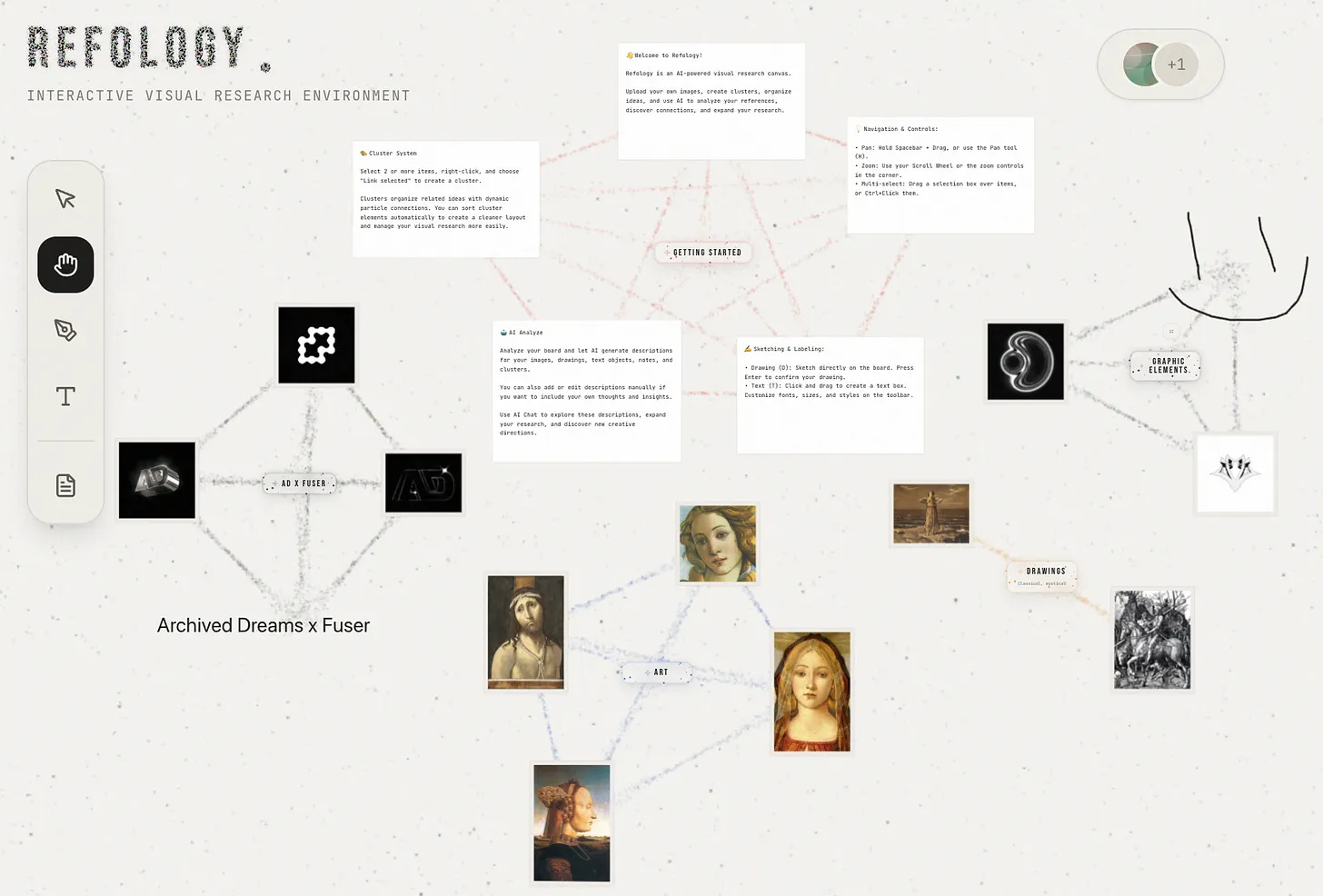
Refology is a visual canvas that turns scattered references into a single, navigable research space.
Connect images, cluster related ideas, and let dynamic particle links map how they relate. Clusters can be auto-sorted into a cleaner layout as they grow, and every image, drawing, note, or cluster can carry its own description—whether generated automatically or written by hand.
3D artist and art director Mikita Sivukha built it for artists and designers who want their research process to feel as fluid as the thinking process itself.
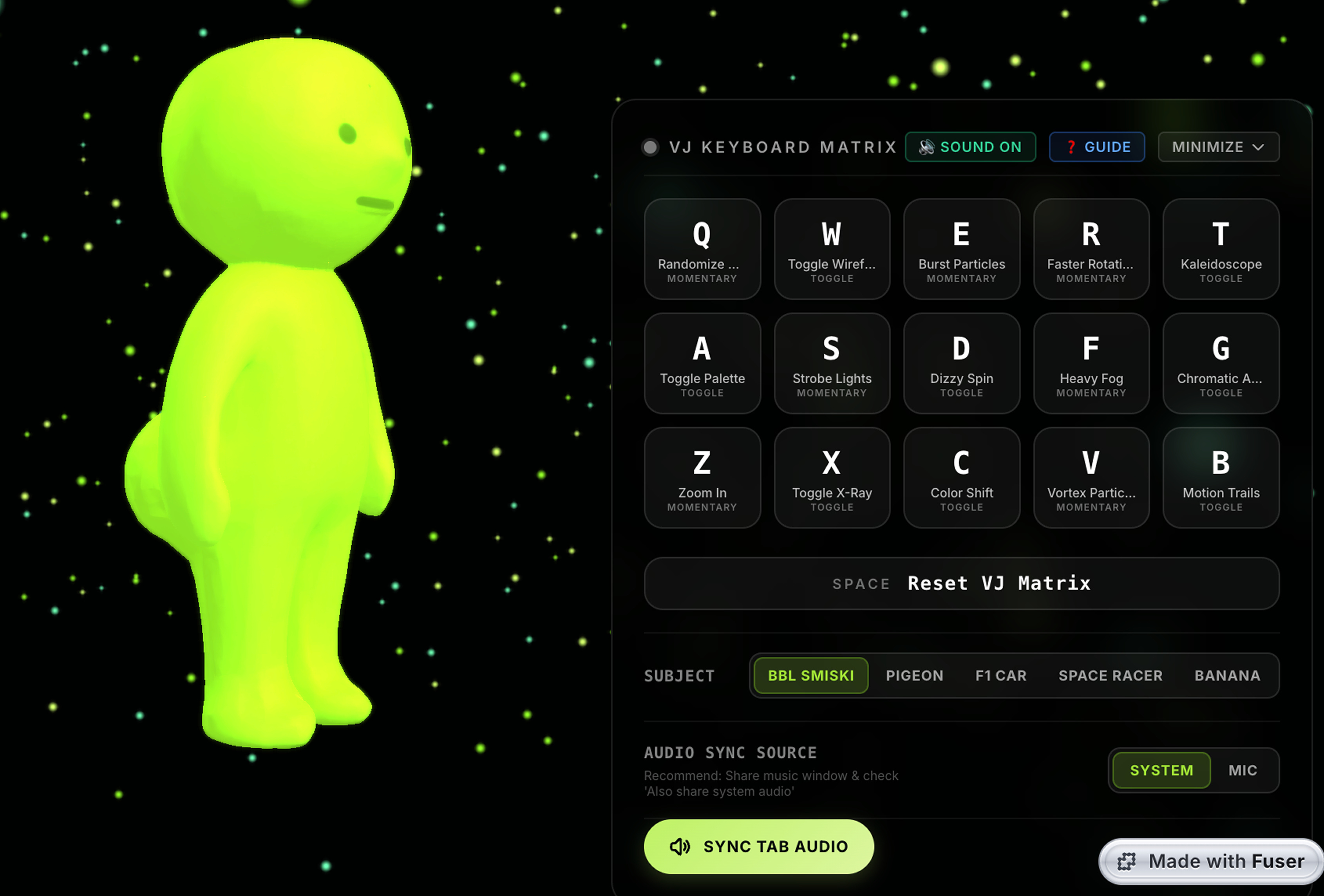
Baby VJ is a VJing app that pairs visuals with music in real time.
Tailor visuals, trigger different effects straight from your keyboard, or let the app listen in: sync the visuals directly to music playing on your laptop, or pick it up live through a mic.
Chris Tan built Baby VJ as a playful extension of his ongoing work moving between digital and physical performance—a tool for anyone who wants their visuals to feel less like a backdrop, and more like part of the instrument.
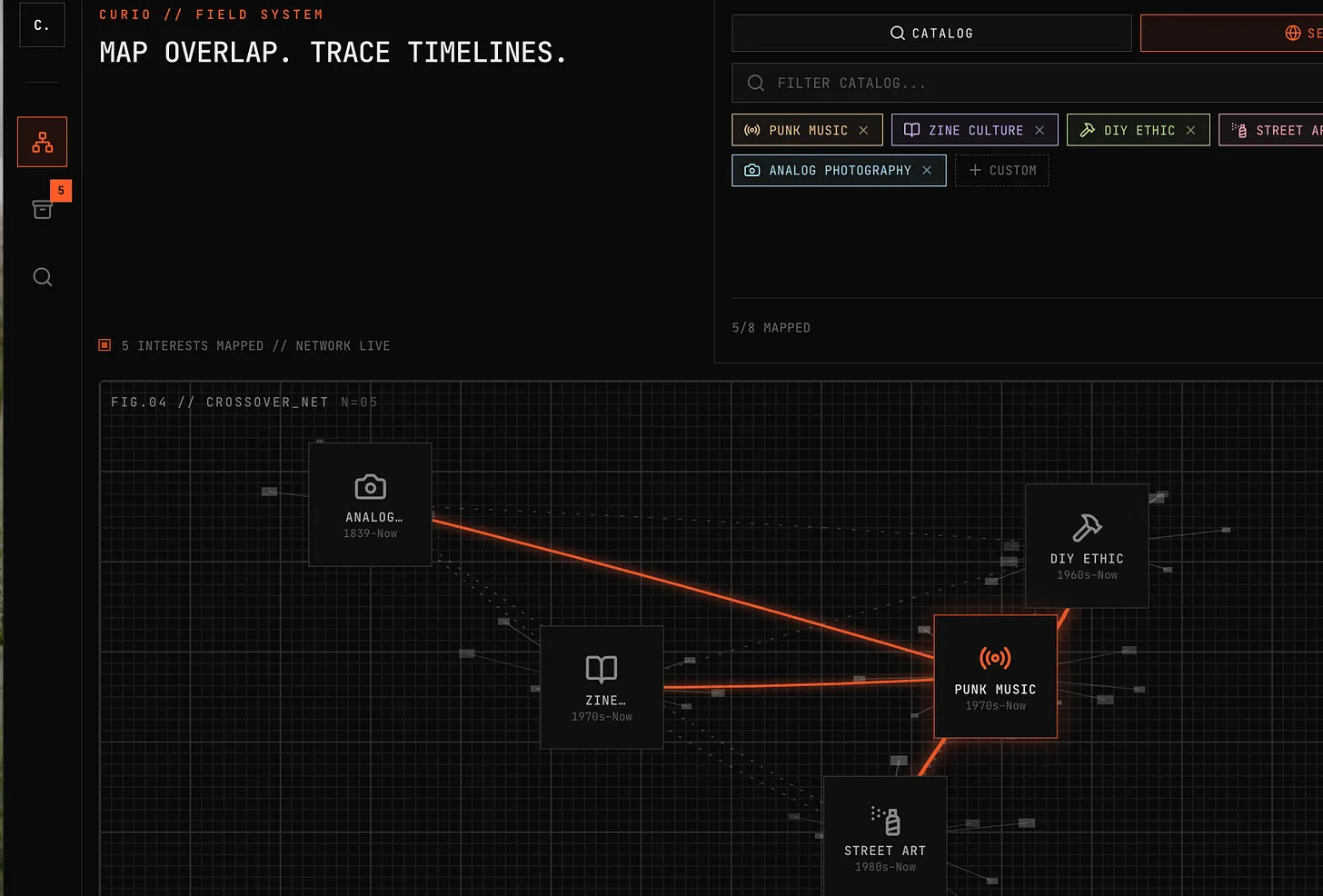
Curio is a collective-intelligence platform meant to connect people who wouldn’t otherwise cross paths, built on the theory that the sharpest insights tend to come from outside of your usual circle.
Rather than routing people toward more of what they already know, Curio maps curiosity itself: contributions accumulate into a shared, explorable network, surfacing connections between disciplines and backgrounds that an algorithm would never link on its own.
Euree Hong built it on a simple bet: that exposure to unexpected perspectives unlocks a kind of collective intelligence no single network can produce alone.
To everyone who submitted an idea, a sketch, or a half-finished thought that turned into something real: thank you. Challenges like this one exist to prove a simple point—that the distance between an idea and a live app is shorter than most people think.
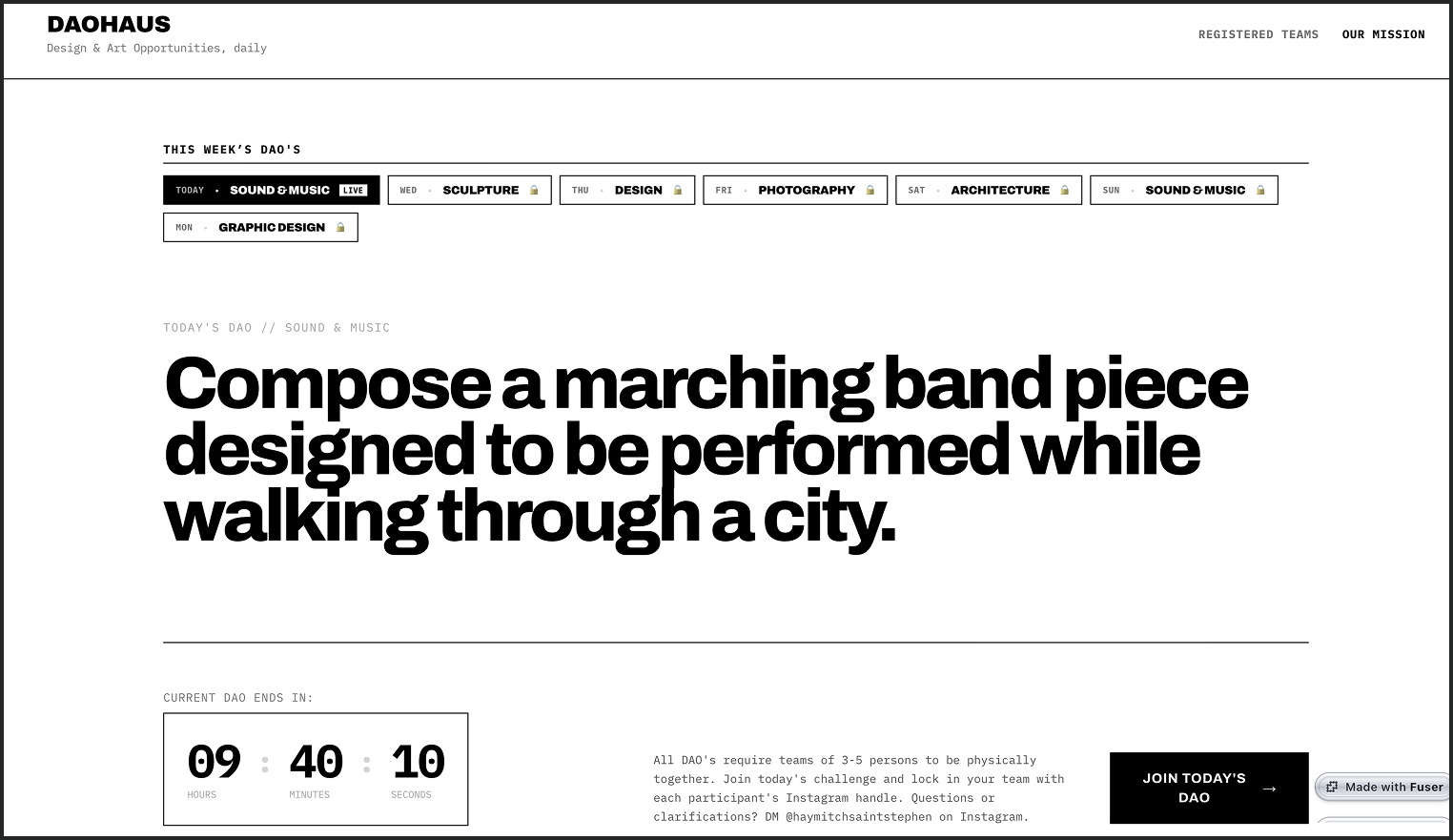
DAOhaus, by Haymitch St. Stephen
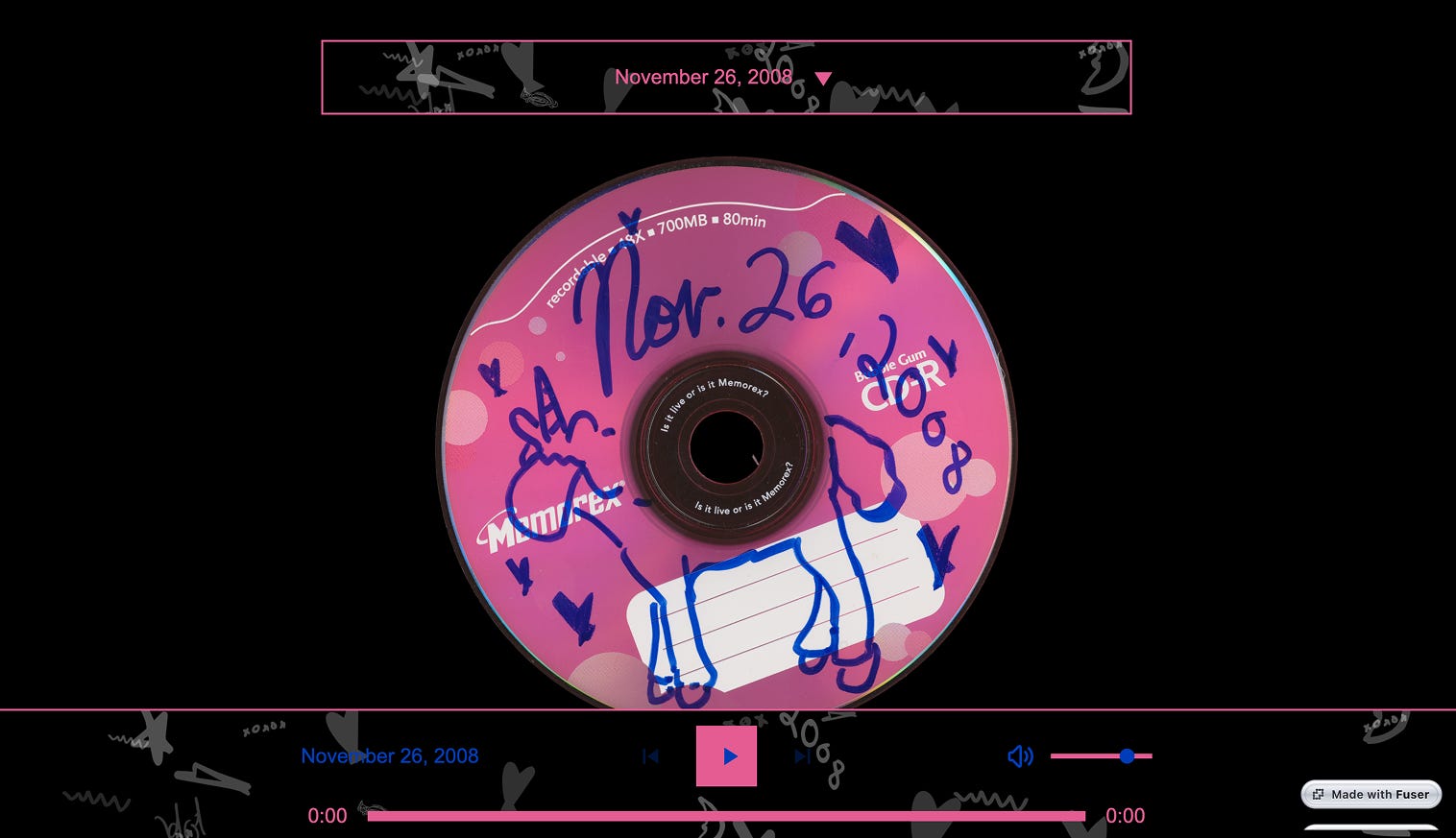
POV it’s 2008 and I’m Driving, by Nika Simovich Fisher
Storyboard Studio, by Lubos Belak