One click, whole workflow
Recipes are here. Package a whole workflow and run it in one click
Explore recipesOne click, whole workflow
Recipes are here. Package a whole workflow and run it in one click
Explore recipesbyOpenAI
Turn a rough idea into a director's-brief prompt, a numbered shot list or ten caption options before the next node is done waiting
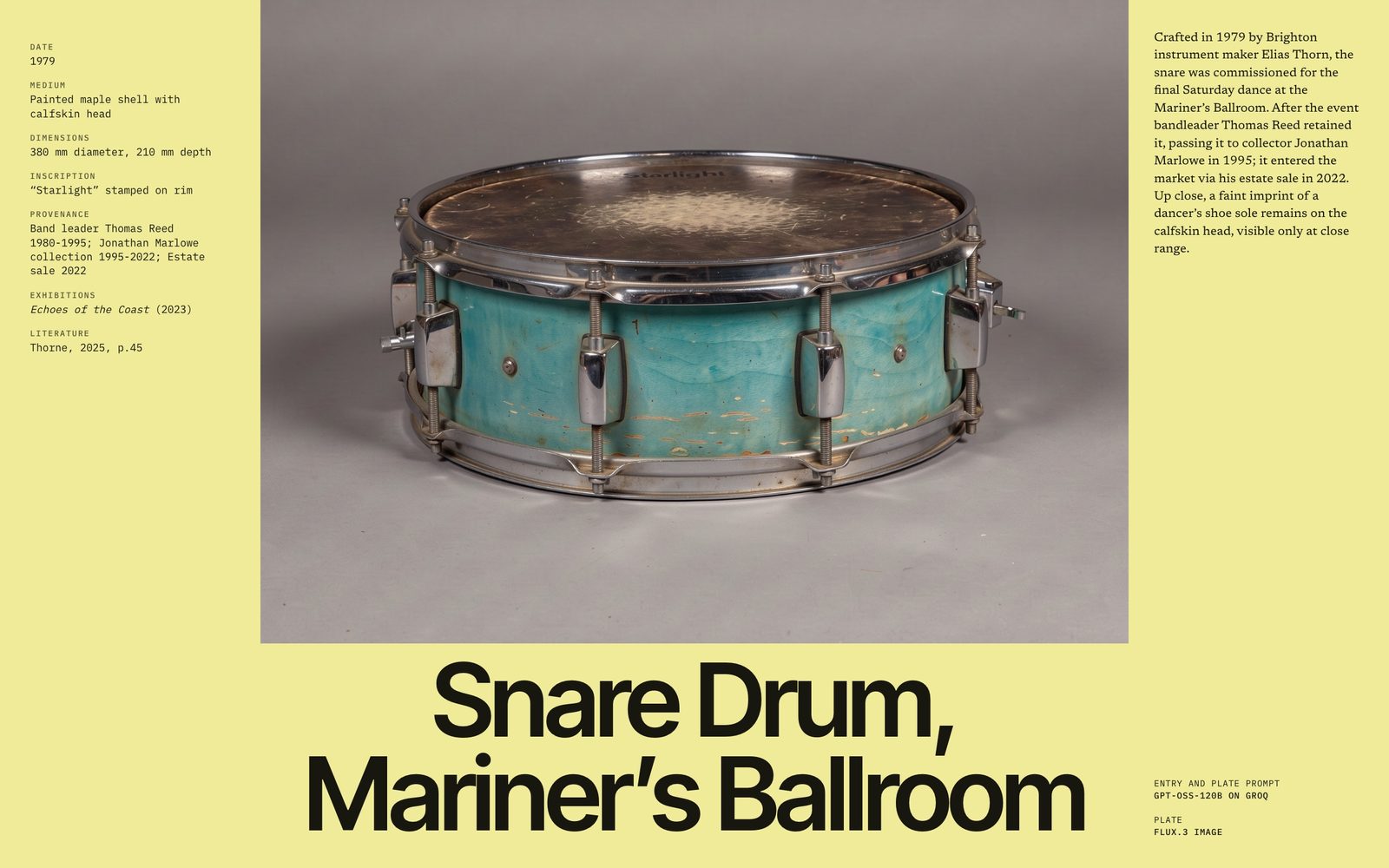
Write the brief, choose a model tier, and the answer lands fast enough to feed the next node without breaking your flow.
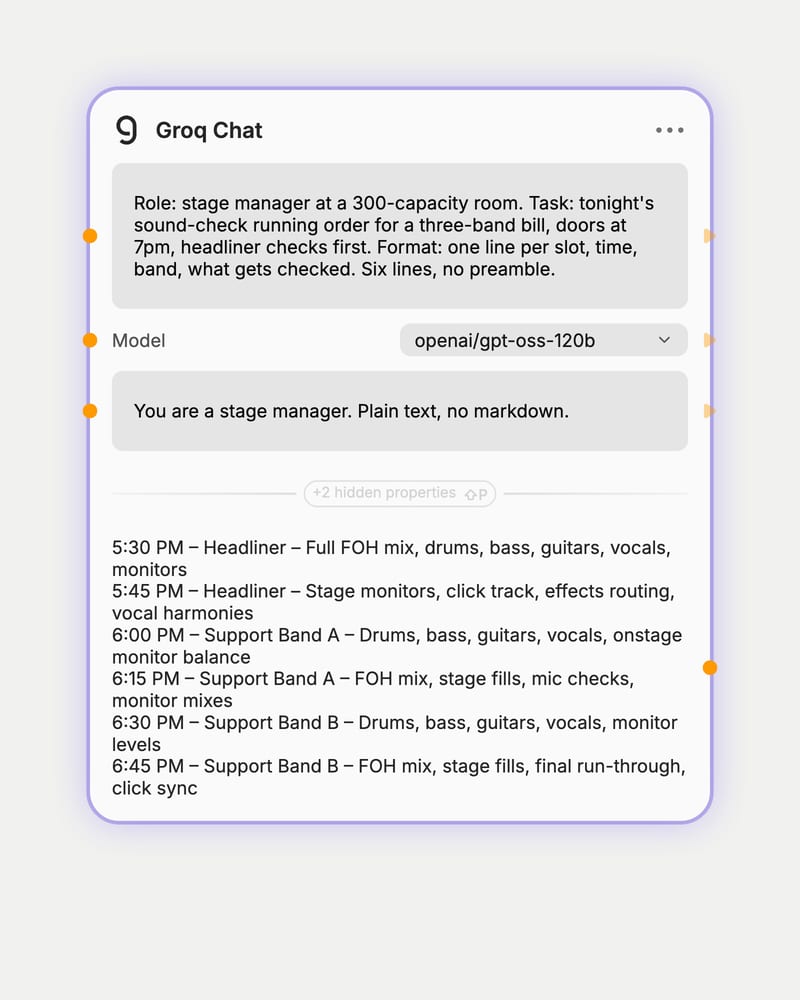
Write a brief, not a wish
Give it a role, a task and an output format, and put the persistent voice and rules in the system prompt.
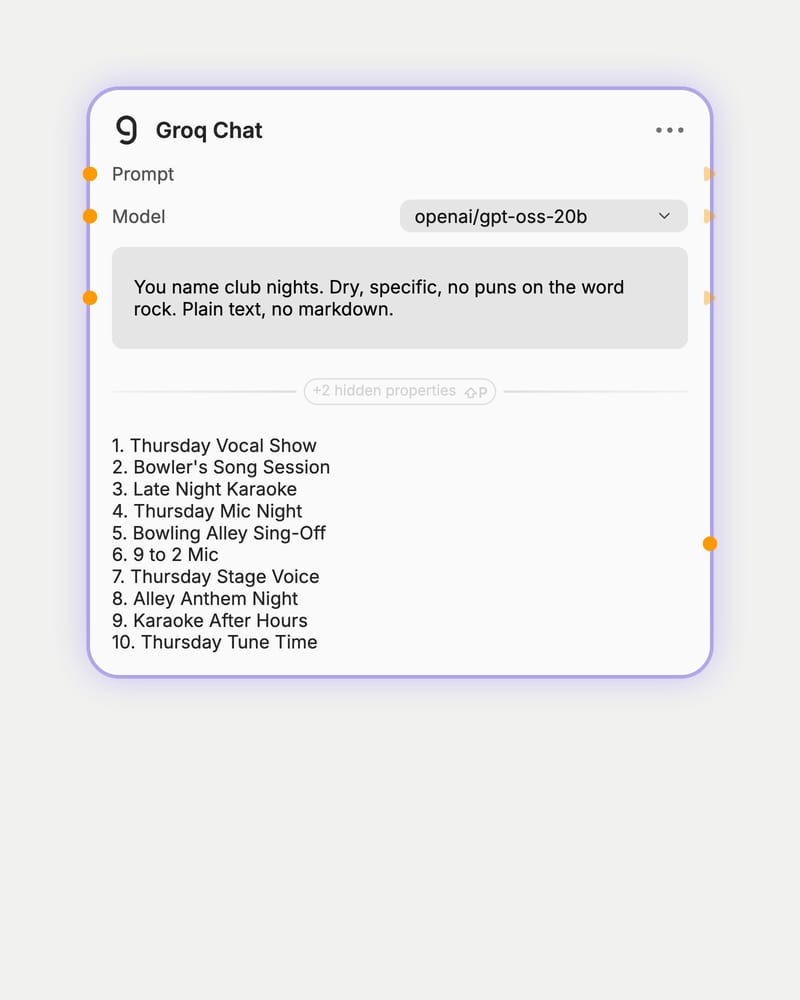
Pick the right model
Choose the 120b for hard briefs, the 20b for fast bulk variations, or the safeguard model to check text against a written policy.
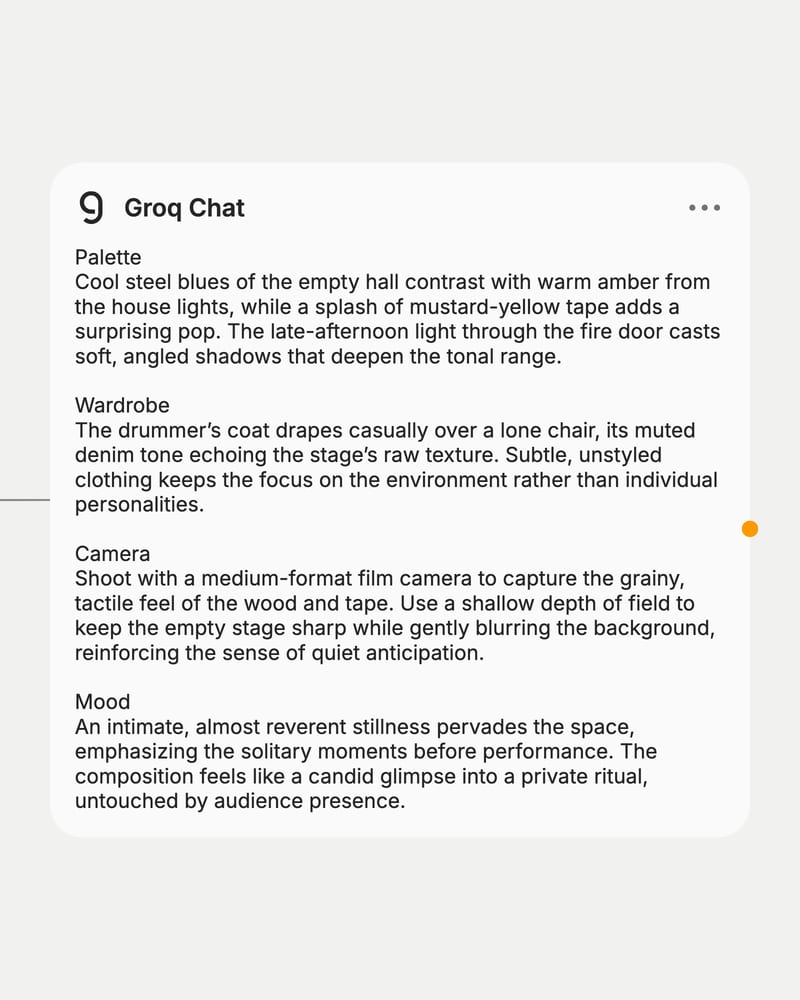
Pipe the text onward
Send the clean paragraph, shot list or caption set straight into the image or video node waiting downstream.
Clean structure, obedient formatting and cinematic vocabulary on request: it's built to turn loose ideas into text other nodes can use.
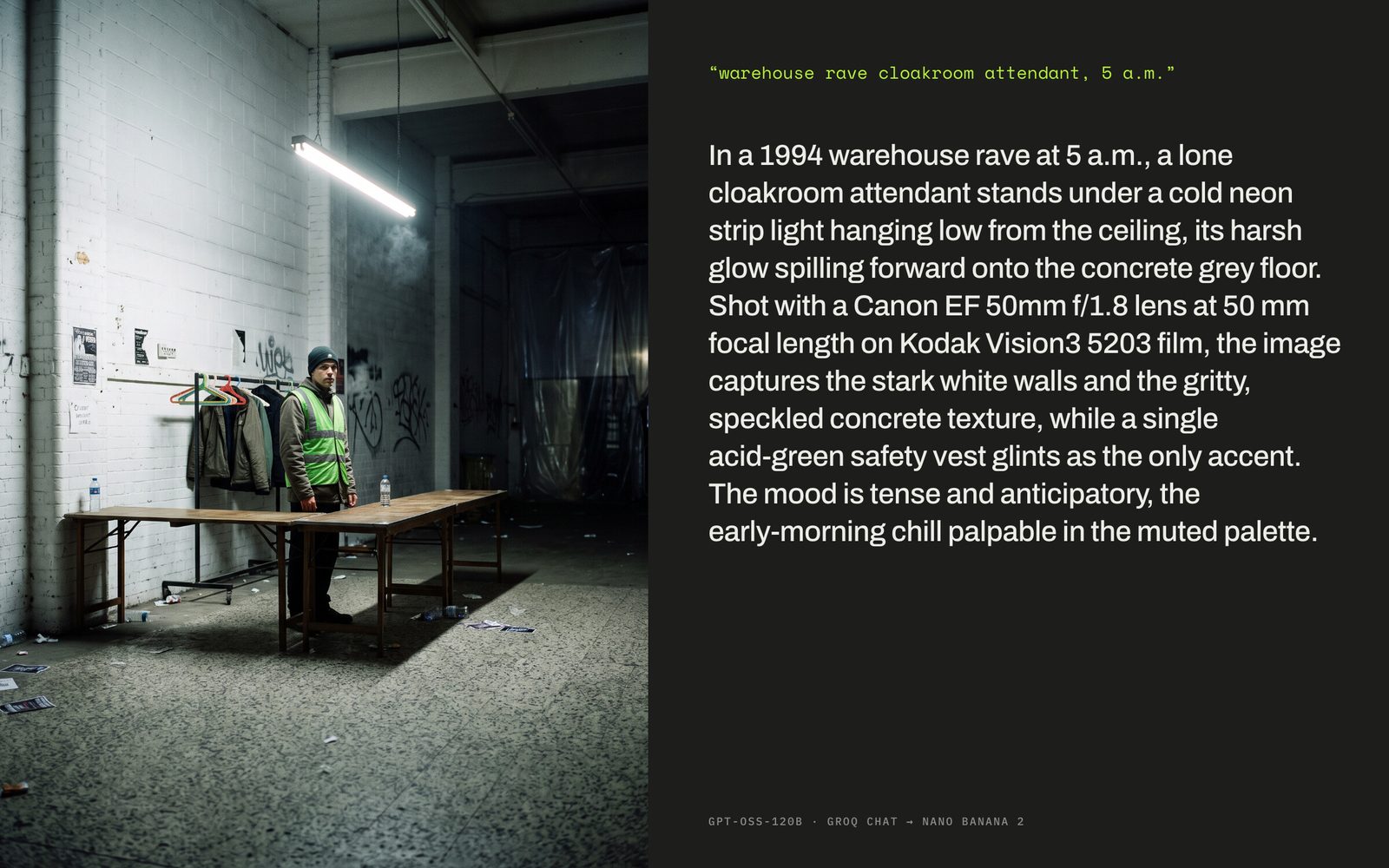
Prompt expansion on demand
Hand it a six-word concept and get back a cinematographer-style paragraph covering lens, lighting, palette and mood. Name the visual elements you want and it follows the format exactly.
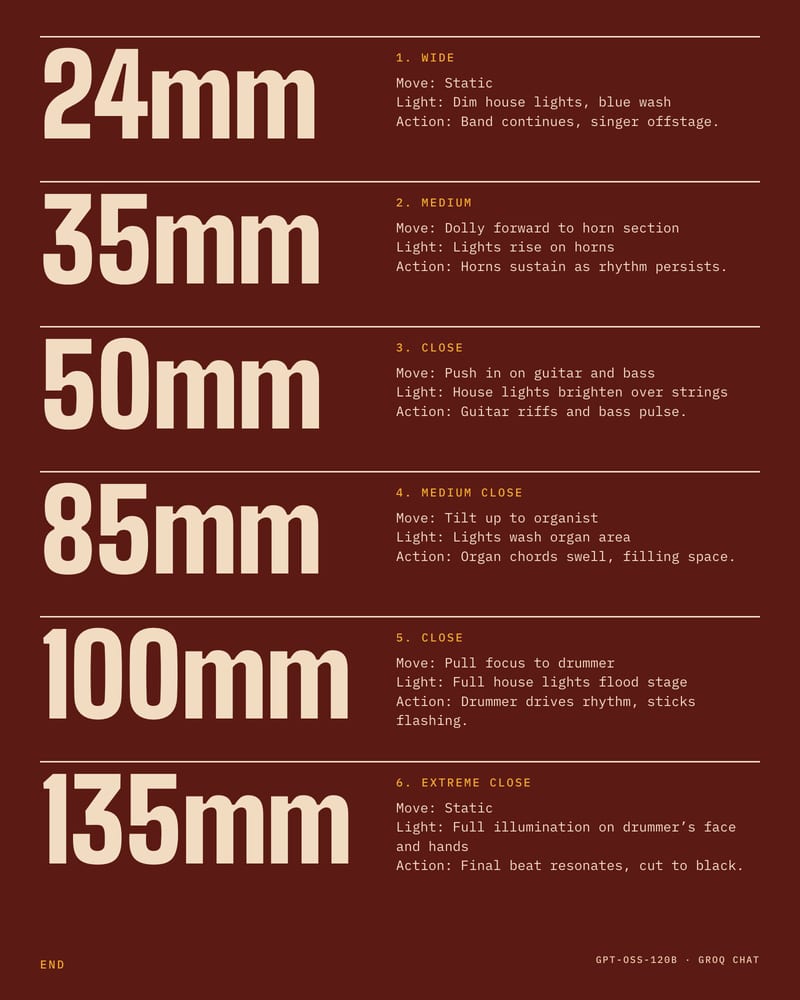
Numbered shot lists
Break a treatment into numbered beats, each with camera move, framing, light and a one-line action. Structured planning is where the reasoning models are strongest.
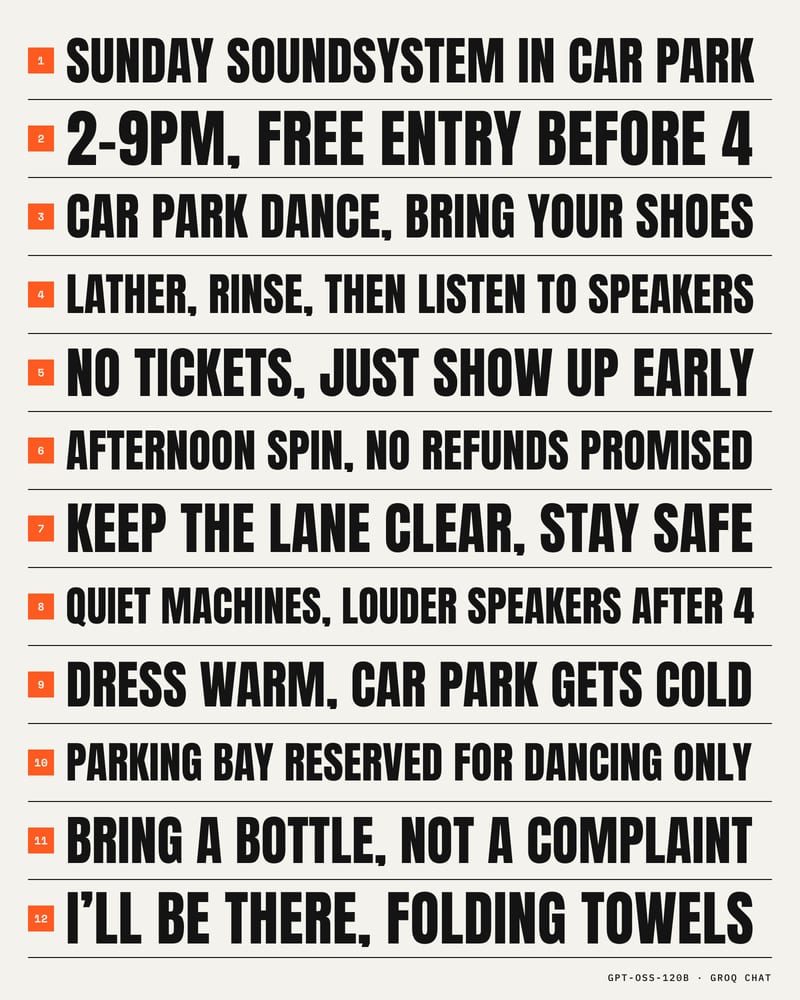
Fast bulk variations
Tagline sets, caption options and quick rewrites in one pass. Turn on last-message-only so each batch stays independent of the last.
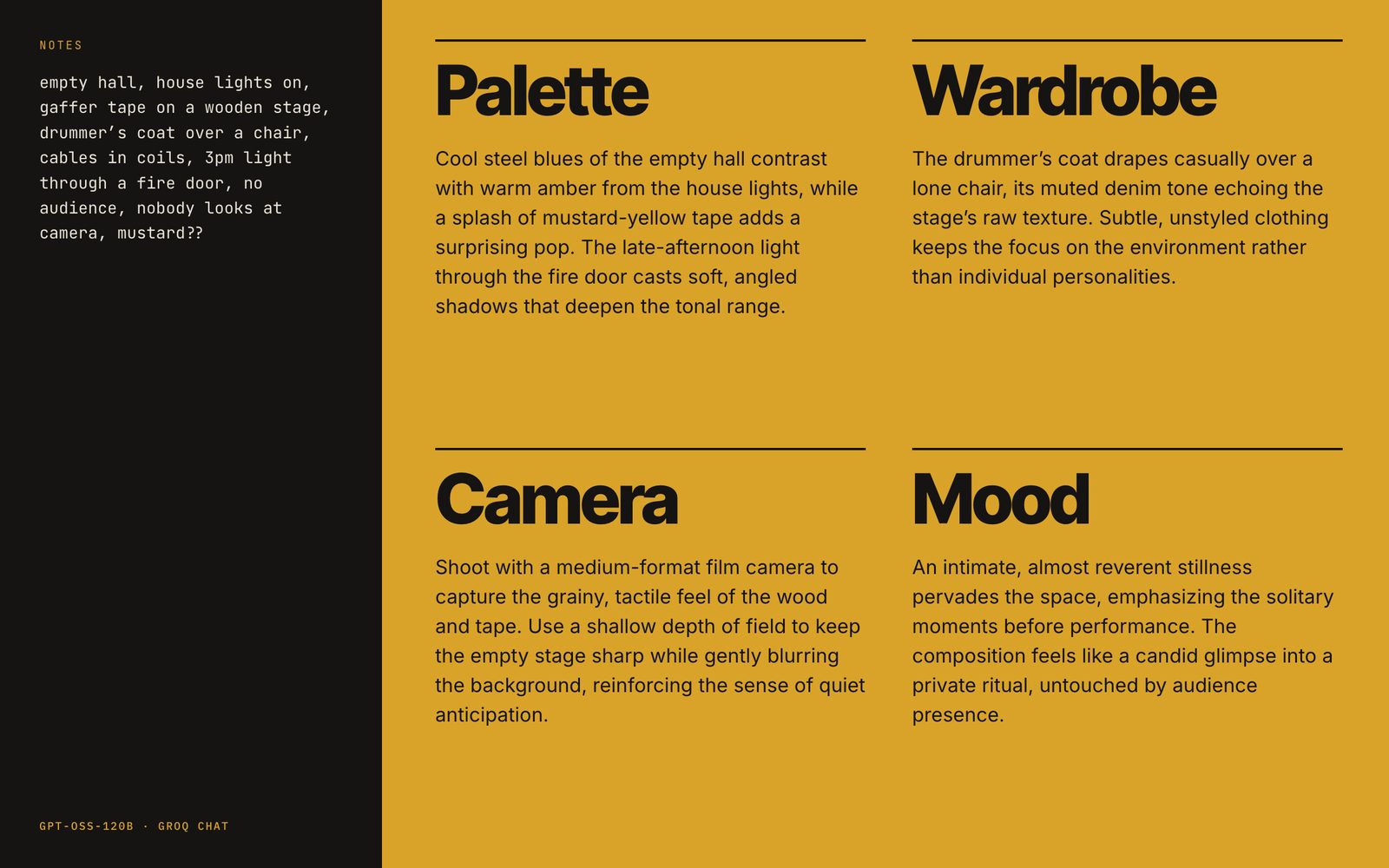
Notes into strict templates
Paste messy moodboard notes and get a tidy art direction brief in the template you specify. The 120b is the pick for multi-constraint briefs; it follows rules more reliably than the lighter model.
A gallery of briefs and the structured text they return: image-ready paragraphs, shot lists, headline sets and templated briefs.
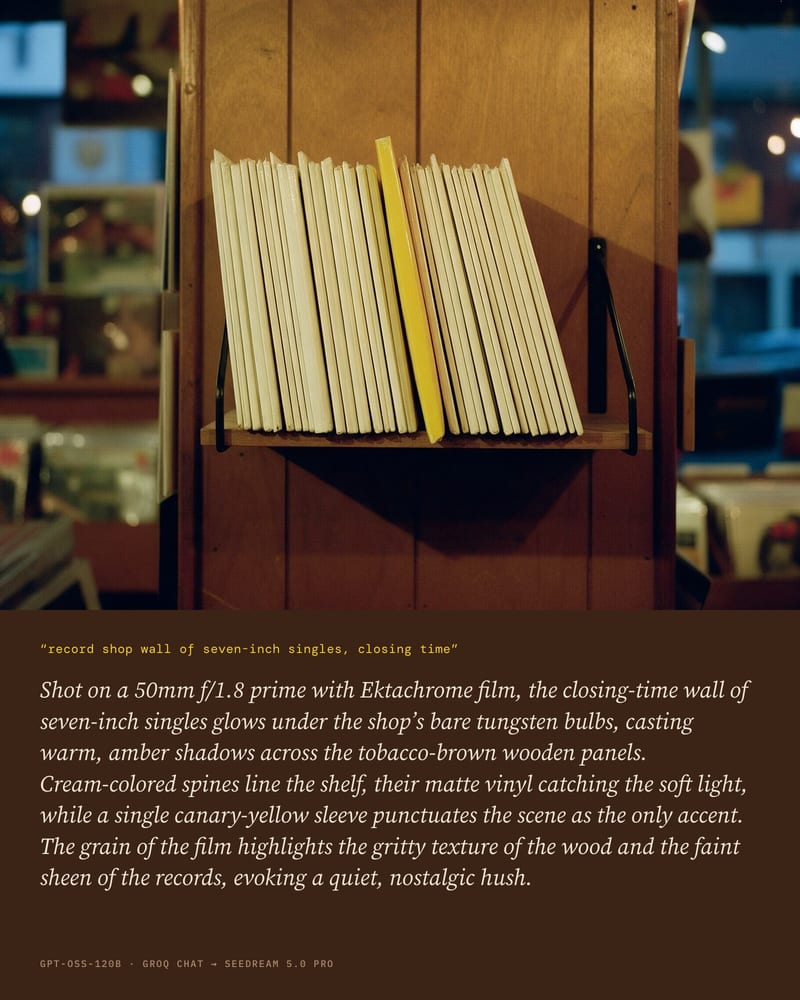
Seed concept to image-ready paragraph
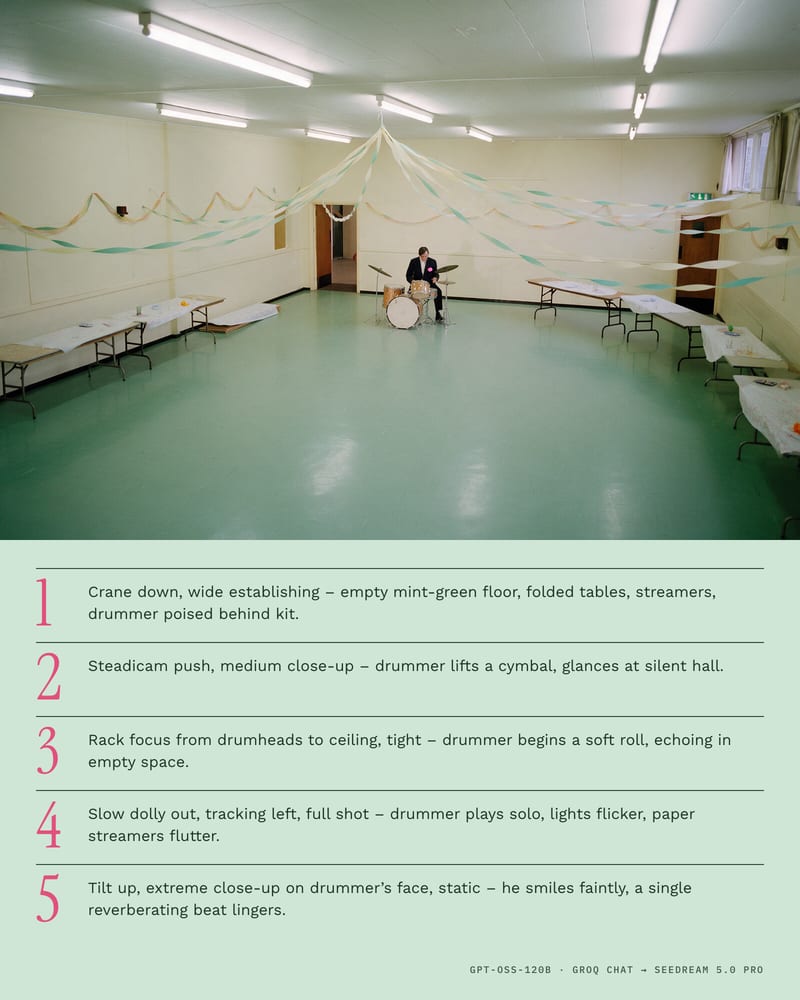
A treatment broken into numbered beats
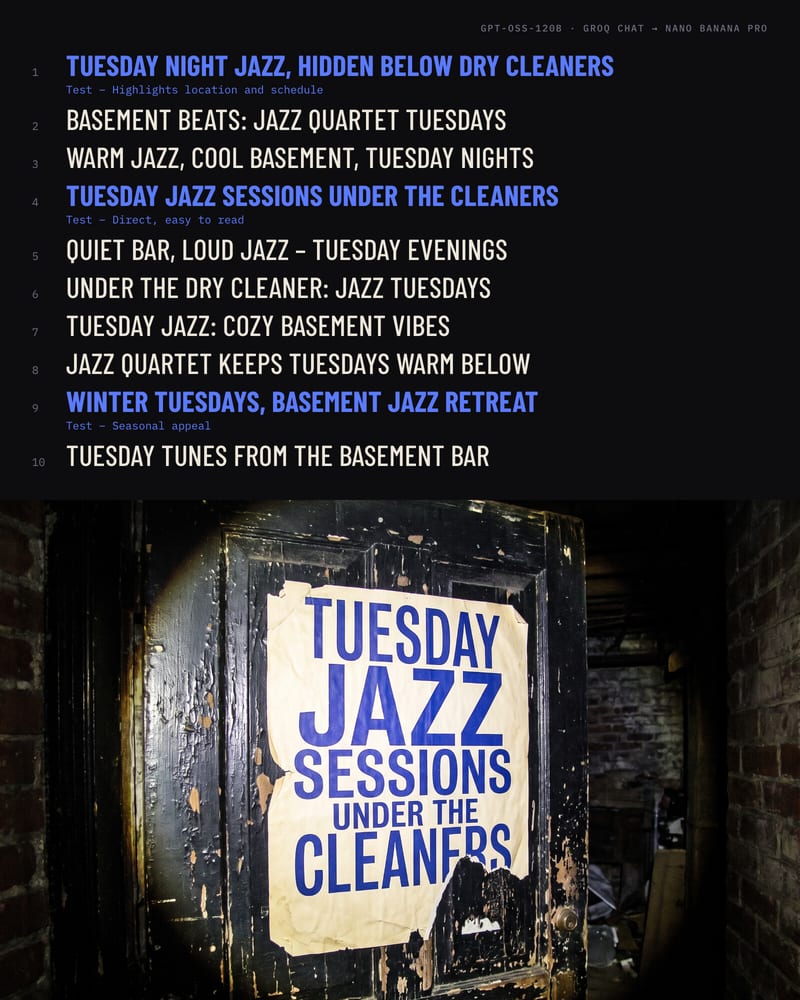
Headline variations in one pass
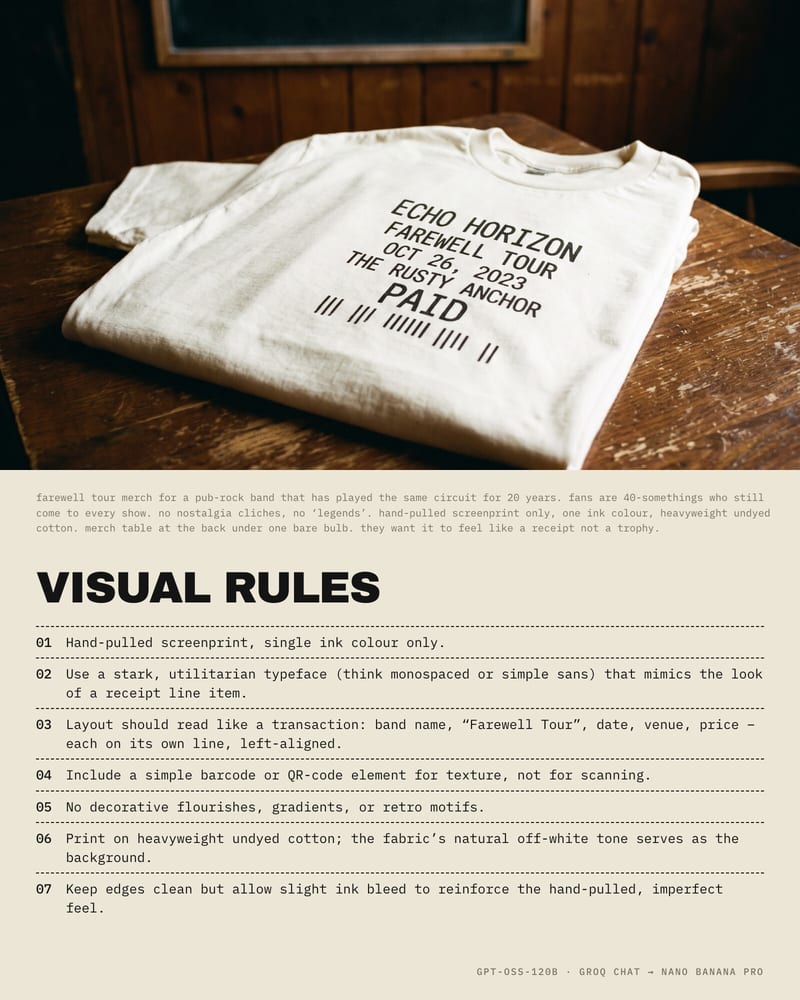
Scattered notes into a clean brief
A word-limited script that obeys the count
Prompt writers, planners and copy teams reach for it when speed and tidy structure matter more than lyrical flourish.
Fast enough to iterate live. Groq lists the default gpt-oss-120b at about 500 tokens per second, so a set of caption or prompt variations typically returns in seconds. Its 131,072-token context window holds a long brief or script excerpt alongside your instructions. Turn on Last Message Only when each variation should start fresh.
Use gpt-oss-120b (the default) for nuanced briefs, structured planning and strict instruction-following. Use gpt-oss-20b for bulk variations, renaming and quick rewrites. Use gpt-oss-safeguard-20b only to judge content against a policy you write in the prompt, not as a general creative writer.
No, it is text-only and cannot see images, video or audio. Attachments should be text such as briefs, scripts or notes. If you need a visual reference described, run it through a vision-capable node first and pass the description in.
It is best at expanding a short idea into a detailed image prompt, shot lists from a brief, rapid headline and caption variations, and rewriting copy to a set voice. It favors lists and tidy structure, and it handles lens, lighting and wardrobe vocabulary well when you ask for it.
It tends toward neutral, slightly stiff prose and can lose the thread on long drafts, so it is a poor fit for voicey long-form fiction. It also refuses or softens many violent, sensitive or style-imitation briefs. Add a voice in the system prompt and keep each call short.
The models are OpenAI's gpt-oss family, open-weight reasoning models released under Apache 2.0 in August 2025. The gpt-oss-safeguard-20b fine-tune for policy-based classification followed in October 2025.
Turn a rough idea into a director's-brief prompt, a numbered shot list or ten caption options before the next node is done waiting