One click, whole workflow
Recipes are here. Package a whole workflow and run it in one click
Explore recipesOne click, whole workflow
Recipes are here. Package a whole workflow and run it in one click
Explore recipesbyPerplexity AI
Live-web research with numbered citations, so your moodboard, script or campaign starts from what is true this week
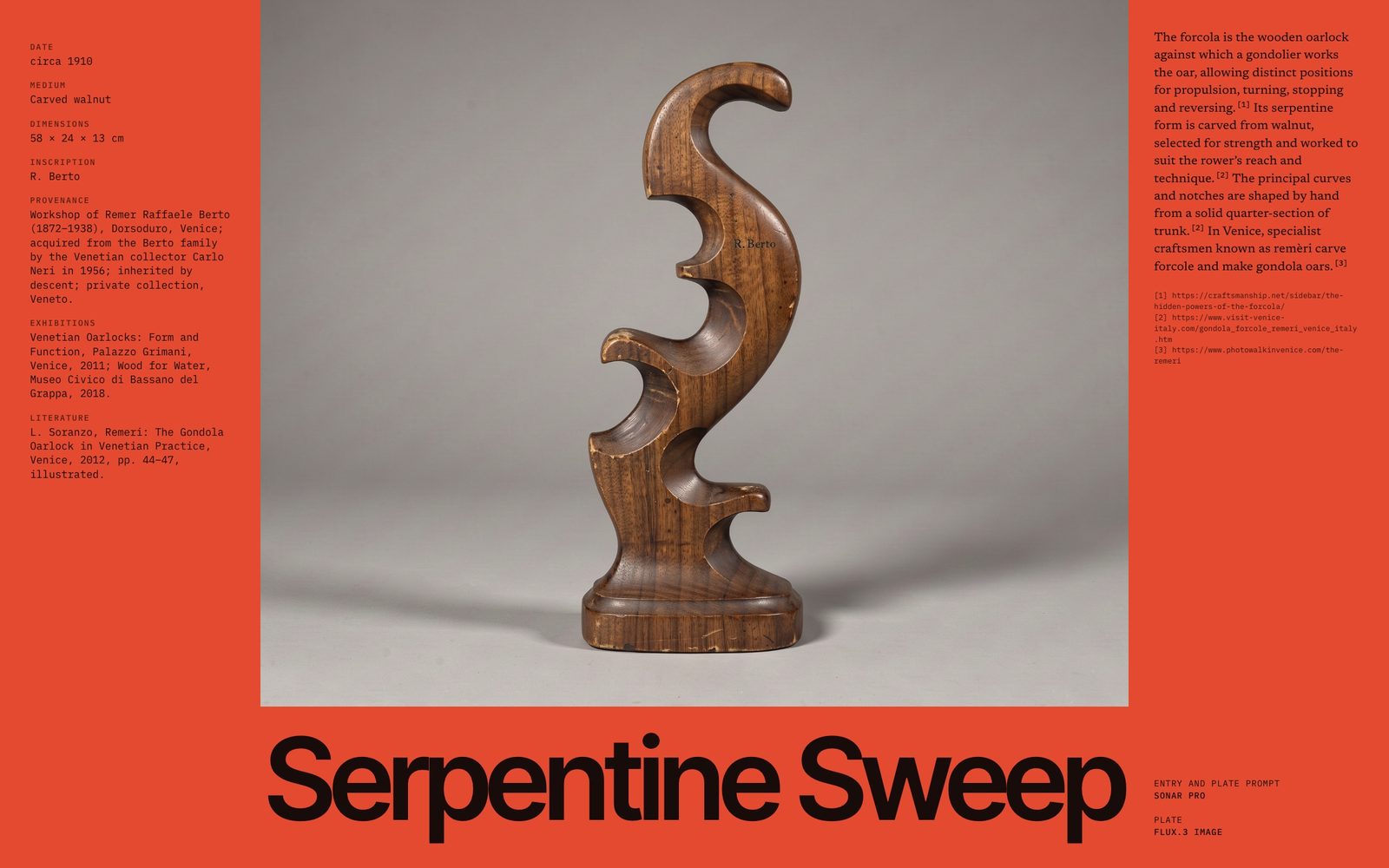
Brief the analyst, scope one sharp question, choose how deep to dig. The answer arrives as a compact, cited block you can drop into the next node.
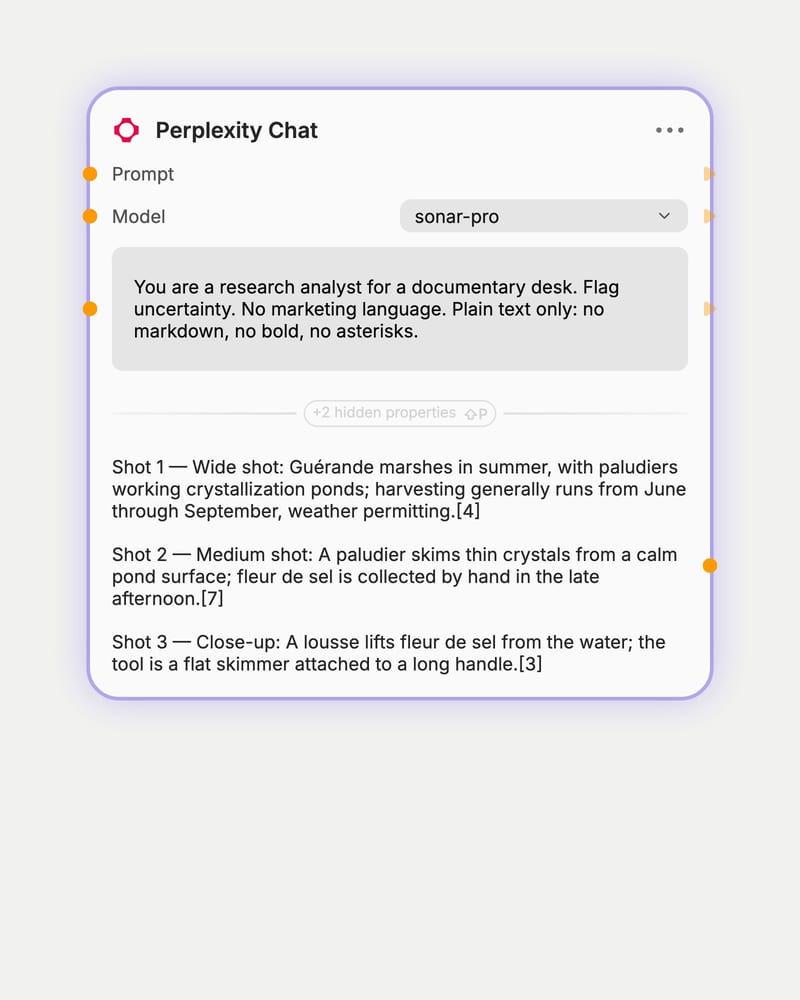
Set the analyst's role
Use the system prompt to define a design researcher, the output format, and rules like name sources inline and flag uncertainty.
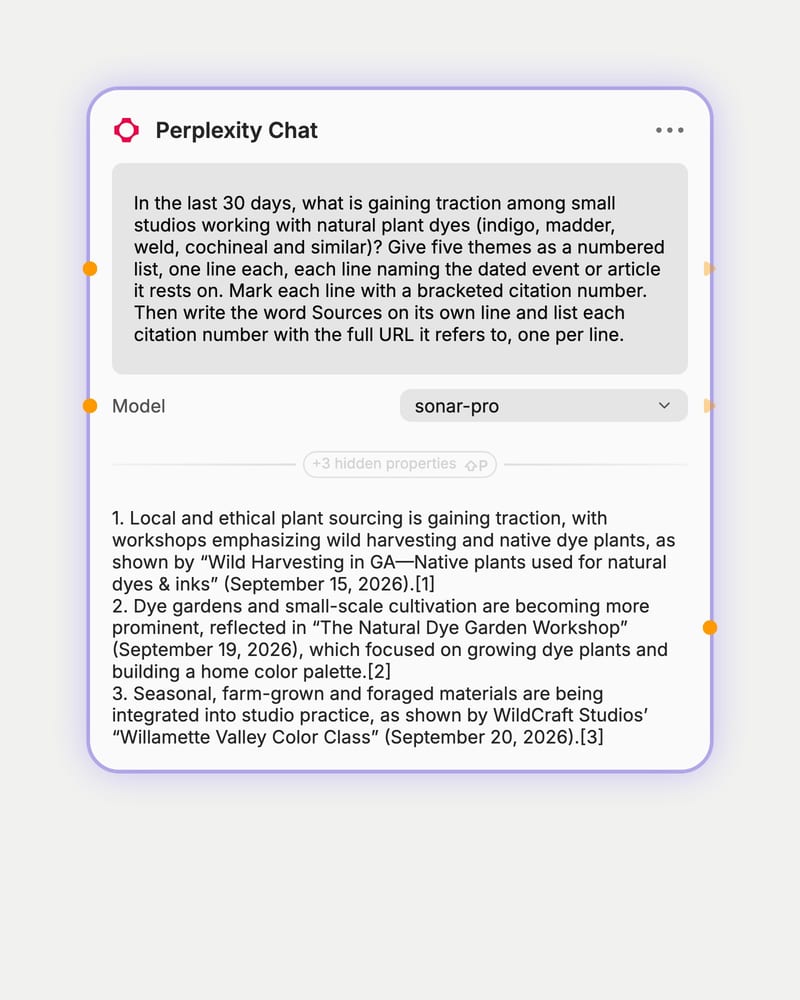
Scope the question
Write the prompt like a brief: a verb, a niche, a timeframe, and the shape you want back, such as five bullets or a hex palette.
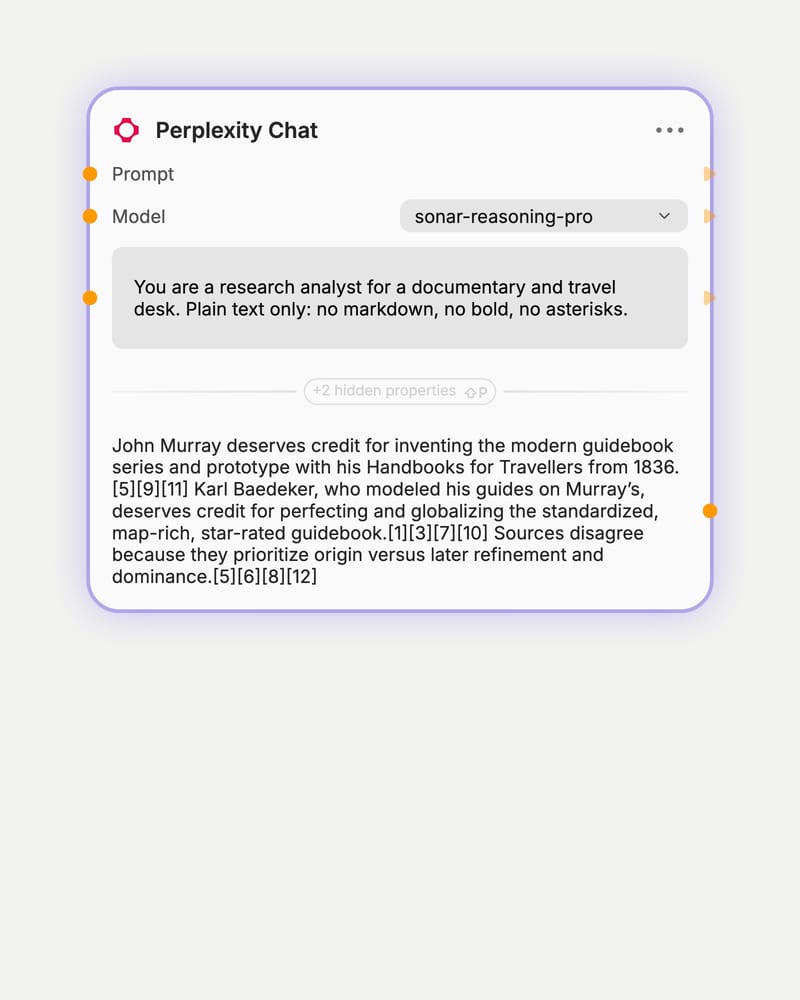
Pick a tier and pipe it on
Choose sonar, sonar-pro or sonar-reasoning-pro, then send the cited answer to the next node on your canvas.
Fresh facts, traceable sources and structured shapes. It is the research layer that tells you what is true before anything gets generated.
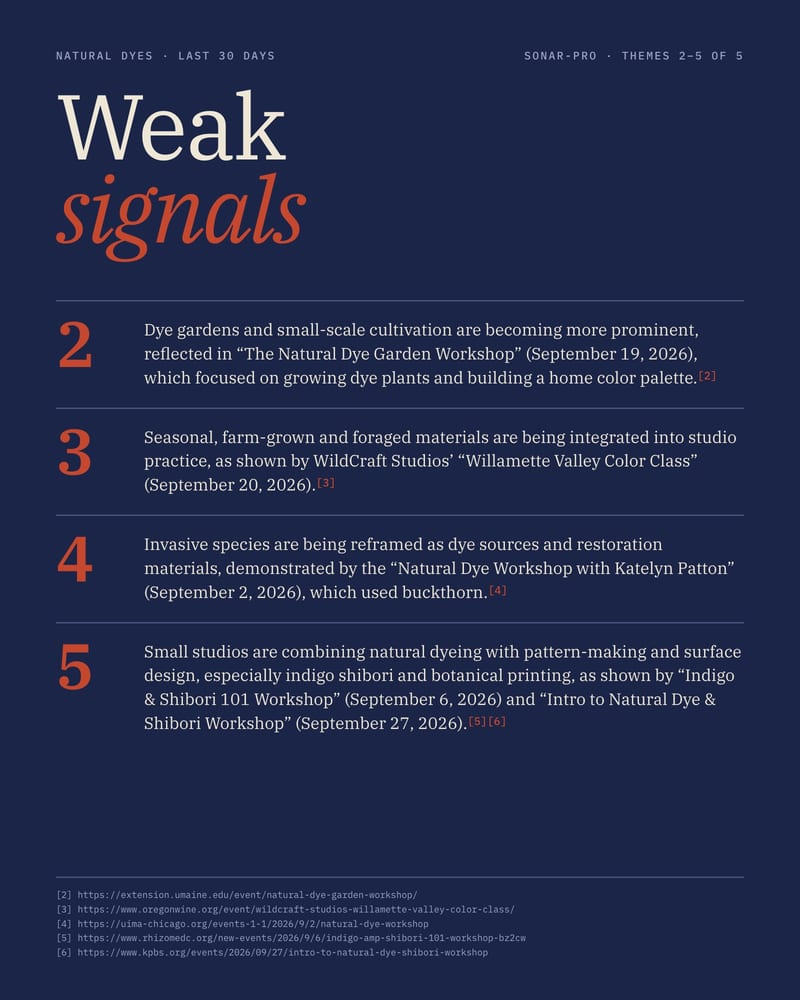
Weak-signal trend scouting
Ask what is gaining traction in a niche over the past 6 months or 30 days and get compact, recency-aware answers with citation markers. A hunch becomes a moodboard-ready list of themes.
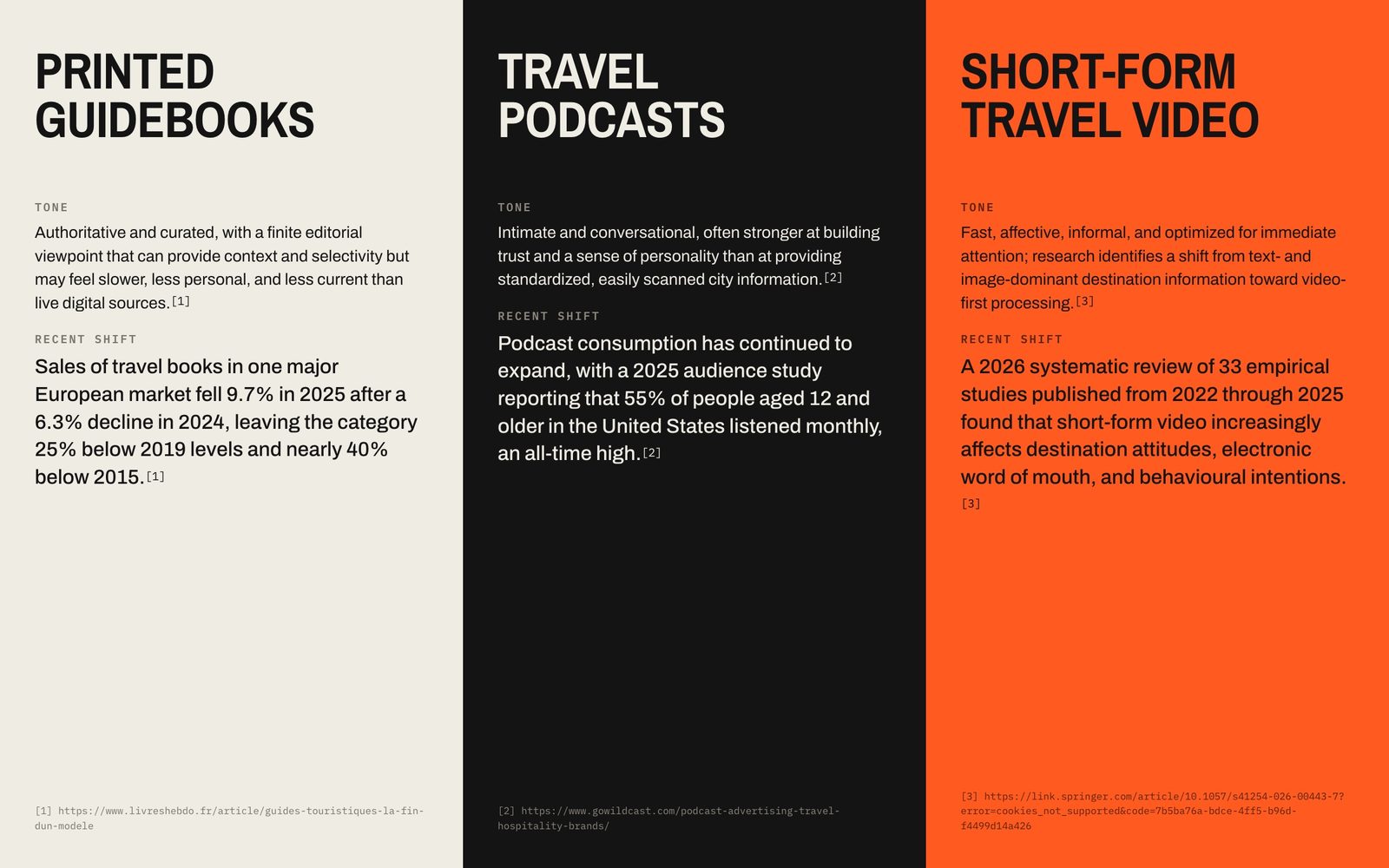
Citation-ready competitor teardowns
Compare brand identity, tone and recent campaigns across rivals in a structured table. Every row points back to a source you can check before it reaches a client deck.
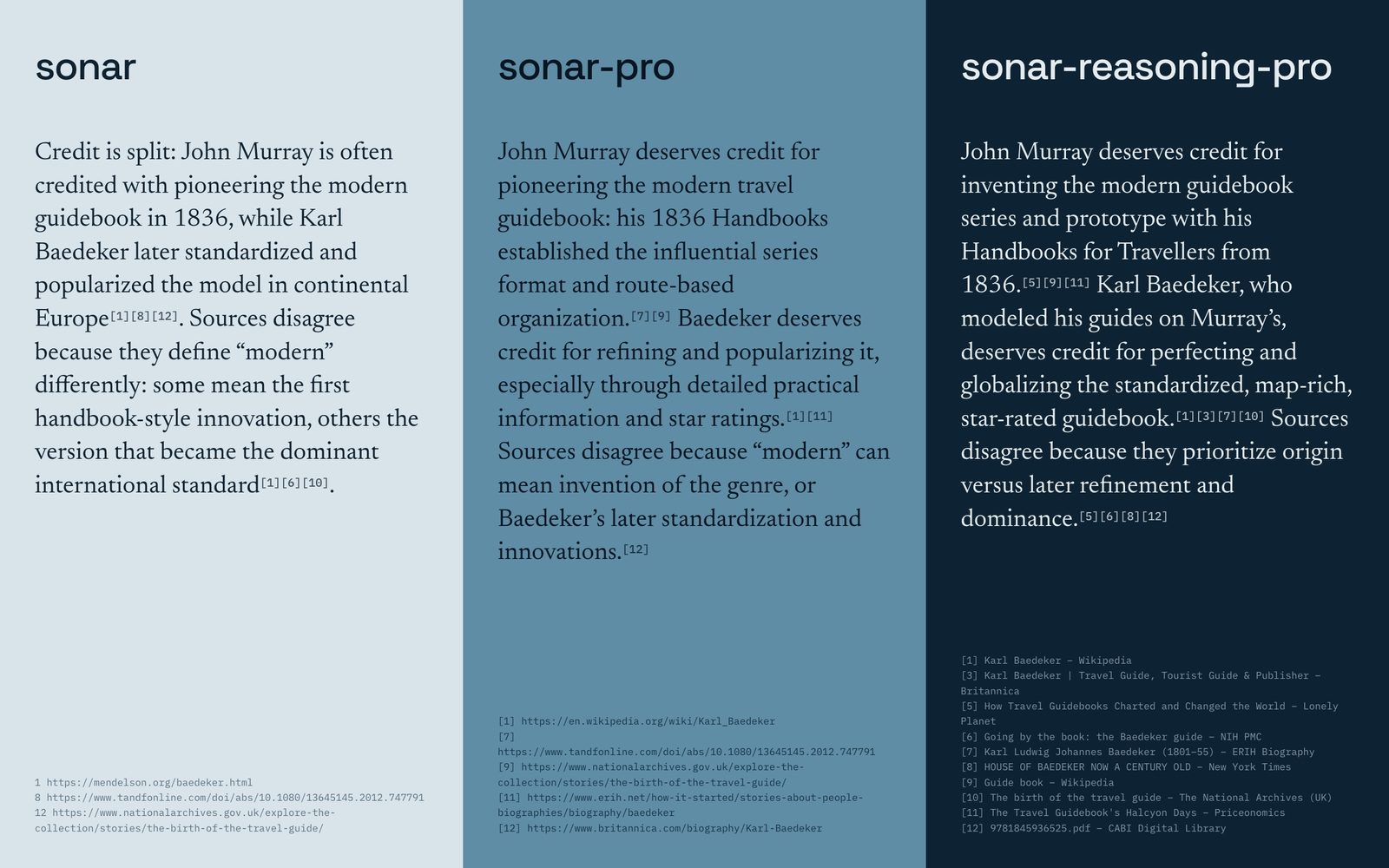
Three tiers of depth
Use sonar for fast fact checks, sonar-pro for wider sourcing across a competitive landscape, and sonar-reasoning-pro when sources conflict and you need a weighed synthesis. Cap reply length to keep reasoning output tight.
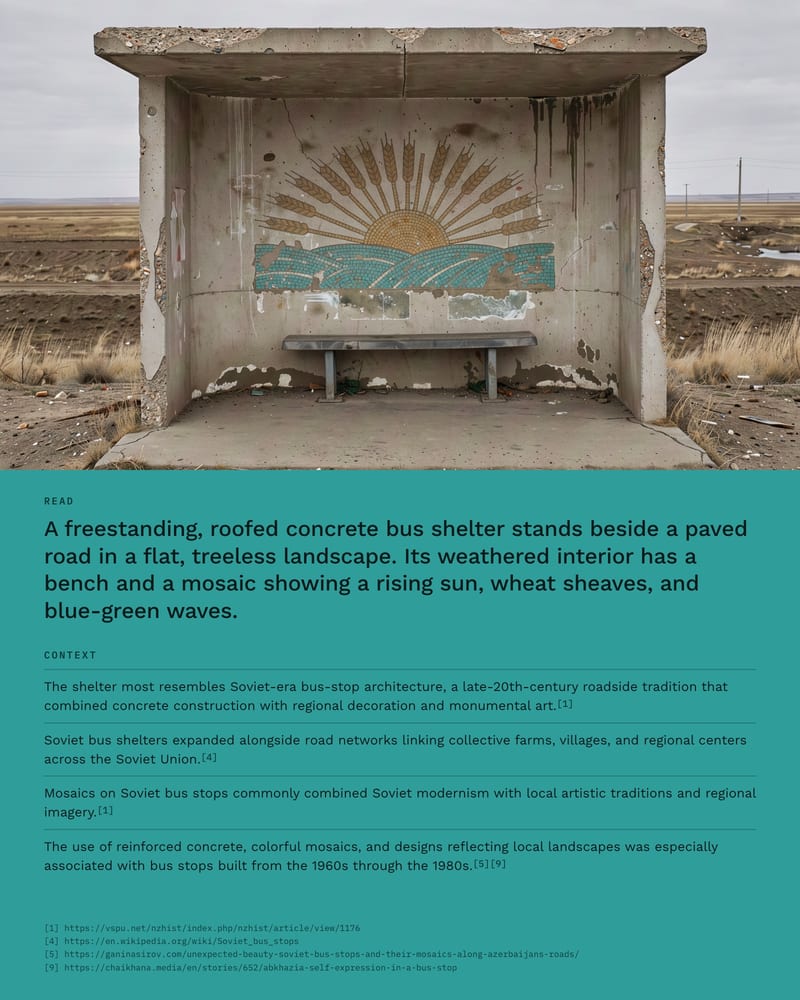
Reference images, grounded context
Attach a reference image and pair it with a specific question about what to look up. It identifies and contextualizes the subject, then adds live web research around it. Use a vision-focused model for deep compositional critique.
Every example here is a research job: trend lists, tone teardowns, reference shot lists and tags, each written to be pasted into a brief or a prompt.
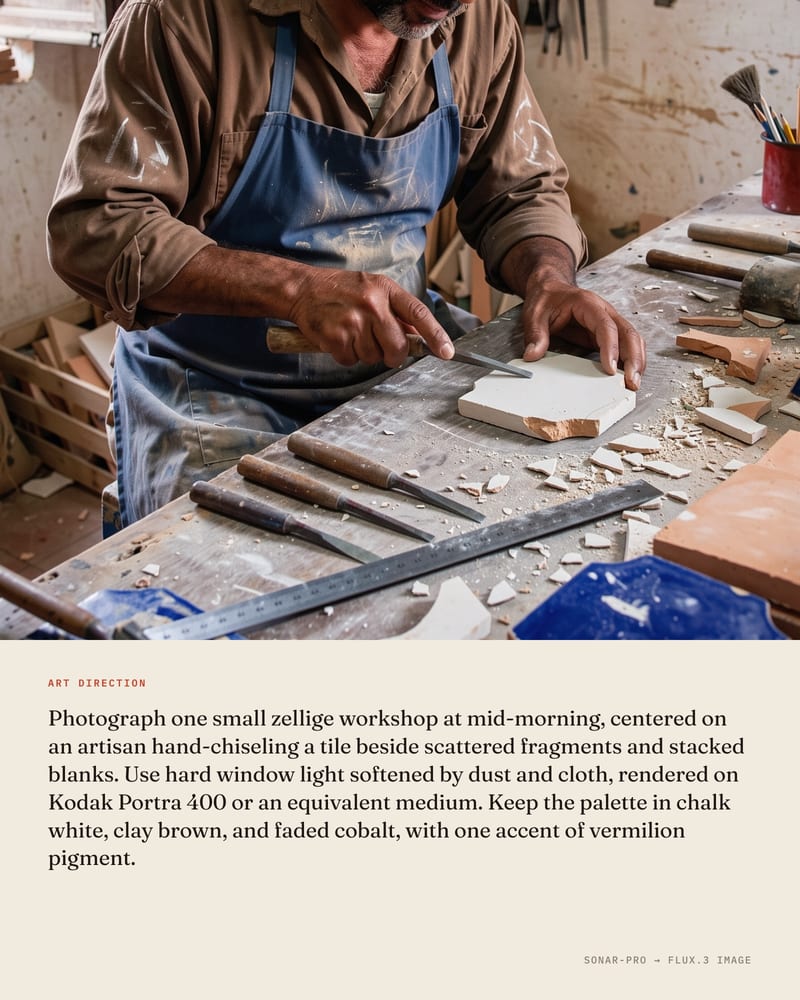
Trend scouting condensed into an art direction note
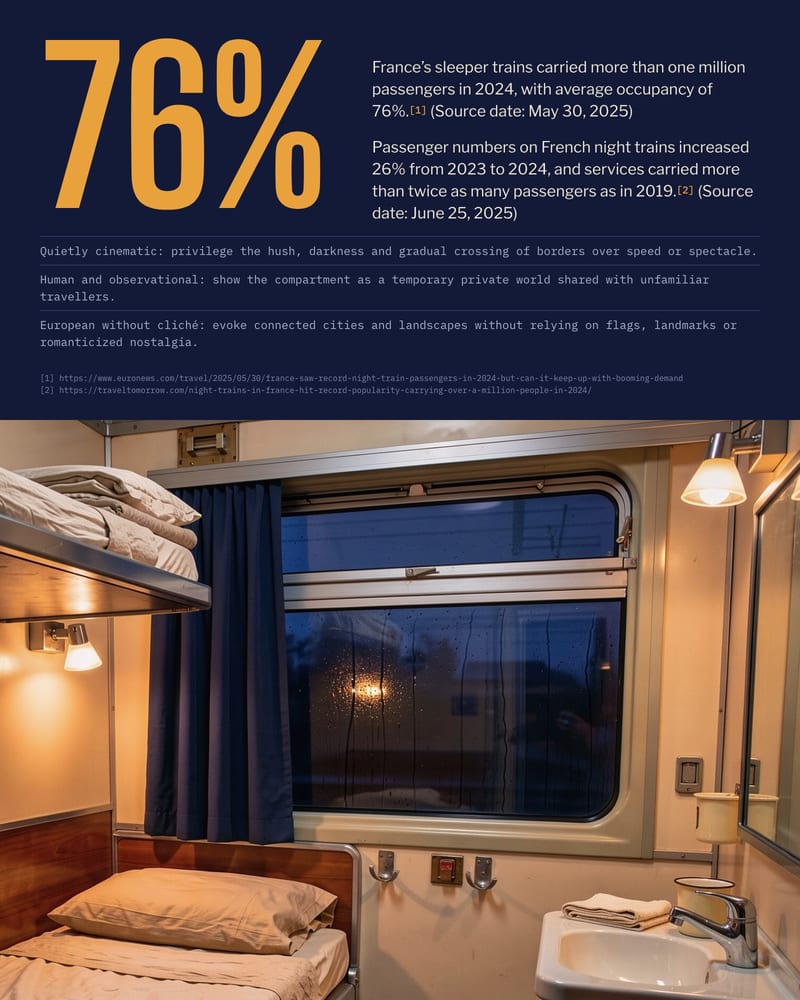
Sourced stats and tone notes for brand copy
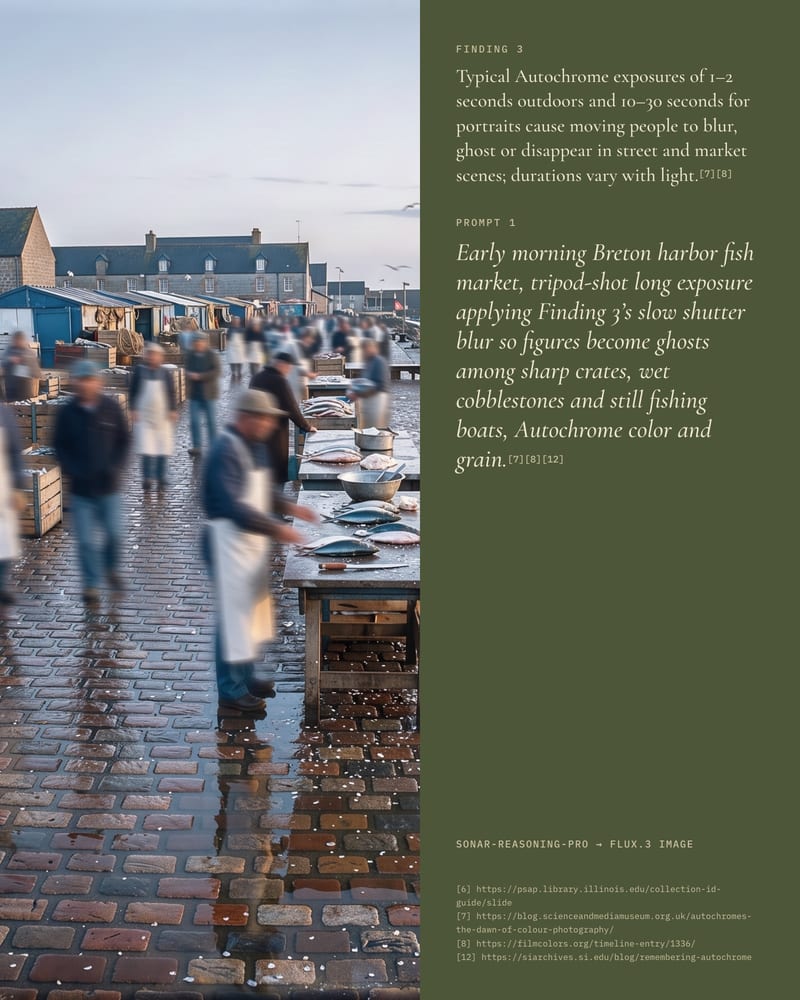
Research first, then image prompts for the canvas
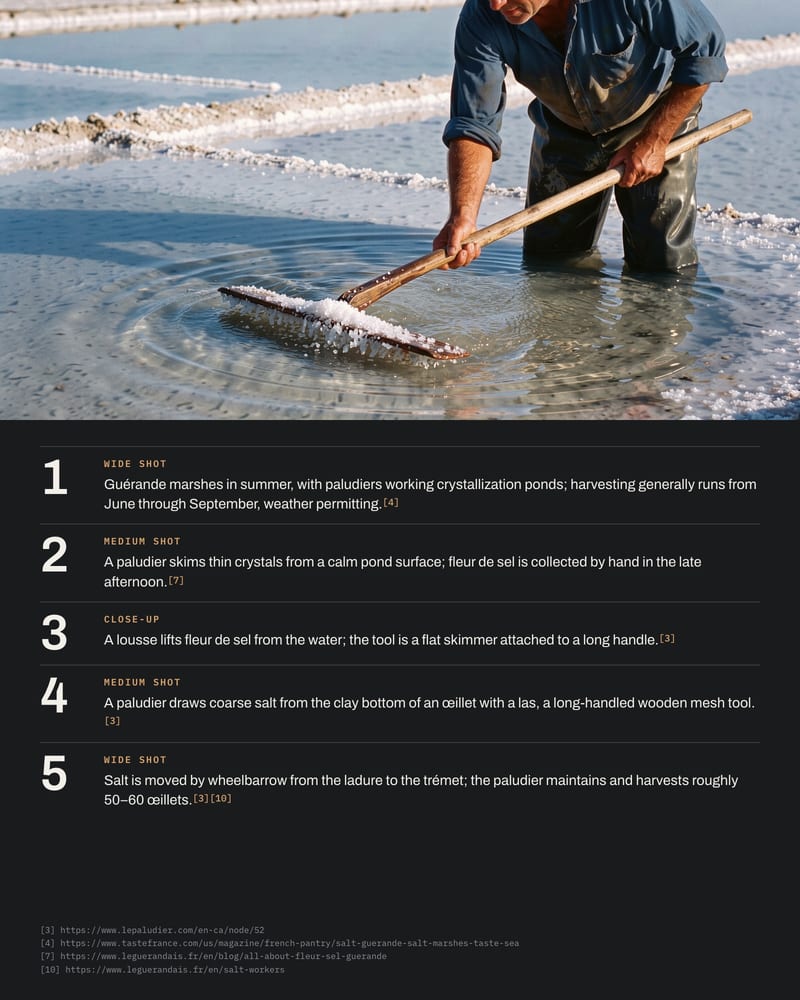
A shot list built from reported production facts
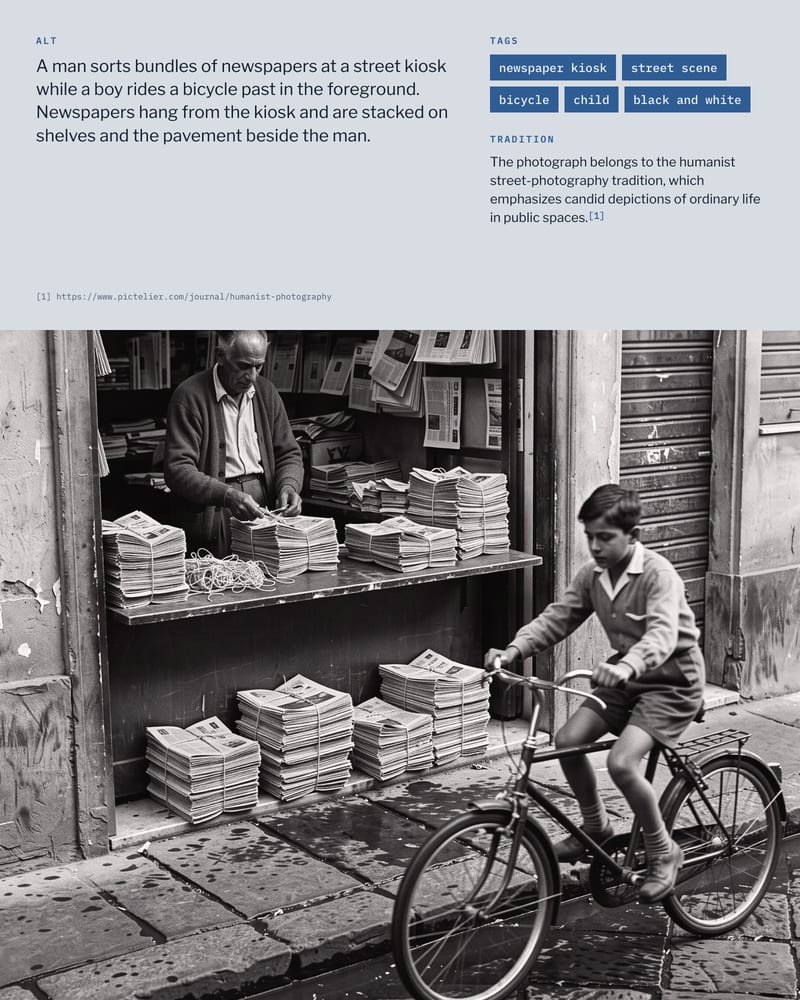
Literal image description with web-backed tags
Art directors, copywriters, filmmakers and archivists reach for it when the work depends on things that are current and checkable, and the final voice belongs to someone else.
It is best at web-grounded research: trend and competitor briefs, fact-checking claims before you script them, cited reference digging for moodboards, and current-events context for campaign copy. It runs on Perplexity AI's Sonar family, which retrieves live web pages and answers with numbered citations.
Yes. Sonar answers from a live web search and usually returns numbered citations with their source URLs. The numbers in the text don't always match the order of the source list, so open the sources that matter before a fact goes into a client brief.
Yes. Attach a still and it describes what is literally in the frame, then adds web-sourced context such as the place, period or tradition it belongs to, with citations you can check.
Match the tier to the question. sonar suits quick, cheap lookups. sonar-pro adds wider source coverage for multi-part research and competitive landscapes. sonar-reasoning-pro handles the hardest synthesis and conflicting sources, with slower, longer replies that may show its thinking.
Numbered markers like [1][2] point to the sources behind each claim, and sonar-reasoning-pro can prepend a <think> block before its answer. Both may need stripping before the text moves downstream. It can also paraphrase a source too confidently, so verify the claims that matter.
Answers come from a live web search, so they shift as sources change, and a source can occasionally be mis-summarised. Rerun the question when you need current figures, and open the citations that matter before a fact goes into a client brief.
Live-web research with numbered citations, so your moodboard, script or campaign starts from what is true this week