One click, whole workflow
Recipes are here. Package a whole workflow and run it in one click
Explore recipesOne click, whole workflow
Recipes are here. Package a whole workflow and run it in one click
Explore recipesbyElevenLabs
Direct expressive character dialogue and studio narration with dynamic prosody, organic micro-breaths, and inline theatrical cues
Go from raw script to emotionally charged vocal performance in three streamlined steps.
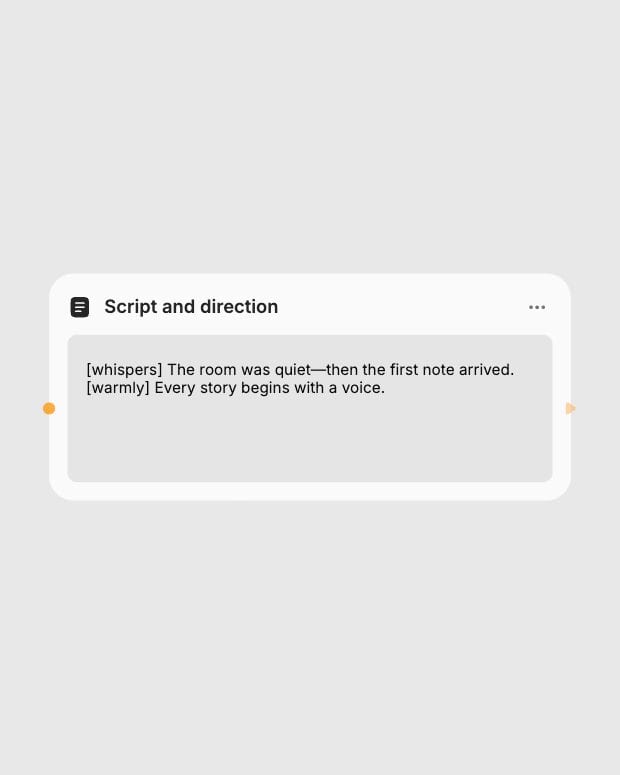
Script with directorial cues
Compose dialogue or narration using bracketed tags like [whispers] and punctuation like em dashes to set the acting rhythm.
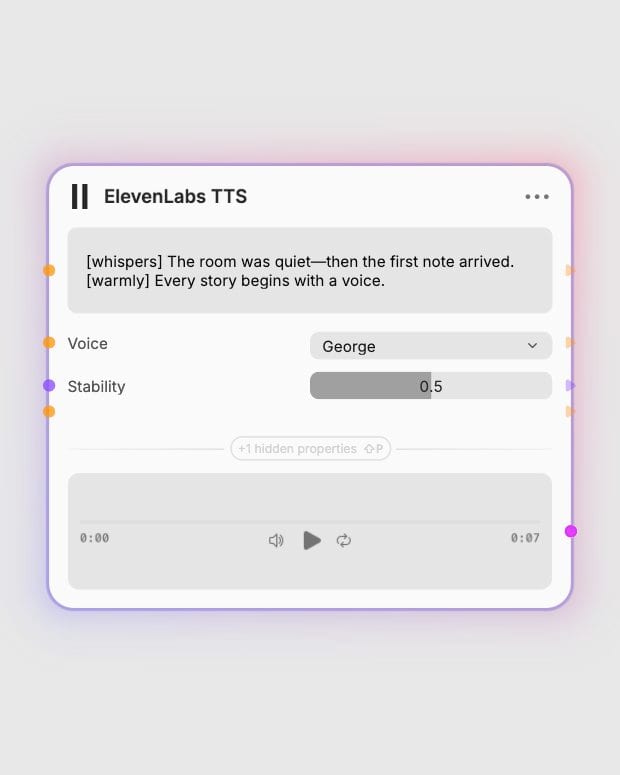
Tune voice and stability
Select a baseline voice archetype and set stability from 0.30 for dramatic inflection to 0.85 for steady narration.
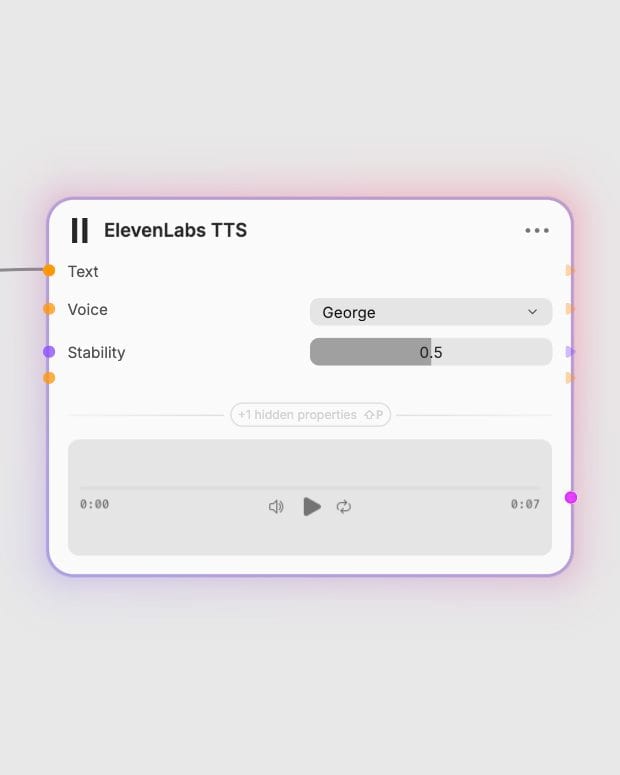
Generate expressive audio
Produce studio-quality speech with contextual phrasing, organic micro-breaths, and precise phonetic normalization.
From bracketed theatrical cues to granular stability tuning, command voice synthesis with directorial nuance.
Explore realistic speech generations spanning cinematic acting, archival documentaries, and dynamic commercials.
See how audio directors, game writers, and commercial producers craft expressive vocal tracks.
Yes, Eleven v3 is the underlying expressive speech synthesis architecture powering this node. It introduces dynamic emotional prosody, natural micro-breaths, and inline theatrical tags like [whispers] and [laughs] to produce lifelike vocal performances.
Set stability between 0.30 and 0.50 for dramatic character acting, dialogue, and scripts using inline emotion tags. For e-learning, news reading, technical explainers, or any project requiring uniform, repeatable delivery across lines, set stability to between 0.70 and 0.85.
Place natural language tags in brackets directly before the dialogue—such as [whispers], [sighs], [laughs], or [excited]. Combine these tags with punctuation like em dashes (—) for pauses and keep stability around 0.30–0.50 so the model can freely interpret the dramatic cues.
Pass a two-letter ISO 639-1 code such as en, es, fr, de, or ja into the language_code parameter. This enforces regional pronunciation rules while preserving the acoustic persona and timbre of your chosen voice.
Avoid this model when sub-100ms turn latency is strictly required, such as in real-time telephony agents. It is also not recommended for unstitched multi-hour continuous audiobooks where seamless prosodic uniformity across separate API chunks without voice drift is critical.
Direct expressive character dialogue and studio narration with dynamic prosody, organic micro-breaths, and inline theatrical cues
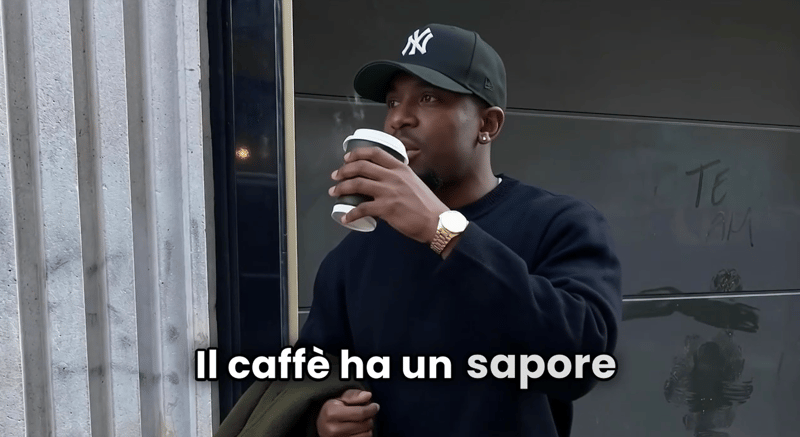
Provide a scenario image, script, voice, and language to create a talking character video with translated speech.
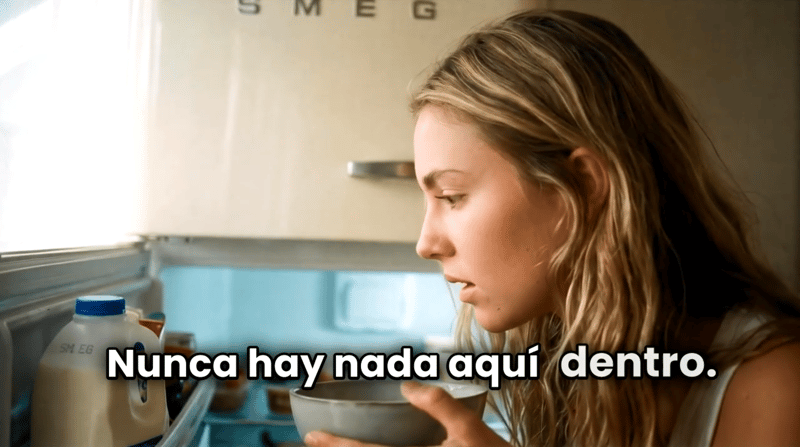
Turn a script, scenario image, voice selection, and target language into a talking character video.
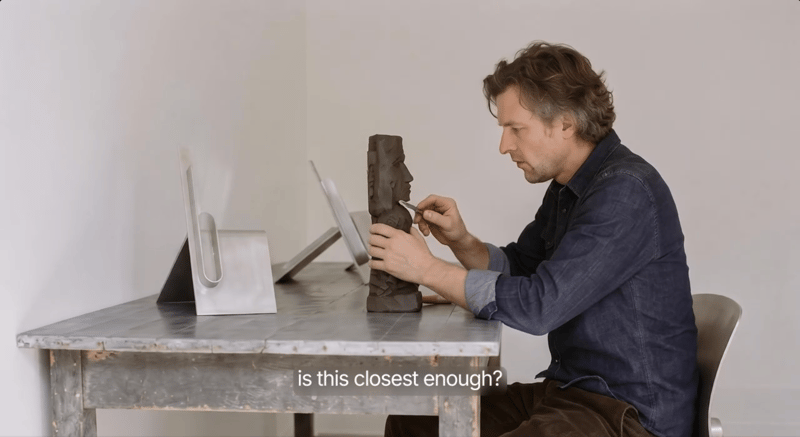
Provide a scenario image, script, and voice to create a talking character video with voiceover.
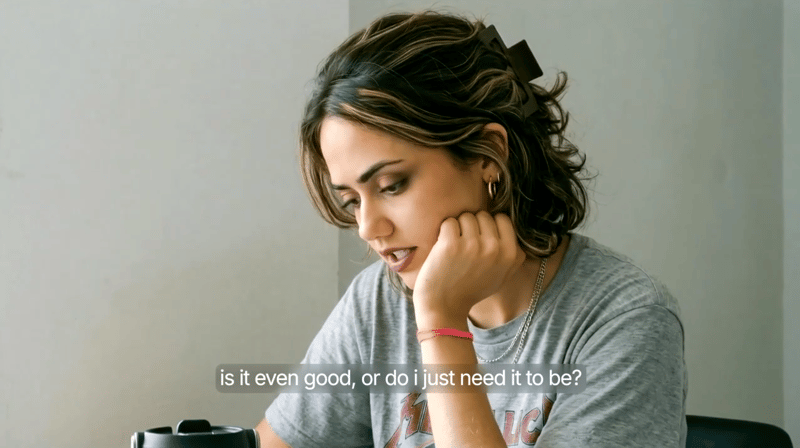
Provide a scenario image, script, and voice selection to create a talking character video with spoken delivery.
Explore a brand’s visual identity, refine typography and build real applications. Combine AI imagery with editable design and reusable workflows in Fuser.
Develop pitches, campaign assets and interactive client work in Fuser. Combine AI generation, editable design and reusable processes across your agency.
Develop film treatments, character and environment concepts, storyboards and motion studies. Connect image, video and 3D exploration in Fuser.
Create social graphics, carousel artwork and short videos with a recognizable brand style. Keep copy editable and recurring content easier to produce in Fuser.
Develop storyboard frames, shot variations and video studies from your references. Compose clear boards and explore movement in one Fuser project.